Mushroom symbolism in the Bible is not directly defined because Scripture never clearly presents mushrooms as a religious symbol. Most traditional English translations do not even name them. Therefore, meanings such as renewal, hidden growth, humility, decay, and transformation come from modern Christian reflection on how fungi live, not from an established biblical teaching.
One disputed passage may refer to desert truffles, while a modern paraphrase uses “mushrooms” as a figure of speech. Neither example creates a complete biblical symbol. To understand the subject accurately, readers must separate Scripture, translation choices, scholarly theories, and personal spiritual interpretation.
Quick Answer
Mushroom symbolism in the Bible has no fixed or directly stated meaning. Christians may connect mushrooms with hidden growth, humility, transformation, decay, or new life, but these ideas come from observing fungi and applying broader biblical themes. Claims that manna, Jesus, or early Christianity secretly represented psychedelic mushrooms lack convincing historical and textual support.
TL;DR
- The Bible does not clearly establish mushrooms as sacred symbols.
- Most major translations never directly name mushrooms.
- A disputed Hebrew term in 2 Kings may refer to wild gourds or desert truffles.
- Modern Christians sometimes associate fungi with humility, renewal, and unseen growth.
- The theory that biblical manna was a psychedelic mushroom lacks textual support.
- Mushroom meanings should remain personal reflections, not official biblical doctrine.
Possible Mushroom Meanings in a Biblical Context
| Modern Interpretation | Feature Behind the Meaning | Related Biblical Theme | Important Limit |
|---|---|---|---|
| Hidden growth | Much fungal activity occurs beneath soil or wood | God working beyond human sight | Scripture does not make this comparison |
| Renewal | Fungi help break down dead organic matter | New life and restoration | Decomposition is not the same as resurrection |
| Humility | Mushrooms grow close to the ground | Humility and service | This is a modern visual analogy |
| Sudden change | Fruiting bodies can appear quickly after rain | Unexpected growth or opportunity | The Bible never treats mushrooms as omens |
| Discernment | Some mushrooms nourish while others harm | Wisdom and careful judgment | No biblical passage uses mushrooms this way |
| Community | Underground fungal networks connect with plants | Mutual support within a community | This scientific feature is not a biblical metaphor |
| Mortality | Mushrooms often grow near decaying material | The temporary nature of earthly life | This meaning depends on the image and setting |
Are Mushrooms Mentioned in the Bible?
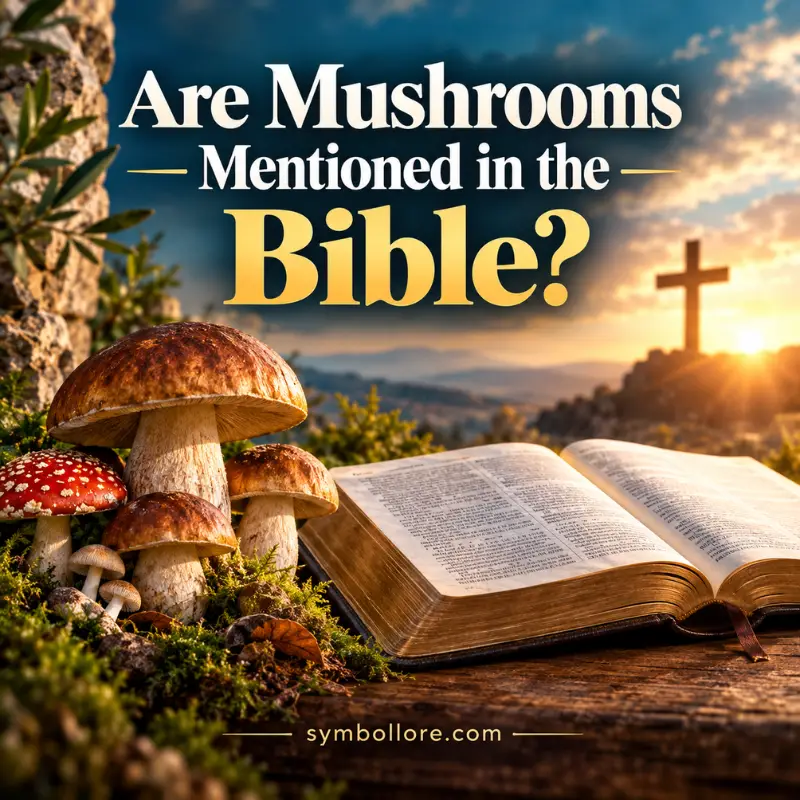
Most widely used English Bible translations do not directly mention mushrooms. The Hebrew and Greek biblical texts also do not contain an undisputed passage that clearly identifies the familiar cap-and-stem fungus as a religious symbol.
This absence matters. It means readers should not present a mushroom as an official symbol of resurrection, hidden wisdom, divine favor, or spiritual awakening. Those interpretations may work in modern art or personal devotion, but Scripture does not establish them.
One contemporary exception appears in The Message, a highly interpretive English paraphrase. Psalm 3 describes the writer’s enemies as “sprouting like mushrooms.” More literal translations simply say that many enemies are rising against him.
A comparison of Psalm 3 translations
shows that “mushrooms” comes from the modern paraphraser’s imagery rather than the original text.
Therefore, Psalm 3 does not create ancient mushroom symbolism. It only uses a familiar modern image to communicate rapid increase.
The Disputed “Wild Gourds” Passage in 2 Kings
Second Kings 4:38–41 tells a story about Elisha and a pot of stew. During a famine, one man gathers unfamiliar produce from a wild vine. After eating the stew, the group fears that the food contains something deadly. Elisha adds flour, and the stew no longer harms them.
Most English translations identify the gathered food as “wild gourds.”
describes fruit growing from a vine, which supports a gourd-like plant rather than a typical mushroom.
However, identification of the Hebrew term paqqu’ot remains debated. A University of Wisconsin–Madison educational page discusses a proposal that the word could relate to paqua or fuqa, regional names associated with desert truffles. The page asks whether the object was a
desert truffle or another type of wild food.
This proposal is interesting, but it is not certain. The passage describes a vine and fruit, while ancient translations and many later interpreters favor colocynths or wild gourds. Even if desert truffles were involved, the story would concern dangerous food, limited knowledge, and divine help—not a universal mushroom symbol.
Why Mushrooms Have No Fixed Biblical Meaning
Biblical symbols usually gain meaning through repeated textual use, a clear explanation, or an important religious event. Bread, wine, water, lambs, fire, vines, seeds, and light all appear in identifiable contexts that shape their meanings.
Mushrooms lack that biblical foundation. Scripture does not use them in a parable, prophetic vision, law, ritual, or teaching of Jesus. It also does not connect them directly with sin, blessing, resurrection, wisdom, or spiritual visions.
This makes mushroom symbolism different from general
food symbolism across religion and culture.
Bread can represent provision or the body of Christ because the biblical text makes those connections. A mushroom has no comparable scriptural explanation.
Therefore, any Christian mushroom meaning begins with analogy. People observe a fungal feature and connect it with a broader biblical theme. This approach can inspire meaningful art or reflection, but it should not be presented as a hidden doctrine.
Hidden Growth and Unseen Spiritual Work
A mushroom’s visible fruiting body represents only part of the organism. Threadlike structures called mycelium may spread through soil, wood, or another material before a mushroom appears. This hidden activity makes fungi a modern symbol of quiet development.
Christians may compare this unseen growth with faith developing before visible change occurs. Prayer, learning, healing, and character formation can take time. Their results may remain hidden until a later season.
This comparison fits broad biblical ideas about trusting what cannot yet be seen. However, the Bible itself does not use mycelium as an example of faith. The symbolism comes from modern knowledge of fungal life.
The meaning can still work in Christian writing when authors label it clearly. A mushroom beneath trees might represent spiritual growth that receives little public attention. It may also remind readers that visible results do not reveal every process taking place below the surface.
Decay, Renewal, and Transformation
Fungi play an important role in breaking down dead organic material. Because they often appear on fallen wood, leaf litter, or rich soil, mushrooms can represent the movement from decay toward new growth.
A Christian artist may connect this process with restoration. What appears finished can become part of something new. Loss may produce wisdom, compassion, or a changed direction, even when it cannot be reversed.
Still, decomposition should not be described as a biblical symbol of resurrection. Christian resurrection concerns God giving life to the dead, not simply matter returning to an ecosystem. The two ideas may create a visual comparison, but they are not identical theological claims.
Mushrooms can also represent mortality. Their fruiting bodies often appear quickly and may disappear within days. This brief life can remind viewers that earthly conditions change. In that sense, the mushroom may support reflection on human limits, time, and the need to use life wisely.
Humility and Life Close to the Ground
Mushrooms grow low to the earth, often beneath larger plants and trees. Their position has led some modern Christians to associate them with humility, modesty, and unnoticed service.
This interpretation fits biblical teachings that warn against pride. A person can contribute to a community without seeking attention or status. Likewise, a small mushroom may perform an important ecological role while remaining hidden beneath a forest canopy.
However, this symbolism comes from appearance and location. The Bible does not call mushrooms humble, nor does it use them as examples of service.
Modern Christian nature art sometimes applies similar meanings to flowers, trees, and seeds. Yet each plant or organism requires careful treatment. For example,
includes later Christian legends that many people mistake for biblical history. Mushroom interpretations need the same clear line between Scripture and later tradition.
Nourishment, Danger, and Discernment
Some mushroom species provide nutritious food, while others can cause serious illness or death. Since safe identification requires knowledge, mushrooms can serve as modern symbols of discernment.
In a Christian context, discernment means examining an idea, influence, or decision instead of accepting it based on appearance. A harmless and a dangerous mushroom may look similar to an inexperienced observer. Therefore, mushroom imagery can illustrate the limits of first impressions.
The story in 2 Kings 4 offers a related theme, although its wild food was probably not a mushroom. The gathered plant looked suitable for stew, but no one knew what it was. The account warns readers about acting without knowledge during a desperate situation.
A mushroom illustration paired with this theme can communicate caution. Still, it should not claim that mushrooms represent evil. Most fungi are neither moral nor immoral. Their symbolic value depends on the particular species, scene, and intended lesson.
Rain, Sudden Appearance, and God’s Provision
Mushrooms often appear after rain when temperature and moisture create suitable conditions. Their quick emergence can make them seem as if they arrived overnight.
Modern spiritual writers may view this pattern as a symbol of sudden provision, unexpected opportunity, or growth after a dry season. Rain already carries rich biblical associations with blessing, judgment, agricultural survival, and divine care. A mushroom appearing after rain can extend that imagery in contemporary art.
However, Scripture never uses mushrooms to explain God’s provision. Therefore, they should not replace established biblical symbols such as bread, rain, harvests, or manna.
The symbolism also requires balance. Not every sudden event represents divine approval. Rapid growth may be beneficial, harmful, or temporary. The mushroom’s appearance can encourage reflection, but it cannot reveal God’s will without scriptural, moral, and practical discernment.
Were Biblical Manna and Mushrooms the Same Thing?
The Bible describes manna as food provided to the Israelites in the wilderness. Exodus 16 compares its appearance with small flakes or frost and says that it appeared with the morning dew. The text does not call manna a mushroom.
Several modern writers have proposed natural explanations for manna, including plant secretions, insect honeydew, lichens, and fungi. Yet no theory has gained universal agreement.
The claim that manna was a psychedelic mushroom has especially weak support. A scholarly study of historical explanations for manna notes that the mushroom proposal has no foundation in the biblical verses. It also observes that the suggested species does not naturally fit the Sinai setting.
This academic discussion of manna theories
treats the mushroom claim as speculative.
Readers may study these theories as part of modern religious history. However, they should not state that archaeologists or biblical scholars have proven manna was a mushroom. The available textual and environmental evidence does not justify that conclusion.
The “Sacred Mushroom and Jesus” Theory
In 1970, John Marco Allegro published The Sacred Mushroom and the Cross. He argued that early Christian language concealed a fertility religion centered on psychoactive mushrooms. His theory even questioned whether Jesus existed as a historical person.
The book attracted public attention because Allegro had worked with material connected to the Dead Sea Scrolls. However, relevant expertise in one field does not automatically validate every later conclusion.
Other philologists and biblical scholars strongly rejected Allegro’s word connections and methods. A historical review from Harvard Divinity School’s Center for the Study of World Religions describes the book’s dramatic publication and the intense criticism it received.
This history of Allegro’s mushroom theory
shows that the claim remains controversial rather than established.
Mainstream Christian teaching identifies Jesus through biblical titles and images such as Messiah, Son of God, shepherd, lamb, vine, bread of life, and
light. An overview of Jesus symbolism and Christian history
provides a clearer distinction between textual symbols and later speculation.
There is no reliable basis for telling readers that Jesus secretly symbolizes a mushroom.
Mushrooms, Psychedelics, and Christian Spirituality
Some mushrooms contain psilocybin, a substance that can alter perception, thought, and emotion. Modern discussions sometimes connect these effects with mystical experience. However, an intense experience does not prove that a person received a divine message.
The Bible does not name psilocybin mushrooms or instruct Christians to use them. Likewise, biblical visions cannot automatically be explained as drug experiences. Such claims require historical evidence, not visual similarities or modern assumptions.
Christian traditions differ in how they approach alcohol, medicine, intoxicants, and altered states. Therefore, readers should consult their faith community, local laws, and qualified medical professionals when dealing with substance use.
It is also important to separate symbolism from safety. A mushroom may represent insight in a painting without being safe to eat. Wild mushrooms should never be consumed based on a spiritual feeling, photograph, online symbol guide, or unverified identification.
Mushroom Colors and Possible Christian Interpretations
Mushroom color does not have a fixed biblical meaning. Still, artists may combine general color symbolism with the natural form of a mushroom.
A white mushroom may suggest simplicity, peace, innocence, or hidden purity. Yet white can also create an eerie or lifeless mood, especially in a dark forest.
A red mushroom may represent warning, sacrifice, danger, or intense life. The red-and-white fly agaric often appears in fantasy imagery, but the Bible never identifies it as a spiritual object.
Brown mushrooms can suggest earthiness, humility, stability, or ordinary life. Golden mushrooms may represent value, light, or transformation, while black mushrooms can suggest mystery, decay, grief, or the unknown.
The surrounding scene determines which meaning fits. A color alone does not turn a mushroom into a biblical message.
Mushrooms in Christian Art and Modern Design
Mushrooms are uncommon in traditional Christian iconography when compared with grapes, wheat, lilies, palms, fish, lambs, or doves. When they appear in older art, they may serve as natural landscape details rather than coded religious symbols.
Modern Christian artists have more freedom to use fungi as visual metaphors. A mushroom growing from a fallen tree can represent hope after loss. A cluster beneath the soil may express community, while a poisonous species can support a lesson about appearances and discernment.
Still, viewers should not assume that every object in religious art contains a secret meaning. Artists sometimes include plants and animals because they belong to the setting or improve the composition.
When interpreting a religious image, examine its date, location, creator, denomination, and written explanation. Biblical symbols such as
fire and its scriptural meanings
have strong textual foundations. Mushroom imagery usually depends more heavily on the individual artist’s intention.
What Does Dreaming About Mushrooms Mean Biblically?
The Bible does not provide an interpretation for dreams about mushrooms. Therefore, no one can accurately claim that such a dream always predicts money, spiritual attack, healing, temptation, or a new relationship.
A mushroom dream may reflect ordinary experiences, fears, memories, or recent media. It may also encourage personal reflection. Rapidly growing mushrooms could resemble an issue developing quickly. A poisonous mushroom may express distrust, while mushrooms growing from dead wood might suggest change after loss.
The dreamer should consider the emotion and context of the dream. Fear, curiosity, comfort, and disgust lead to different possible readings.
Christians who view dreams as spiritually important can compare their impressions with Scripture, wise counsel, and real circumstances. However, a dream symbol should never replace sound judgment or become the only basis for a major decision.
How to Interpret Mushroom Symbolism Responsibly
Start by identifying the source of the image. A mushroom in a Bible-themed painting, tattoo, dream, social-media post, or personal encounter may serve a different purpose.
Next, separate direct Scripture from analogy. Ask whether a biblical passage actually mentions the symbol or whether someone has connected a natural feature with a biblical theme. Both approaches can produce meaningful reflection, but they do not carry equal authority.
Then examine the mushroom’s condition and setting. Healthy mushrooms after rain may suggest growth. Fungi covering dead wood can point toward decay or renewal. A brightly colored poisonous mushroom may communicate warning.
Finally, avoid absolute claims. A mushroom is not guaranteed evidence of blessing, demonic activity, prophecy, or divine instruction. Responsible interpretation leaves room for artistic intention, personal experience, scientific reality, and uncertainty.
Common Misconceptions
The first misconception is that the Bible clearly defines mushrooms as symbols of rebirth. It does not. Renewal is a modern analogy based on the role fungi play in decomposition and ecosystems.
Another misconception says that manna was definitely a hallucinogenic mushroom. This claim remains speculative and lacks firm textual or environmental support.
A third claim identifies the “wild gourds” in 2 Kings as mushrooms. Desert truffles have been proposed, but most translations and commentaries favor a vine-growing gourd or colocynth.
Some people also claim that early Christian art secretly hid mushrooms in images of trees and sacred scenes. Individual shapes may resemble fungi, but resemblance alone cannot prove a hidden religious cult.
Finally, mushrooms are not inherently evil. Poisonous species can symbolize danger, but edible and ecologically helpful fungi challenge any universal negative interpretation.
FAQs
Mushrooms have no official or universal Christian meaning. Modern Christians may use them to represent hidden growth, humility, mortality, renewal, or discernment. These meanings come from analogy with fungal life rather than a direct biblical teaching.
Most standard English Bible translations do not mention mushrooms by name. The Message uses “sprouting like mushrooms” in Psalm 3 as a modern paraphrase, but the original Hebrew refers to enemies rising or increasing. This wording does not establish an ancient symbol.
Probably not, although the exact plant remains debated. Most translations identify the food in 2 Kings 4:39 as wild gourds, possibly colocynths. Some writers connect the Hebrew term with desert truffles, but the passage’s description of a vine makes that identification uncertain.
The Bible never uses mushrooms as a symbol of resurrection. Some modern artists connect fungi with new life because they transform dead organic material. However, this ecological process should remain separate from the Christian doctrine of bodily resurrection.
There is no convincing evidence that biblical manna was a psychedelic mushroom. The theory does not arise directly from the Exodus text, and proposed mushroom species do not fit the setting well. Scholars have suggested many natural explanations, but none has replaced the biblical account with certainty.
A mushroom may inspire reflection on creation, growth, or human mortality, but its appearance does not prove a private message from God. Christians should avoid using an ordinary sighting as a guaranteed prediction or command, especially when making important decisions.
A Christian mushroom tattoo may represent quiet faith, transformation, humility, or hope emerging from hardship. Its meaning depends on the wearer’s intention and design. Since Scripture gives mushrooms no fixed meaning, the tattoo remains a personal symbol rather than a biblical emblem.
Conclusion
Mushroom symbolism in the Bible has no direct or universally accepted definition. Scripture does not clearly use mushrooms as religious emblems, and disputed references cannot support a complete symbolic system. Meanings such as hidden growth, humility, discernment, mortality, and renewal come mainly from modern observation of fungi. These ideas can enrich Christian art or personal reflection when they are labeled honestly. However, claims about psychedelic manna, a mushroom Jesus, or secret early Christian mushroom worship lack strong evidence. The safest interpretation keeps biblical teaching, historical theories, natural symbolism, and personal belief clearly separated.
Five Related Articles from symbollore.com
- Food Symbolism: Meanings Across Culture, Art, and Life — https://symbollore.com/food-symbolism-meaning/
- Jesus Symbolism: Meaning, Symbols, and Christian History — https://symbollore.com/jesus-symbolism/
- Dogwood Tree Symbolism: Meaning, Faith, and Renewal — https://symbollore.com/dogwood-tree-symbolism/
- Fire Symbolism in the Bible: 7 Meanings Explained — https://symbollore.com/fire-symbolism-bible/
- Fog Symbolism in the Bible: Meanings and Key Verses — https://symbollore.com/fog-symbolism-bible/


