
Food symbolism is the use of meals, ingredients, and eating customs to express ideas beyond physical nourishment. A loaf of bread can suggest life or community. A wedding cake can mark celebration, while a forbidden dish may define religious or group boundaries. Yet no food has one universal meaning.
Meaning comes from context: who prepares the food, who shares it, when it appears, and what a community believes about it. In culture, religion, literature, art, and everyday American life, food can carry memory, identity, hospitality, power, desire, loss, and renewal.
Quick Answer
Food symbolism means using food, cooking, serving, or eating to represent a deeper idea. Common meanings include love, belonging, faith, prosperity, temptation, life, death, and renewal. However, the same food can communicate different ideas across families, cultures, religions, historical periods, and works of art.
TL;DR
- Food gains meaning from context, not an unchanging universal code.
- Shared meals often communicate belonging, care, trust, and social bonds.
- Ritual foods can preserve faith, history, and community identity.
- Art and literature use food to reveal power, desire, character, or loss.
- Respectful interpretation checks culture, occasion, audience, and historical setting.
Food Meanings at a Glance
| Meaning | How It May Appear | Important Context |
|---|---|---|
| Love and care | Cooking, feeding, gifts, family recipes | The relationship between giver and receiver |
| Belonging | Communal tables, holiday dishes, inherited recipes | Family, regional, religious, or national identity |
| Prosperity | Full tables, grain, rice, fruit, sweets | Weddings, harvests, festivals, and New Year customs |
| Faith | Offerings, sacred meals, fasting, blessed ingredients | The teaching and practice of a specific religion |
| Power | Banquets, rare ingredients, controlled portions | Wealth, class, authority, or access |
| Temptation | Sweets, fruit, rich dishes, forbidden food | Moral, romantic, or psychological context |
| Mortality | Rotting fruit, spilled wine, unfinished meals | Funerals, vanitas art, grief, or lost time |
| Renewal | Eggs, seeds, bread, seasonal foods | Birth, spring, resurrection, or a new beginning |
What Food Symbolism Means
Food can carry meaning on three connected levels. First, an ingredient may function as a symbol. Seeds, for example, can suggest potential or new life. Second, an action may hold the meaning. Breaking bread, offering a meal, fasting, or refusing to eat can communicate more than the food itself.
Third, the setting changes the message. A crowded wedding table may suggest celebration and union. The same dishes left untouched after an argument may signal emotional distance. Likewise, an empty plate can represent poverty, mourning, protest, exclusion, or chosen restraint.
Therefore, a food dictionary can provide possible associations, but it cannot deliver a final interpretation. Readers must examine the food, action, people, occasion, and result together. Symbolic meaning lives in that relationship.
Why Food Becomes a Symbol
Food becomes symbolic because people need it, repeat it, remember it, and organize social life around it. Smell and taste can also produce vivid personal memories. As a result, one familiar dish may recall a caregiver, childhood home, religious festival, migration story, or lost relationship.
Repetition gives these associations a shared form. A cake presented at birthdays begins to represent celebration and passing time. A harvest meal can express gratitude because a community serves it at the same seasonal moment each year.
Shape, color, language, cost, and scarcity also matter. Round foods may suggest unity in one setting. Gold-colored foods may evoke wealth in another. Meanwhile, rare ingredients can display prestige because not everyone can obtain them. These meanings develop through use rather than existing naturally inside the ingredient.
Food, Cultural Identity, and Shared Meals
Food helps people recognize where they belong. Recipes preserve family knowledge, regional ingredients, migration histories, religious practices, and memories of home. However, cultural identity never produces one fixed menu. Families from the same community may prepare the same dish differently or attach different memories to it.
The Smithsonian Center for Folklife and Cultural Heritage
explains that holiday food connects people with identity, family, culture, religion, and one another. This matters because the meaning rests in the relationship and occasion, not only in the recipe.
Likewise, UNESCO describes the
as a collection of skills, knowledge, rituals, symbols, and traditions. That definition shows why cultural heritage includes cultivation, preparation, teaching, and eating together. It is much broader than a list of ingredients.
Religious Symbolism, Ritual Foods, and Food Taboos
Religions may use food to express gratitude, sacrifice, purity, covenant, remembrance, discipline, or communion. Ritual foods can appear as offerings, blessed meals, festival dishes, or ingredients tied to a sacred story. Fasting can also carry meaning because temporarily giving up food may express repentance, devotion, mourning, or spiritual focus.
Restrictions work differently but remain meaningful. A food taboo can help a community maintain religious identity and ethical boundaries.
The OpenStax anthropology discussion of food and identity
explains that both prescribed and prohibited foods acquire cultural meaning. Its examples include kashrut in Judaism, Hindu practices connected with nonviolence, and Christian periods of fasting.
These practices should not be merged into one universal system. Bread, wine, meat, rice, or fasting can carry very different theological meanings. Accurate interpretation begins with the particular tradition and community.
Common Foods and Their Traditional Meanings
Common associations can offer a starting point, but context must confirm them.
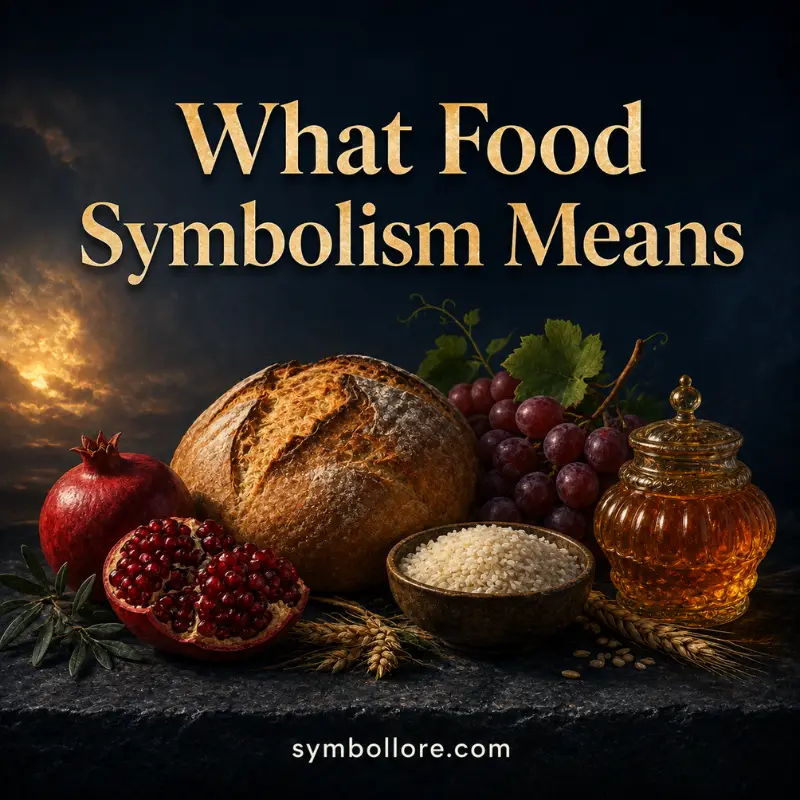
- Bread: Life, work, nourishment, community, or sacred provision. Its role as a staple helps explain its connection with survival and sharing.
- Rice: Prosperity, fertility, continuity, or communal well-being in some Asian and wedding traditions. Meanings vary by region.
- Eggs: Birth, potential, fragility, spring, or new beginnings. Their unbroken form may suggest protected life.
- Seeds: Future growth, descendants, patience, or possibility. A seed contains visible potential without showing the final result.
- Honey: Sweetness, affection, reward, or promised plenty. However, excessive sweetness can also suggest seduction.
- Salt: Preservation, value, purification, loyalty, or protection. Its practical ability to preserve food shaped many associations.
- Pomegranate: Desire, marriage, fertility, death, or return. Its many seeds and mythological history create several layers.
- Fish: Life, faith, abundance, livelihood, or good fortune. Religion, geography, and local language affect the reading.
- Cake: Celebration, reward, luxury, childhood, or excess. In modern American settings, it often marks a milestone.
- Apple: Knowledge, health, temptation, or forbidden desire in Western traditions.
The last example requires caution. Genesis refers to forbidden fruit, not an apple. The apple association developed later through Western language and art, so it should not be treated as the original biblical description.
Hospitality, Abundance, and Social Status
Offering food can communicate welcome, protection, generosity, and trust. A host who gives guests the best available dish may show respect. In contrast, refusing to serve someone can signal rejection or a broken social relationship.
Abundance can represent blessing, successful harvests, prosperity, or generosity. Yet it can also reveal waste, greed, or unequal access. A huge banquet enjoyed by a ruler while others remain hungry carries a different message from a community feast open to everyone.
Food can therefore display social status. Rare spices, imported fruit, fine serving dishes, and large portions have historically shown wealth. Simple food may indicate poverty, but it can also express humility, honesty, or resistance to luxury. The surrounding characters and tone decide which meaning applies.
Food Symbolism in American Life and Family Memory
American food meanings grow from many Indigenous, immigrant, regional, religious, and family traditions. A potluck can symbolize cooperation because each guest contributes something. Birthday cake marks celebration and passing time. Meanwhile, comfort food often connects a person with safety, home, or a caregiver.
Family recipes can also hold migration stories. Preparing a dish from a former homeland may protect memory while new ingredients show adaptation. That change does not automatically make the dish less authentic. It may record how a family survived and built a new home.
The Library of Congress foodways collections
document traditions involving restaurants, fishing, community events, and cultural or religious meals. These records demonstrate that American food culture is not a single menu. It is an evolving archive of communities, labor, movement, celebration, and memory.
Thanksgiving provides a clear example of variation. Its foods may represent gratitude and gathering for some people. However, the holiday can also raise questions about Indigenous history, national storytelling, exclusion, grief, and whose perspective receives attention.
Literary Symbolism and Food in Storytelling
Literary symbolism uses food to reveal information without direct explanation. A writer may show a generous character feeding strangers or a controlling character deciding who may eat. Food can also establish place, class, emotional atmosphere, and family history.
Writers commonly use it in four ways:
- Characterization: What a person cooks, refuses, wastes, or shares reveals values.
- Conflict: Scarcity, unequal portions, or a rejected meal can expose tension.
- Memory: A smell or recipe can connect the present with an earlier life.
- Transformation: Eating, fasting, cooking, or destroying food may mark change.
Repetition matters. One apple on a table may simply create a realistic setting. An apple that repeatedly appears before betrayal may acquire a symbolic role. Readers should look for patterns, contrast, emotional response, and consequences before declaring an object a symbol.
Food in Still Life, Film, and Visual Art
Visual artists use placement, color, condition, quantity, and surrounding objects to shape meaning. Fresh fruit may express beauty or plenty. Rotting fruit can suggest mortality. An overturned cup may indicate that pleasure has ended, while rare food served on silver can display luxury.
The Metropolitan Museum of Art’s study of food in European painting
explains how artists drew symbolic imagery from classical literature, mythology, scripture, and social life. The essay also shows that apples, grapes, nuts, pomegranates, shellfish, and other foods could carry different meanings in different artworks.
A still life should therefore be read as a complete arrangement. Film works similarly. Directors may use cooking to build intimacy, a silent table to show conflict, or an untouched meal to suggest loss. Camera distance, sound, lighting, and editing add meaning that the ingredient cannot carry alone.
How to Interpret Food Symbols Without Oversimplifying
A reliable interpretation starts with evidence rather than a memorized definition. Use these six questions:
- Whose tradition is involved? Identify the family, community, religion, region, or artist.
- When and where does it appear? Historical setting can change the association.
- What occasion is taking place? Weddings, funerals, festivals, and ordinary meals differ.
- Who prepares, controls, receives, or refuses it? Actions reveal relationships and power.
- Is the food plentiful, scarce, fresh, spoiled, shared, or wasted? Condition affects meaning.
- What happens before and after it appears? Consequences test the interpretation.
Next, compare several clues. Do not rely on the food alone. A strong reading fits the setting, behavior, emotional tone, and outcome. Finally, research the specific culture when the example comes from a living tradition. Avoid phrases such as “all cultures believe” unless reliable evidence truly supports them.
How Modern Foodways Keep Meanings Alive
Foodways include the connected practices of growing, preparing, serving, eating, and teaching others about food. These practices keep symbolic meanings alive because people repeat them while adapting them to new places and circumstances.
Migration can replace unavailable ingredients without erasing a dish’s emotional role. Social media can introduce traditions to wider audiences, but it may also strip away context. Businesses can turn a cultural symbol into a marketing image, while political movements may use eating choices to communicate ethics, environmental concern, identity, or protest.
Therefore, modern meaning often contains several layers at once. A dish can preserve family memory, attract customers, express belonging, and spark debate. The key question is who assigns the meaning and whether the people connected with the tradition recognize that interpretation.
FAQs
A food tradition is a repeated practice passed through a family or community. A food symbol is the deeper idea that an ingredient, action, or meal communicates. One practice can be both. Serving a yearly dish is a tradition, while its connection with remembrance may be symbolic.
Bread has served as a basic source of nourishment in many societies, so it naturally became associated with survival, labor, and provision. Sharing bread may also express community or hospitality. However, sacred meanings depend on the particular religion, text, ritual, and historical setting.
Look for repetition, unusual attention, contrast, emotional reactions, and consequences. Ask who prepares, receives, controls, wastes, or refuses the food. If the detail influences character, conflict, mood, or theme, it may carry symbolic meaning rather than serving only as background.
No. Thanksgiving dishes may represent gratitude, family, seasonal plenty, or cultural belonging. They can also connect with personal grief, exclusion, Indigenous history, and disagreement about national narratives. The family, community, and speaker determine which meanings receive emphasis.
Yes. An empty plate may represent poverty, fasting, grief, exclusion, protest, emotional neglect, or failed hospitality. Its meaning depends on why it is empty and how people respond. A chosen fast differs greatly from food being withheld by someone with power.
It can be respectful when the writer identifies the specific community, studies reliable sources, and avoids presenting one belief as universal. Sacred practices require particular care. Explain the original context, acknowledge internal variation, and avoid turning a living tradition into decoration or a fixed stereotype.
Conclusion
Food symbolism turns ordinary ingredients and meals into a language of relationship, belief, memory, and power. The strongest interpretation never treats that language as a universal code. Instead, it asks whose table is shown, what occasion is marked, who is included, and how history shapes the dish.
Once context leads the reading, bread can be both daily nourishment and a sacred offering. Cake can mark joy or excess, while an empty plate can speak as strongly as a feast. This approach keeps symbolic meanings useful, accurate, and respectful.