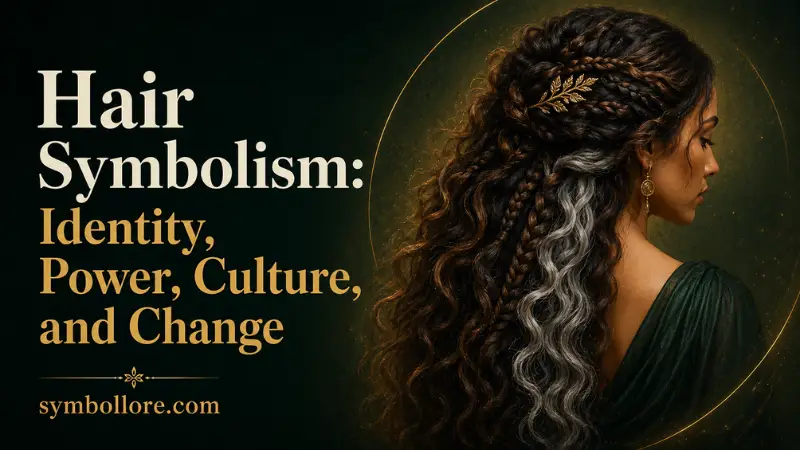
Hair symbolism uses hair’s length, texture, style, color, covering, or removal to communicate identity, power, faith, grief, freedom, and change. Hair feels personal because it grows from the body, yet other people can see and judge it. That mix makes it a strong social symbol.
However, no hairstyle has one universal meaning. A shaved head can show devotion, punishment, illness, fashion, or a fresh start. Likewise, long hair can express beauty, resistance, religious commitment, or simple preference. Culture, consent, history, and setting decide which reading fits.
Quick Answer
Hair symbolism most often represents personal identity, strength, social status, cultural belonging, faith, beauty, control, or transformation. Length and style can express how someone wants to be seen, while cutting or forced removal may mark change, grief, freedom, or lost control. The meaning always depends on the person, community, action, and historical setting.
TL;DR
- Hair can communicate identity, power, faith, status, grief, or resistance.
- Long, short, and shaved styles do not carry fixed meanings.
- Consent separates chosen transformation from humiliation or forced control.
- Cultural hairstyles require specific community and historical context.
- Hair dreams reflect personal emotions rather than predict future events.
Hair Meanings at a Glance
| Hair form or action | Common symbolic reading | Context that can change it |
|---|---|---|
| Long, uncut hair | Strength, devotion, freedom, continuity | Faith, gender rules, heritage, personal taste |
| Short hair | Independence, discipline, practicality, renewal | Fashion, military rules, work, health |
| Shaved head | Renunciation, equality, loss, rebellion | Choice, coercion, illness, ritual |
| Braided hair | Connection, care, order, community | Braid type, wearer, family, living tradition |
| Natural texture | Pride, authenticity, resistance | Racial history and beauty standards |
| Dyed hair | Reinvention, creativity, group identity | Color, workplace, subculture, personal motive |
| Cut lock of hair | Memory, intimacy, mourning | Gift, keepsake, ritual, unwanted removal |
| Hair falling out in a dream | Exposure, stress, aging, lost control | Emotion, recent events, health concerns |
What Does Hair Symbolism Mean?
Hair symbolism means that people use visible hair choices and changes to express ideas beyond appearance. For example, a hairstyle may show membership, rank, age, faith, mourning, rebellion, attraction, or professional identity. Yet the same style can carry a different message in another place.
A useful hair meaning comes from four questions: Who wears or changes the hair? Did the person choose it? What does the community say it means? What is happening around the image? These questions prevent a personal haircut from being confused with a religious practice or a history of forced removal.
Hair also holds opposing meanings. Growth may suggest vitality, while cutting may suggest renewal. Still, cutting can represent harm when another person controls it. Symbolism follows context rather than a fixed code.
Why Hair Represents Personal Identity and Power
Hair represents personal identity because people can shape it while it remains part of their bodies. A person may use texture, length, accessories, or grooming to show taste, gender expression, profession, age, belief, or connection to family. Therefore, a hair change can feel more intimate than changing clothes.
Power enters the symbol through control. Choosing a style can express autonomy. By contrast, a rule that bans, hides, straightens, or removes a person’s hair can enforce another group’s standard. Hair may then become a visible site of resistance.
The Smithsonian’s National Museum of African American History and Culture explains that
Black hairstyles can express personal style, background, status, and life events.
The museum also documents how Eurocentric standards have treated natural Black textures and styles as unsuitable. Thus, an Afro or another natural style may express beauty, pride, political resistance, or ordinary preference. The wearer, not an outsider, provides the best interpretation.
What Long, Short, and Shaved Hair Can Represent
Common long hair symbolism includes vitality, patience, beauty, freedom, devotion, or continuity. Because hair takes time to grow, people may connect length with endurance or an unbroken relationship to faith and heritage. However, long hair can also signal fashion, wealth, sexuality, or nonconformity in a story.
Short hair symbolism often points toward practicality, discipline, independence, modernity, or a new stage. In some periods, a short haircut has challenged gender expectations. In other settings, it simply follows fashion or makes daily care easier.
A shaved head meaning changes most sharply with consent. A chosen shave can mark religious discipline, equality, grief, recovery, rebellion, or release from beauty pressure. Forced shaving can instead communicate punishment, captivity, humiliation, or an attempt to erase identity. Therefore, the action alone cannot settle the meaning.
Cutting Hair: Symbolism of Change, Grief, and Control
Cutting hair symbolism usually concerns transition because a visible part of the self changes at once. Someone may cut their hair after a breakup, graduation, loss, illness, career change, or personal decision. The haircut does not prove emotional healing, but it can create a clear marker between an earlier period and what follows.
Grief adds another layer. Some communities cut hair during mourning, while others keep it as a sign of continuity. In nineteenth-century America, families also preserved hair as a keepsake.
A Smithsonian gold ring dated between 1840 and 1890
contains a braided hair pattern and reflects the Victorian wish to keep a loved one close.
The key distinction is agency. A voluntary cut may express transformation, much like the gradual renewal discussed in
Conversely, unwanted cutting can symbolize violated boundaries. An accurate reading must ask who held the scissors and whether the person agreed.
Braids, Locs, the Afro, and Cultural Belonging
Braids can symbolize connection because separate strands form one ordered structure. They may also reflect care, skill, family time, age, rank, beauty, or membership. However, one braid does not represent every African, Indigenous, Asian, or European community.
Locs may express Rastafari faith, African heritage, natural hair care, resistance, fashion, or a private spiritual belief. Likewise, the Afro gained major political force during the Black freedom movements of the 1960s and 1970s. Yet not every person wearing an Afro makes the same political statement.
The wider history of
African American symbols and cultural expression
gives that distinction more context.
Forced hair removal shows why cultural belonging matters. The National Park Service states that staff at U.S. federal Indian boarding schools
cut Native children’s hair as part of forced assimilation.
In that history, maintaining or reclaiming long hair can represent survival, family continuity, and resistance. Still, meanings differ among Native nations, so broad claims about all Indigenous people remain inaccurate.
Religious and Spiritual Meaning of Hair
The spiritual meaning of hair depends on a defined tradition, not a general claim that hair stores energy. Some faiths keep hair uncut, some cover it, and some remove it. Each practice has its own teachings, duties, and community context.
For initiated Sikhs, kesh means maintaining unshorn hair as one of the articles of faith.
The Sikh Coalition’s explanation of Sikh identity
describes these articles as a public commitment to the tradition’s values. It also cautions against reducing them to simple practical functions. Therefore, kesh should not be recast as a generic claim that long hair works like a supernatural antenna.
The biblical account of Samson connects uncut hair with a Nazirite vow and God-given strength. Meanwhile, shaved or closely cut hair can represent humility and renunciation in certain monastic settings. These examples seem opposite, but both make hair a visible form of commitment. Specific belief explains the symbol.
Hair Color Symbolism in Art and Daily Life
Hair color symbolism combines natural features, fashion, storytelling, and local stereotypes. Black hair may suggest elegance, mystery, authority, or youth in visual art. White or gray hair often marks age, time, experience, or mortality. Gold hair may signal light, beauty, status, or an idealized character.
Dyed colors create other possibilities. Red can appear energetic, rebellious, dangerous, or passionate. Blue may suggest calm, fantasy, or nonconformity. Green can signal nature, experimentation, or an outsider identity.
A broader guide to color associations
helps explain these choices, although hair changes how viewers read a color.
Still, color does not define character. Fiction has often used hair color to build stereotypes about intelligence, morality, race, and desirability. A careful interpretation checks the full work rather than treating appearance as proof of personality.
Hair in Literature, Film, and Art
Writers and artists use hair because audiences notice a change quickly. Loose hair may show freedom, intimacy, disorder, grief, or danger. Bound hair can suggest control, duty, maturity, or social expectation. A sudden haircut often marks a new identity, while unwanted cutting can show defeat or domination.
Hair can also carry the plot. Samson’s cut hair signals broken devotion and lost strength. Rapunzel’s hair works as beauty, confinement, connection, and a route between her isolated room and the outside world. Meanwhile, a lock saved in jewelry can keep an absent person physically present within a story.
Visual framing matters. Hair blowing freely in bright outdoor light creates a different message from loose hair covering a frightened face. Ask what changed before and after the image. Then examine who sees the hair, who controls it, and what consequences follow.
Hair Dream Meaning by Scene and Emotion
Hair dream meaning has no scientifically proven universal dictionary. Cleveland Clinic notes that researchers have
no consistent theory linking a specific dream image to one fixed meaning.
Personal experience therefore matters more than a prediction from a symbol list.
Use the action and emotion together:
- Hair falling out: Stress, aging, exposure, health worries, or reduced confidence may fit, especially if the dream caused panic.
- Cutting your own hair: Relief may suggest chosen change. Regret may point to fear of acting too quickly.
- Someone cutting it: Anger or fear may reflect pressure, crossed boundaries, or lost control.
- Growing very long hair: Pride may suggest patience or strength. Feeling trapped may suggest a burden that has grown.
- Braiding or styling hair: The dream may concern preparation, care, order, creativity, or social presentation.
- Changing hair color: Reinvention, experimentation, visibility, or concern about judgment may matter.
First record who acted, where the scene occurred, and how you felt. Then connect those details with recent events. A dream may help you reflect, but it does not predict luck, illness, betrayal, or death.
How to Interpret Hair Meanings Without Stereotypes
Start with evidence inside the situation rather than a universal list. This four-part method works for a photograph, dream, ritual, novel, film, or personal haircut:
- Identify the form. Note length, texture, color, covering, ornament, condition, and action.
- Check agency. Determine whether the person chose, accepted, resisted, or endured the change.
- Name the context. Look for a specific faith, community, historical period, relationship, or artistic story.
- Test the interpretation. Ask whether the surrounding details support the meaning or contradict it.
Avoid guessing someone’s faith, politics, gender, health, or personality from their hair. Also, do not copy a sacred or community-specific practice merely because its appearance feels meaningful. When cultural knowledge matters, listen to members of that community and use their preferred terms.
FAQs
Hair can symbolize devotion, strength, humility, continuity, or a relationship with the sacred. However, the meaning changes by faith. Sikh kesh, a monastic shaved head, and Samson’s uncut hair belong to different systems. They should not be blended into one claim about spiritual energy.
Long hair may represent vitality, patience, beauty, freedom, faith, heritage, or resistance. In another setting, it may simply reflect fashion and personal taste. Check the wearer’s community, gender expectations, historical period, and reason for keeping it long before assigning a deeper message.
Cutting your own hair often marks change, release, grief, independence, or a deliberate new beginning. Still, emotion and consent change the reading. A wanted cut can feel freeing, while forced cutting may represent humiliation, punishment, cultural erasure, or lost control.
Hair becomes connected with power because control over appearance can show autonomy, rank, discipline, faith, or resistance. Stories such as Samson make the link direct. In real life, grooming rules and forced removal also show how institutions can use hair to reward conformity or suppress identity.
Braids commonly suggest connection, care, order, skill, memory, or community because several strands become one structure. Yet braid meanings are culturally specific. A family style, protective Black hairstyle, ceremonial form, or ordinary fashion braid may look similar while carrying very different significance.
A hair dream may reflect self-image, change, aging, control, health worries, creativity, or social judgment. The strongest clue is the emotion attached to the action. Dreams do not reliably forecast events, so connect the scene with current experiences instead of treating it as an omen.
Conclusion
Hair symbolism expresses identity, power, faith, beauty, grief, resistance, and transformation because hair is both bodily and publicly visible. Still, length, color, texture, braiding, covering, or removal never supplies a complete meaning alone.
Start with consent, culture, history, and the surrounding story. That approach separates a personal style from a sacred practice and chosen change from forced control. Hair becomes most meaningful when interpretation respects the person or community whose identity it helps express.