Green rose symbolism combines the familiar romance of a rose with the natural associations of green. It most often expresses renewal, growth, hope, harmony, and abundance rather than intense passion.
Yet the message is not fixed. A pale green wedding rose may suggest a fresh shared life, while an emerald bloom can signal prosperity or bold individuality. Because green can also suggest envy, the recipient, shade, flower type, and occasion all matter. Those details help a bouquet, tattoo, dream, or artwork communicate a thoughtful message.
Quick Answer
Green rose symbolism most often represents growth, renewal, hope, harmony, and prosperous new beginnings. In love, it suggests a relationship developing steadily rather than fiery passion. However, green can imply jealousy in some Western settings, so the surrounding colors, occasion, and intended message should guide the interpretation.
TL;DR
- Green roses mainly represent renewal, hope, growth, and abundance.
- In relationships, they suggest harmony and developing love.
- Jealousy is possible but rarely the primary modern message.
- Historic Viridiflora blooms contain leaf-like structures instead of normal petals.
- Shade, occasion, culture, and accompanying flowers change the interpretation.
Green Rose Meanings at a Glance
| Context | Most Likely Meaning | Why It Fits | Possible Ambiguity |
|---|---|---|---|
| New job or graduation | Growth and new beginnings | The green bloom suggests emerging potential | Add a card to clarify congratulations |
| New home or business | Abundance and prosperity | Green can evoke thriving plants and money | Avoid implying guaranteed financial success |
| Romantic relationship | Harmony and developing love | The rose adds affection; green adds growth | Less passionate than a red rose |
| Friendship | Encouragement and hope | The color feels fresh and supportive | Pair with yellow for a friendlier tone |
| Wedding | Renewal and a flourishing partnership | The couple begins a shared life | Meaning depends on the full palette |
| Recovery or difficult change | Rejuvenation and resilience | New growth offers a hopeful metaphor | It does not promise healing |
| Conflict or uneasy romance | Jealousy or envy | Green has negative Western associations | Context must strongly support this reading |
What Does Green Rose Symbolism Mean?
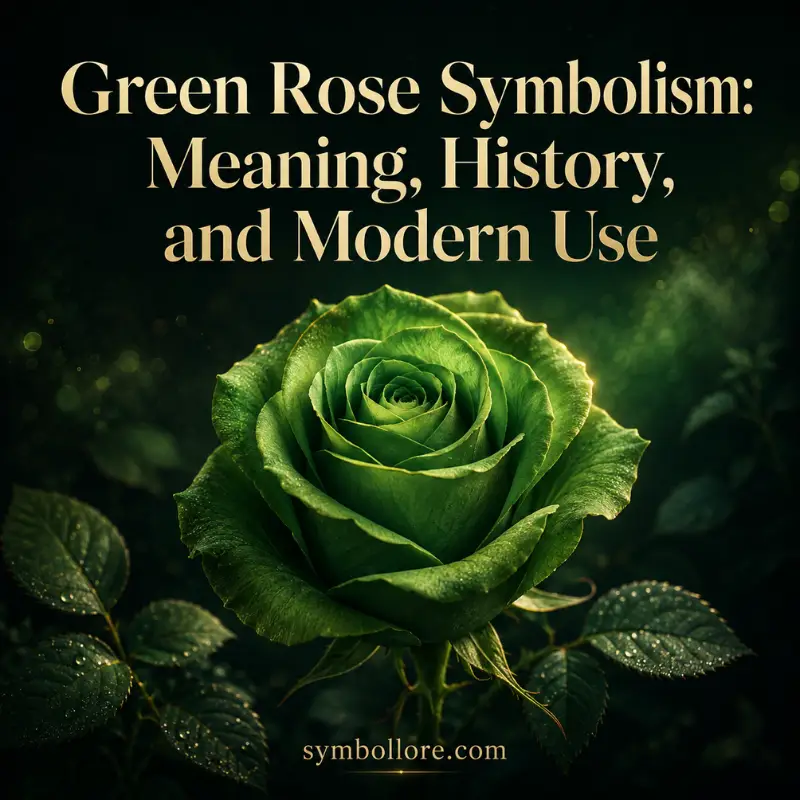
The central green rose meaning is life moving forward. The green color evokes leaves, spring growth, and living landscapes. Meanwhile, the rose contributes beauty, affection, value, and emotional importance. Together, they create a symbol of something precious that continues to develop.
Its strongest meanings include hope, renewal, emotional balance, prosperity, and positive change. In contemporary spiritual use, the flower may also represent inner restoration or an open heart. However, that spiritual meaning is a personal or modern interpretation, not one universal religious teaching.
This combination makes the flower gentler than a red rose and less purely friendly than a yellow one. It can honor affection without making intense romantic claims.
Why Green Roses Represent Growth and Renewal
Green roses represent growth because their color resembles healthy vegetation. Budding leaves, spring landscapes, and productive gardens all make green a natural visual shorthand for life and development. Roses then add emotional weight to that familiar association.
This interpretation also connects growth and renewal with patience. A garden does not flourish in one day. Therefore, the flower can represent steady progress after a setback, the beginning of a long project, or confidence in someone’s potential.
However, colors never carry one fixed definition. SymbolLore’s guide to
how context changes color meanings
shows why culture, shade, surrounding objects, and personal experience must guide the final reading. Green may signal health in one setting, money in another, and inexperience somewhere else.
Are Green Roses Natural?
Some green roses are natural cultivars, although their form and color vary. The best-known historic example is Rosa × odorata ‘Viridiflora.’ Its unusual bloom contains rows of green, leaf-like structures rather than the ordinary colored petals people expect.
Botanical sources describe its exact origin differently.
The New York Botanical Garden’s account of Viridiflora
calls it a mutation, or sport, of the pink ‘Old Blush’ rose. In contrast,
the Chicago Botanic Garden plant record
describes an 1840s hybrid involving Rosa chinensis and Rosa gigantea. Both agree that its green bloom consists of modified bracts or sepals.
Modern florists also sell pale chartreuse, cream-green, lime-edged, and mint-toned cultivars. Meanwhile, unusually vivid emerald roses may be dyed or preserved. Buyers should ask for the variety name and treatment method instead of assuming every green bloom developed its color naturally.
History and Victorian Flower Language
Roses carried symbolic meanings long before the green cultivar became a garden curiosity. They represented love, beauty, secrecy, devotion, mortality, and many other ideas across different places and periods. However, individual rose colors did not always carry today’s familiar definitions.
Floriography became especially fashionable in the nineteenth century.
The Smithsonian’s history of Victorian flower communication
explains that books such as Flora’s Lexicon helped readers interpret bouquets. Yet several glossaries circulated, so senders and recipients could assign different meanings to the same flower.
That limitation matters for the rare green rose. Its current links with prosperity, balance, and new life draw heavily from modern green associations rather than one universally accepted Victorian definition.
The history of Campanula and Victorian flower language
provides another example of why flower meanings must be tied to a source and period.
American folklore also links Viridiflora with Quaker abolitionists. According to the New York Botanical Garden, a tradition claims that planted green roses marked people associated with the Underground Railroad. This is compelling folklore, but it should not be presented as confirmed historical documentation.
In the United States, the rose has wider national importance.
Under 36 U.S.C. § 303,
the rose is the national floral emblem. The law applies to the rose generally and does not assign a special federal meaning to green varieties.
Love, Friendship, and Relationship Meanings
In love, a green rose suggests a bond that is growing, stabilizing, or beginning again. It can suit a new relationship that has potential or a long partnership entering a healthier phase. Because green feels calmer than red, the message emphasizes cooperation and development instead of desire.
For friends, the flower expresses encouragement, hope, and belief in future progress. It works well when someone is moving, graduating, changing careers, or rebuilding confidence.
Still, the sender should consider the relationship. A single unusual rose may seem romantic because it is still a rose. If the message is strictly platonic, add yellow flowers or a clear note such as, “Wishing you growth and success in your next chapter.”
Does a Green Rose Mean Jealousy or Envy?
A green rose can represent jealousy and envy, but that is not its most common modern gift meaning. The negative reading comes mainly from wider Western associations with green, including familiar expressions that connect the color with jealousy.
Context determines whether that meaning makes sense. A cheerful graduation bouquet strongly suggests growth. In contrast, a green rose used in a tense painting about rivalry may signal envy. Surrounding objects, expressions, words, and story events provide the evidence.
Therefore, do not assume that receiving green flowers is a hidden insult. Florists usually market them around renewal, balance, good fortune, and fresh starts. When misunderstanding is possible, a short card can make the intended message explicit.
Meanings of Mint, Lime, Sage, and Emerald Roses
Different shades adjust the flower’s mood, although these are modern visual conventions rather than strict historical codes.
- Mint green: freshness, gentleness, calm, and a quiet beginning
- Lime green: energy, youth, creativity, and noticeable change
- Sage green: stability, maturity, nature, and understated affection
- Emerald green: prosperity, confidence, luxury, and strong individuality
- Yellow-green: new growth, spring energy, or possible unease
- Cream-green: graceful renewal, balance, and soft wedding elegance
Lighting also changes how a bloom appears. A yellow rose with green edges may communicate warmth differently from a fully dyed emerald flower. Therefore, judge the entire arrangement rather than relying only on its color label.
When to Give Green Roses
Green roses suit milestones connected with progress and possibility. Good occasions include graduations, promotions, new jobs, business openings, housewarmings, creative launches, birthdays, and renewed commitments.
They can also offer encouragement after a difficult period. In that setting, the message should focus on hope and support, not guaranteed recovery. “Wishing you strength for the days ahead” is more thoughtful than promising that everything will quickly improve.
Use extra care around fertility, a new baby, pregnancy loss, or infertility. Although flower guides often connect green with fertility, that message can feel painful or intrusive. Give such a bouquet only when you understand the recipient’s circumstances and know the association will feel welcome.
Wedding Meaning and Color Pairings
In a wedding bouquet, green roses commonly represent a growing partnership, harmony, renewal, and a flourishing shared life. Their natural appearance also works with garden, botanical, minimalist, and woodland themes.
Other colors make the message more specific:
- Green and white: peaceful beginnings, sincerity, and simplicity
- Green and pink: gentle affection, care, and emotional growth
- Green and yellow: friendship, optimism, and shared success
- Green and purple: ambition, dignity, creativity, and abundance
- Green and red: passionate love that continues to develop
The arrangement’s style matters as much as its colors. Loose greenery creates an organic mood, while structured emerald blooms can feel formal and dramatic. Couples should select the interpretation that fits their relationship rather than following a rigid floral code.
Green Rose Symbolism in Dreams, Art, and Tattoos
A green rose dream often reflects ideas already connected with change, hope, affection, or comparison. A healthy opening bloom may represent personal progress. A damaged one could suggest neglected potential, while a rose surrounded by rivals may point toward jealousy. Dreams do not predict future events, so the dreamer’s feelings and current situation offer the strongest clues.
In art, the flower can show unnatural beauty, renewal, wealth, environmental concern, or emotional contradiction. Its rarity also makes it useful for portraying individuality.
A green rose tattoo commonly represents growth through love, a fresh start, resilience, or a relationship that survived change. A butterfly can strengthen the transformation theme; SymbolLore’s guide to
butterfly and rose tattoo combinations
explains how paired elements reshape a design’s message. Names, dates, thorns, skulls, or geometric forms can make the symbolism more personal.
How to Interpret the Meaning in Context
Use four questions before deciding what a green rose communicates:
- Where does it appear? A wedding, dream, tattoo, painting, and sympathy bouquet create different expectations.
- What condition is it in? A fresh bloom suggests potential, while a wilted one may suggest lost growth.
- What surrounds it? Colors, words, people, and other symbols can strengthen or reverse a meaning.
- Who chose it and why? Personal experience may matter more than a general flower guide.
This method prevents symbolism from becoming a rigid dictionary. Begin with renewal, harmony, and growth as the likely meanings. Then use visible context to confirm, refine, or reject that first interpretation.
FAQs
Spiritually, a green rose often represents renewal, emotional balance, hope, inner growth, or restoration after hardship. Some people also connect green with the heart and compassionate relationships. These are modern or tradition-specific beliefs rather than one meaning shared by every religion or spiritual community.
Both exist. Viridiflora is a genuine historic green cultivar with modified leaf-like floral structures, while several florist cultivars produce pale chartreuse or cream-green tones. Bright emerald roses may be dyed or preserved, so ask the seller for the variety and treatment method.
A green rose can be romantic, especially when it represents a developing relationship, reconciliation, or a partnership entering a new phase. However, it communicates less passion than a red rose. A note or a combination with pink or red flowers can clarify romantic intent.
Green roses commonly represent prosperity, hope, and favorable new beginnings, so people may use them as good-luck gifts. However, the flower does not guarantee success. Its role is symbolic: it expresses encouragement for a new job, home, business, relationship, or personal goal.
A green rose tattoo usually symbolizes growth, resilience, renewal, individuality, or love that continues to develop. Thorns can add hardship or protection, while butterflies emphasize transformation. The wearer’s experience, chosen shade, and surrounding design ultimately determine its personal meaning.
Receiving a green rose usually means someone wishes you growth, hope, balance, prosperity, or success in a new chapter. It may also express calm affection. Jealousy is possible in a deliberately negative context, but recipients should not assume that meaning without supporting words or circumstances.
Conclusion
Green rose symbolism centers on renewal, steady growth, harmony, hope, and abundance. The rose adds affection and value, while green connects the message with life, change, and future possibility.
Still, no interpretation works everywhere. Jealousy may matter in a negative setting, while a wedding or graduation bouquet clearly favors growth and new beginnings. Check the shade, occasion, accompanying flowers, and giver’s intention before deciding what the bloom communicates. In most modern settings, its message is hopeful: something meaningful is ready to grow.


