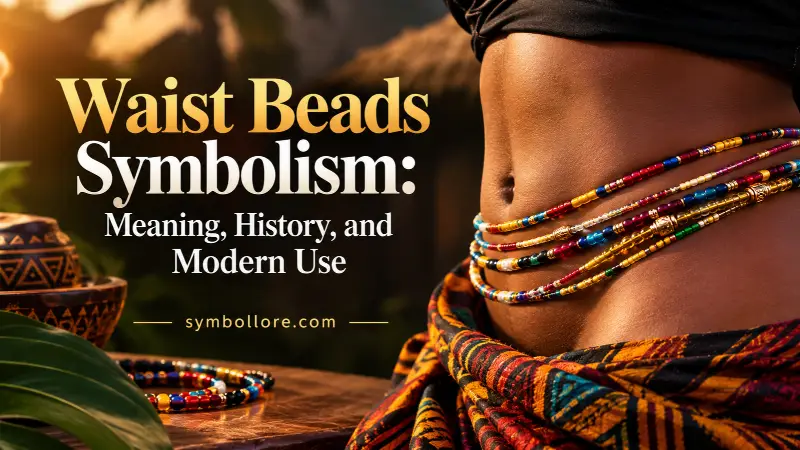
Waist beads are more than beautiful accessories. Across several African cultures, these colorful strands hold meanings connected to femininity, beauty, identity, and important life stages.
Today, people also wear them to celebrate their bodies, honor their heritage, or express personal beliefs.
But what does waist beads symbolism actually mean? Does each color carry a special message? And are waist beads connected to spirituality, fertility, or protection?
This guide explores their cultural history, traditional meanings, popular color associations, and modern uses. It also explains why waist beads can mean different things to different people.
Quick Answer: What Do Waist Beads Symbolize?
Waist beads symbolize femininity, cultural identity, beauty, maturity, and personal expression. In some African traditions, they also represent fertility, marriage, spiritual protection, or important life changes. Their exact meaning depends on the community, occasion, and person wearing them. Today, many people choose waist beads to celebrate body confidence, ancestral connections, and personal intentions.
Key Takeaways
- Cultural heritage: Waist beads connect many wearers to African traditions, family customs, and cultural identity.
- Femininity and maturity: Certain communities use beads to celebrate womanhood and significant life stages.
- Spiritual meaning: Some traditions associate beads with protection, blessings, fertility, and personal intentions.
- Color symbolism: Bead colors can carry special meanings, but no universal African color system exists.
- Modern expression: People also wear waist beads for beauty, body awareness, confidence, and fashion.
What Are Waist Beads?
Waist beads are decorative strands of small beads worn around the waist, stomach, or hips. They usually feature glass, plastic, stone, or other materials threaded onto string, elastic, or wire.
These accessories have a long history in parts of Africa, especially West Africa.
In Ghana, several communities have traditional names for waist beads. For example, Akan speakers may call them toma or related regional forms, while Ga and Ewe communities use other local terms.
Their appearance also varies. Some strands have bright colors and large beads. Others feature tiny glass beads arranged in simple patterns.
Traditional waist beads often sit beneath clothing. However, modern wearers may display them above pants, skirts, or swimwear.
Unlike ordinary necklaces or bracelets, waist beads rest around a part of the body that carries cultural meaning in many societies.
For this reason, they can represent much more than decoration.
Waist Beads Symbolism and Its Cultural Importance
The meaning of waist beads depends on the culture and the wearer. Still, several important themes appear across documented traditions.
Femininity and Womanhood
Waist beads are closely associated with femininity in several West African communities.
They may represent beauty, maturity, and pride in one’s body. In some traditions, girls receive special beads during ceremonies that mark their transition into adulthood.
These customs can recognize a new stage of life and changing social responsibilities.
However, not every woman wears waist beads, and their meaning is not identical across communities.
Fertility and Motherhood
Some traditional beliefs connect waist beads with fertility, pregnancy, and motherhood.
Within these customs, beads may express hopes for children or celebrate the reproductive role of women.
These meanings are symbolic and cultural. Wearing waist beads does not medically improve fertility or increase the chances of pregnancy.
Today, someone might choose beads to honor motherhood or remember a personal journey involving family.
Beauty and Body Confidence
Beauty is another important part of waist beads symbolism.
In several traditional settings, beads draw attention to the waist and hips. They may also reflect local ideas about elegance and physical attractiveness.
Modern wearers often give this meaning a more personal form.
Instead of trying to meet one beauty standard, they may use waist beads to appreciate their bodies as they are.
The beads become a reminder that beauty does not require a particular waist size.
Cultural Identity and Ancestral Connection
For some people of African descent, waist beads provide a visible or private connection to family heritage.
A strand may remind someone of a parent, grandparent, homeland, or cultural celebration.
African Americans and other members of the African diaspora may also wear waist beads to explore or celebrate connections to African traditions.
However, wearing beads alone does not establish ancestry or membership in a particular cultural group.
Spiritual Protection and Personal Beliefs
In certain traditional religious and spiritual contexts, beads are associated with protection, blessings, or sacred responsibilities.
A person might wear a particular strand because of family customs or spiritual beliefs.
Modern spiritual practices sometimes connect waist beads with positive energy, intentions, or emotional healing.
These interpretations can carry personal meaning. Still, supernatural protection and healing effects have not been scientifically established.
African Waist Beads: History and Cultural Traditions
Waist beads have deep roots in several African societies. Their history is diverse rather than one shared tradition with a single origin.
Waist Beads in Ghanaian Culture
In Ghana, beads play important roles in personal decoration, social identity, and cultural ceremonies.
Among some Akan, Ga, Ewe, and Krobo communities, waist beads may appear during important stages of life.
These include childhood, puberty, marriage, and other traditional occasions.
Some families place beads around a child’s waist as part of a customary practice. Historically, certain strands also helped caregivers notice physical growth.
In some Ghanaian settings, valuable beads are associated with wealth, beauty, and social standing.
However, these uses vary by community and family.
Waist Beads in Nigerian Culture
Nigeria also has important waist bead traditions.
Among Yoruba communities, waist beads have historically served as body adornments and markers of physical development.
They have appeared in ceremonies and practices connected to womanhood.
Research on Nigerian women’s experiences shows that waist beads can also express personal identity, beauty, and social meaning.
Today, many Nigerian women wear beads as part of fashion or to maintain a connection with tradition.
The symbolism can be personal, cultural, or both.
Waist Beads and Coming-of-Age Ceremonies
Some African communities include beads in ceremonies that recognize a girl’s transition into womanhood.
For example, beads have played a role in certain Ghanaian puberty rites.
These ceremonies may involve special clothing, public celebrations, family guidance, and traditional ornaments.
In these settings, beads can communicate maturity or a new social position.
Not all African communities practice these ceremonies. Even within a single culture, customs can change over time.
Waist Beads in the African Diaspora
Waist beads are also worn by people of African descent in the United States, the Caribbean, and elsewhere.
For some, they represent cultural pride and a renewed interest in ancestral traditions.
Others appreciate their appearance or wear them for personal reasons.
Modern designers frequently combine traditional beadwork with contemporary colors, charms, and adjustable designs.
As a result, waist beads continue to evolve while maintaining connections to African cultural history.
Waist Bead Colors and Their Symbolic Meanings
Color is one of the most popular parts of waist beads symbolism.
Some colors have meanings within documented cultural settings. Others reflect modern spiritual interpretations or personal preferences.
The following table shows common contemporary associations, not fixed meanings shared by every African culture.
| Waist Bead Color | Common Symbolic Association |
|---|---|
| Red | Passion, courage, love, vitality |
| White | Peace, purity, renewal |
| Blue | Calmness, trust, loyalty |
| Green | Growth, nature, prosperity |
| Yellow | Happiness, optimism, confidence |
| Gold | Wealth, success, abundance |
| Black | Strength, protection, power |
| Purple | Wisdom, dignity, spirituality |
| Pink | Affection, tenderness, self-love |
| Orange | Creativity, energy, enthusiasm |
| Brown | Stability, grounding, connection to earth |
| Clear | Clarity, simplicity, fresh beginnings |
A color’s traditional meaning can differ widely between communities. The chart should not replace guidance from someone familiar with a particular cultural tradition.
Red Waist Beads Meaning
Red waist beads commonly represent love, passion, strength, and courage in modern interpretations.
Someone may choose red beads to celebrate confidence or personal determination.
However, red can also have ceremonial meanings that differ from these modern associations.
White Waist Beads Meaning
White waist beads are often linked to peace, purity, and renewal.
In personal spiritual practices, someone may associate them with a fresh beginning or a desire for calm.
Their meaning in a specific African religious tradition may be different.
Blue Waist Beads Meaning
Blue beads may symbolize loyalty, calmness, or truth.
A person might choose blue waist beads as a personal reminder to communicate clearly or remain emotionally balanced.
These associations are popular interpretations rather than universal cultural rules.
Green Waist Beads Meaning
Green waist beads frequently represent growth, nature, and prosperity.
Some wearers select green to mark a new goal, a life change, or a period of personal development.
In certain spiritual interpretations, green also connects with renewal and hope.
Black Waist Beads Meaning
Black waist beads can symbolize strength, power, or protection.
Some traditions also associate dark-colored beads with spiritual or ceremonial significance.
Black does not automatically represent bad luck or negative energy.
Context matters more than color alone.
Gold and Purple Waist Beads Meaning
Gold is often associated with wealth, success, and dignity.
Purple can suggest wisdom, spirituality, or a sense of personal importance.
In Ghanaian bead traditions, colors and materials may also communicate social status or ceremonial roles.
Therefore, the value of a strand may depend on its cultural context, craftsmanship, and materials.
Spiritual Meaning of Waist Beads
Waist beads can carry spiritual significance, but their meaning is not the same for every wearer.
Traditional religious practices, family beliefs, and modern spiritual movements may interpret them differently.
Protection and Spiritual Strength
Some people wear waist beads because they believe the beads offer protection or symbolize spiritual strength.
These beliefs may come from particular cultural or religious traditions.
Others use beads as a reminder of personal boundaries and inner resilience.
There is no reliable scientific evidence that waist beads themselves prevent harm or negative spiritual experiences.
Manifestation and Personal Intentions
In contemporary spirituality, some wearers connect waist beads with manifestation.
They may choose a color while setting an intention related to love, confidence, or personal growth.
For example, someone might select green beads as a reminder to focus on a new beginning.
The beads do not guarantee that an intention will come true. Instead, they can serve as a meaningful personal symbol.
Self-Love and Emotional Awareness
For many modern wearers, waist beads support a sense of connection with their bodies.
The feeling of the beads against the skin may remind them to notice their posture, comfort, or physical changes.
Some people use this awareness as part of a personal self-care routine.
This symbolic use should not be confused with a proven treatment for emotional or medical conditions.
Connection to Ancestors
Waist beads can also represent family memory and cultural continuity.
A person may wear a strand gifted by a relative or made by an artisan from their family’s homeland.
Its meaning comes from the relationship, history, or tradition connected with that piece.
Such personal connections are often more significant than a general color description.
How to Choose and Wear Waist Beads
Choosing waist beads begins with understanding what you want them to represent.
Some people follow a family tradition. Others prefer a design that reflects their personality or style.
Step 1: Decide What the Beads Mean to You
Think about why you want to wear waist beads.
Your reason might include cultural pride, personal expression, beauty, or a meaningful life event.
You do not need to assign a spiritual meaning to every strand.
Step 2: Choose a Color and Material
Select colors that appeal to you or reflect a personal intention.
Glass beads offer a traditional appearance, while other materials may provide different textures or styles.
If you are following a cultural practice, learn about the materials and colors used in that tradition.
Step 3: Find a Comfortable Position
Waist beads can sit at the natural waist, lower abdomen, or hips.
The right position depends on your preference and how you plan to wear them.
Make sure the strand does not dig into your skin or restrict normal movement.
Step 4: Secure the Beads
Some waist beads use a permanent string that is tied to fit. Others have adjustable closures or elastic.
Follow the maker’s instructions for fastening your strand.
A comfortable fit should allow everyday movement without excessive pressure.
Step 5: Care for Your Beads
Avoid pulling or twisting delicate strands.
Keep beads clean and dry according to their material and construction.
If you notice skin irritation, discomfort, or a broken strand, remove the beads and check their condition.
Examples of Waist Beads Symbolism in Everyday Life
Waist beads can tell different stories depending on who wears them.
Example 1: Celebrating Cultural Heritage
A Ghanaian American woman wears waist beads made by an artisan from her family’s community.
For her, the beads represent cultural pride and a connection with previous generations.
The meaning comes from her family history rather than the color alone.
Example 2: Marking a Personal Milestone
Someone chooses a new strand after graduating from college.
The beads represent independence and the beginning of a new chapter.
This is a personal interpretation, not a claim about traditional ceremonies.
Example 3: Practicing Body Acceptance
A wearer uses comfortable waist beads as a reminder to appreciate their body.
The beads become part of a personal routine focused on confidence and self-respect.
Their purpose is not to measure beauty or personal worth.
Example 4: Honoring a Family Tradition
A mother gives her adult daughter a strand of beads connected to a family custom.
The gift may represent love, guidance, and continuity.
Its significance depends on the meaning that the family attaches to the practice.
Benefits and Modern Uses of Waist Beads
Waist beads continue to serve both traditional and contemporary purposes.
Personal decoration: They provide a colorful way to express individual style.
Cultural connection: Some wearers use beads to maintain or celebrate family traditions.
Body awareness: A non-stretch strand may fit differently when the waist changes in size.
Meaningful gifts: Beads can mark birthdays, milestones, or important personal experiences.
Personal symbolism: Colors and designs may represent individual goals, memories, or beliefs.
Although beads can make some body changes noticeable, they are not reliable medical measuring tools. Their fit may change with posture, bloating, meals, or the location of the strand.
They also do not directly cause weight loss, reshape the body, or improve fertility.
Waist Beads vs. Belly Chains: What’s the Difference?
Waist beads and belly chains can look similar, but they are not always used in the same way.
| Feature | Waist Beads | Belly Chains |
|---|---|---|
| Typical material | Small beads on string, wire, or elastic | Metal chains or linked ornaments |
| Cultural background | Important traditions in several African communities | Found in various jewelry and fashion traditions |
| Main purposes | Adornment, cultural expression, personal symbolism | Often fashion and decoration |
| Fit | Tied, adjustable, or elastic | Usually clasped or adjustable |
| Visibility | Often hidden or partly displayed | Frequently worn visibly |
| Symbolic meaning | May carry cultural, spiritual, or personal meaning | Depends on cultural context and personal use |
Neither accessory has one fixed meaning. A belly chain may have cultural significance, while waist beads may be worn simply because someone likes their appearance.
Common Misconceptions About Waist Beads Symbolism
Myth 1: Waist Beads Are Only for Married Women
Waist beads are not exclusively for married women.
They have been worn by children, unmarried women, and married women in different cultural settings.
Age and marital status may affect their meaning within a particular tradition.
Myth 2: Every Waist Bead Color Has a Universal Meaning
No single color chart represents all African waist bead traditions.
Local customs, ceremonial practices, and individual beliefs influence color symbolism.
A color that represents one idea in a modern guide may mean something else in a specific community.
Myth 3: Waist Beads Are Always Sexual
Waist beads can express intimacy and attraction in certain traditions, but that is only one part of their history.
They also represent childhood, beauty, family heritage, maturity, and cultural belonging.
Reducing their purpose to sexual attraction overlooks these broader meanings.
Myth 4: Waist Beads Automatically Bring Good Luck
Some wearers believe beads provide protection or attract blessings.
However, these are spiritual interpretations rather than guaranteed effects.
The meaning of a strand does not establish supernatural powers.
Myth 5: Waist Beads Make Your Waist Smaller
Waist beads do not physically shrink the waist or burn body fat.
A snug strand may help a wearer notice changes in fit, but it cannot cause weight loss.
Comfort and personal preference should guide how the beads are worn.
Important Cultural Insights About Waist Beads
Waist beads symbolism becomes easier to understand when we consider three important facts.
First, Africa contains many distinct cultures, languages, and customs. It would be inaccurate to describe one waist bead tradition as the meaning of all African waist beads.
Second, cultural practices change over time. Traditional ceremonies, modern fashion, and individual spirituality can all influence how people understand these accessories.
Third, the person wearing a strand may give it a meaning that differs from its historical uses.
For example, a particular set of beads may have a recognized role in a Ghanaian ceremony. Another strand, created by a modern designer, may symbolize personal growth or confidence.
Both meanings can matter, but they should not be treated as historically identical.
Cultural Appreciation and Respectful Wearing
People from different backgrounds may choose to wear waist beads.
However, respect for their origins matters.
Learning about the tradition, supporting African artisans, and avoiding false claims about cultural meanings are thoughtful ways to appreciate these accessories.
It is also important to recognize that opinions about cultural appropriation differ.
Some makers welcome customers from all backgrounds. Others place greater importance on preserving specific traditional uses.
Listening to people from the communities involved helps create a more respectful understanding.
People Also Ask About Waist Beads Symbolism
What does it mean when a woman wears waist beads?
A woman may wear waist beads for cultural heritage, beauty, femininity, spirituality, or personal expression. In some traditions, they also mark maturity or important life events. Her reasons cannot be determined from appearance alone.
What do waist beads symbolize in African culture?
In several African communities, waist beads symbolize beauty, cultural identity, womanhood, and life stages. Some traditions also connect them with fertility, marriage, or spiritual protection. Meanings differ across countries and ethnic groups.
Do waist beads have spiritual powers?
Some people believe certain waist beads offer protection, blessings, or spiritual strength. These are cultural or religious beliefs. No scientific evidence confirms that the beads themselves produce supernatural effects.
Why do women wear waist beads under their clothes?
Some women wear waist beads privately because of tradition, comfort, personal preference, or intimacy. In certain cultures, hidden beads carry special social meaning. Other wearers simply enjoy having jewelry that remains personal.
Frequently Asked Questions About Waist Beads
Yes. Many contemporary designers make waist beads for people of different backgrounds, genders, and body types. However, particular communities may have their own customs concerning who wears certain designs. Learning about their cultural origins and respecting ceremonial traditions is important.
A broken strand usually means the string, clasp, or another part has worn out or experienced too much tension. Some people attach spiritual or personal meaning to this event. However, there is no universal tradition that treats broken waist beads as a sign of bad luck or a specific future event.
Many people wear comfortable waist beads while sleeping. Whether this works depends on the design, materials, and fit. Tight or damaged strands may cause discomfort, and loose beads can create safety concerns for young children. Remove them if they cause irritation or catch on clothing or bedding.
There is no universal number of strands. Some people wear one, while others prefer several layers. Traditional practices may have specific customs, but modern fashion generally allows personal choice. Comfort and the meaning of the beads should guide your decision.
Waist beads are not automatically religious. They can function as cultural jewelry, fashion accessories, or spiritual objects, depending on the wearer and tradition. Some people associate them with protection or blessings. Others wear them without assigning any religious meaning.
Waist beads do not directly cause weight loss. A fixed-size strand may become tighter or looser as someone’s waist measurement changes. However, this can happen because of several factors, including bloating and posture. Waist beads are not a substitute for accurate health measurements.
Black, blue, or white may be associated with protection in certain traditional or modern interpretations. However, no universal color guarantees spiritual safety. If you want beads for a cultural or religious purpose, seek guidance from someone familiar with that specific tradition.
No. Some traditions favor wearing waist beads beneath clothing, while modern wearers may display them openly. Privacy can have cultural or personal significance, but there is no universal rule requiring everyone to hide their beads.
Conclusion: The Meaning Behind Waist Beads
Waist beads symbolism reflects a rich combination of African cultural heritage, femininity, beauty, identity, and personal meaning.
In some traditions, the beads mark important life stages or carry spiritual significance. Today, they can also represent body confidence, family connections, and individual expression.
The most important thing to remember is that waist beads do not have one universal meaning. Their significance comes from the culture, history, beliefs, and personal experiences connected to them.
Understanding those differences helps us appreciate waist beads as both beautiful accessories and meaningful cultural objects.