
Frog symbolism most often represents transformation, renewal, fertility, rain, adaptability, and good fortune. These meanings grow from the animal’s dramatic life cycle, close relationship with water, seasonal calls, and large numbers of eggs. However, no single meaning belongs to every culture or every encounter.
Ancient Egyptian amulets, Japanese wordplay, biblical passages, Indigenous traditions, and modern spiritual writing use frogs differently. A careful reading therefore separates documented cultural meanings from personal belief, dream interpretation, and modern metaphor.
Quick Answer
Frog symbolism mainly points to change, renewal, fertility, rain, and abundance. Metamorphosis supports the idea of personal transformation, while life near water suggests cleansing and emotional flow. Still, a frog is not a universal omen. Its meaning depends on the culture, setting, artwork, story, or personal experience in which it appears.
TL;DR
- Metamorphosis makes the frog a strong symbol of life-changing growth.
- Water and seasonal calls connect frogs with renewal and rain.
- Ancient Egypt linked frogs with life, birth, and fertility.
- Japanese frog charms can express safe return and good fortune.
- Biblical frog imagery often carries warning rather than luck.
- Dreams and sightings need personal context, not fixed predictions.
Frog Meanings at a Glance
| Context or Feature | Common Meaning | Important Distinction |
|---|---|---|
| Egg-to-adult life cycle | Transformation | Not every species follows the same life cycle. |
| Water and wetlands | Renewal and cleansing | This is symbolic, not a scientific message. |
| Seasonal calling | Rain and return | Meaning varies by climate and tradition. |
| Many eggs | Fertility and abundance | A cultural association, not a personal prediction. |
| Leaping | Courage and progress | Direction depends on the surrounding story. |
| Home or doorstep sighting | Change or good fortune | The frog may simply seek food, shade, or moisture. |
| Biblical setting | Plague or spiritual warning | This differs from modern positive interpretations. |
| Sensitive skin | Environmental awareness | This meaning has a real ecological foundation. |
What Does Frog Symbolism Mean?
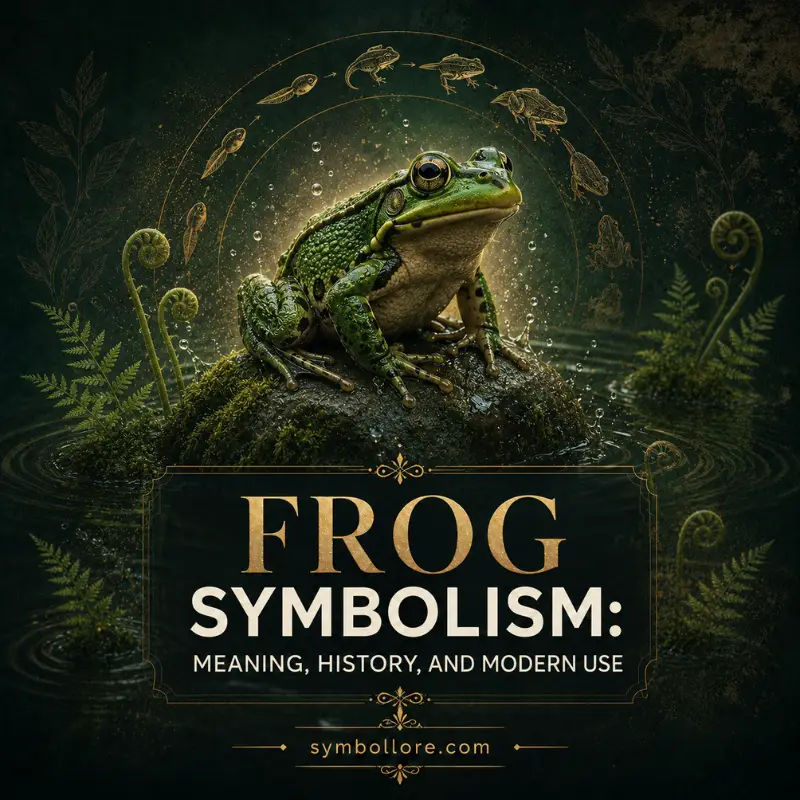
At its broadest, frog symbolism describes life moving between stages, places, and conditions. A frog may begin as an aquatic larva and later live across water and land. That visible shift makes the animal a natural metaphor for adaptation, possibility, and a new identity.
The frog spiritual meaning is usually positive in modern writing, yet that tone is not universal. Some traditions connect frogs with birth or good luck, while others place them in stories about plague, danger, greed, or witchcraft. The strongest interpretation starts with a specific source instead of treating every meaning as one ancient belief.
Why Transformation and Metamorphosis Lead the Meaning
Transformation is the clearest modern meaning because many frogs develop from eggs into tadpoles and then adults. During metamorphosis, the body changes dramatically rather than simply growing larger.
The University of Arizona’s overview of frog life-cycle research
explains that tadpole tissues and feeding structures reorganize as adult features develop.
That biology gives the metaphor a firm foundation: change may require a new form, new habits, and a different environment.
Similar imagery appears in the blue morpho butterfly’s transformation symbolism,
although a frog adds movement between water and land. Still, some frog species develop directly without a free-swimming tadpole stage, so the familiar sequence is common rather than universal.
Water Symbolism: Renewal, Rain, Fertility, and Abundance
Water symbolism helps explain why frogs often represent renewal, cleansing, and emotional movement. Many species depend on ponds, streams, wetlands, or seasonal pools for breeding. Their calls may become especially noticeable during wet periods, so communities have long connected frogs with rain and the return of productive seasons.
Fertility and abundance also reflect visible reproduction, including masses of eggs in suitable habitat. These links offer cultural explanations, not guarantees about pregnancy, money, or future events. Readers interested in another water-based animal can compare the
blue crab’s water-linked meanings,
which emphasize protection and place more than rebirth.
Frog Symbolism in Ancient Egypt: Heqet and Life
Ancient Egyptian evidence gives the frog a documented connection with life and birth.
The British Museum identifies Heket, also spelled Heqet,
as a fertility goddess represented by a frog. The annual Nile cycle and the appearance of frogs around wet ground helped make the animal a fitting image of generation and renewed life.
Material objects support this history.
The Metropolitan Museum of Art catalogs a small
New Kingdom frog amulet dated about 1550–1080 BCE.
Such an object proves that frog imagery had a real place in Egyptian protective material culture, although one amulet cannot define every owner’s private belief.
Frog Meanings in Japan, China, and Indigenous Traditions
In Japan, kaeru can mean “frog” and also sounds like a form of “to return.” That wordplay supports charms associated with safe travel, returning home, and the return of money.
The Seattle Art Museum’s explanation of a Kyoto frog charm
documents this popular modern use without claiming that every Japanese person shares it.
Chinese imagery often features a three-legged money toad linked with wealth; it should not be flattened into a universal “Asian frog” belief. Likewise, Indigenous meanings differ by nation, family, and artistic tradition. In some Northwest Coast art contexts, frog imagery relates to communication or movement between land and water. Writers should name the community and source rather than use “Native American meaning” as one category.
Frogs in Biblical and European Traditions
Biblical frog imagery often has a negative setting. In Exodus 8, frogs overrun Egypt as part of a plague narrative. Revelation 16:13 later compares three unclean spirits to frogs. Therefore, “frog in the Bible” does not automatically mean renewal, wealth, or a favorable sign.
European folklore adds further contrast. Frogs and toads can appear beside poison, witchcraft, marshes, or unsettling transformation. Yet fairy tales such as the Frog Prince use an unattractive form to conceal a changed identity. Together, these traditions show why the same animal may suggest warning, hidden worth, or release from enchantment.
Frog Spirit Animal and Frog Totem as Modern Meanings
A frog spirit animal commonly represents adaptability, emotional release, intuition, and growth through change. People may use the image as a prompt to leave a stagnant situation or adjust to a new stage. That practice can support reflection, but it does not prove that an animal encounter delivers a supernatural instruction.
The phrase frog totem needs more care. “Totem” comes from specific Indigenous cultural contexts, yet popular wellness writing often uses it as a generic personality label. When no community tradition is involved, “personal symbol” or “animal guide” is usually clearer and more respectful. The meaning should remain an invitation to reflect, not a fixed description of someone’s character.
Frog Dream Meaning and Real-Life Encounters
Frog dream meaning depends on action, emotion, and personal memory. A frog leaving water may reflect a transition, while an injured frog might express concern about vulnerability or habitat. However, dreams do not use a proven universal dictionary. A recent pond visit, story, photograph, or fear can shape the image as much as spiritual belief.
Use the same care with a frog at the door or inside a house. Some people read the visit as luck, cleansing, or change. In practical terms, the animal may be following insects or seeking cool moisture. Notice what happened, protect the frog from pets or chemicals, and let personal meaning remain personal.
Frog Tattoo Meaning, Art, and Popular Culture
Frog tattoo meaning often centers on growth, survival, humor, luck, or love of wetlands. A tadpole-to-adult design highlights change, while a frog beside rain or lotus imagery can emphasize renewal. Egyptian-style amulets, Japanese charms, and Northwest Coast designs carry distinct cultural histories, so artists should research them before borrowing sacred or community-specific forms.
Modern popular culture adds new associations. Kermit the Frog may suggest kindness, awkward humor, creativity, or childhood memory. Pepe the Frog has a complicated internet history and can carry political or extremist associations in some settings, even though the original comic character began differently. Context therefore matters in public-facing art, clothing, and logos.
A Grounded Way to Interpret a Frog Symbol
A useful interpretation begins with evidence and then makes room for personal meaning. This approach prevents a random online list from overriding culture, context, or common sense.
- Identify the setting: nature, dream, scripture, museum object, tattoo, or story.
- Observe the real feature: change, water, calling, jumping, color, or vulnerability.
- Check the cultural source and name the specific tradition when possible.
- Separate documented history from modern spiritual interpretation.
- Ask what the frog means in your experience without predicting an outcome.
This framework also works for other life-cycle symbols, including the cecropia moth’s pattern of hidden change. It keeps symbolism thoughtful while avoiding claims that nature guarantees luck, wealth, pregnancy, or disaster.
The Frog as an Environmental Indicator
The frog’s most urgent modern meaning may be ecological. Frogs have permeable skin and often depend on both aquatic and land habitats. Consequently, pollution, disease, habitat change, and shifts in water or temperature can affect them quickly.
The U.S. Geological Survey explains that amphibians can act as an
early-warning environmental indicator.
Its Amphibian Research and Monitoring Initiative has tracked U.S. populations since 2000. Therefore, frog imagery can represent not only personal renewal but also wetland care, scientific attention, and responsibility toward living ecosystems.
FAQs
Seeing a frog can symbolize good luck in some traditions, especially those linking it with rain, fertility, safe return, or prosperity. However, the sighting does not predict a favorable event. Local wildlife behavior, cultural background, and the observer’s own associations shape the meaning.
A green frog often suggests growth, nature, health, renewal, or prosperity in modern color symbolism. Yet color meanings are flexible, and a green frog is also simply a naturally colored animal. Its behavior, setting, and cultural source provide more useful clues than color alone.
Spiritually, some people interpret a doorstep frog as change, cleansing, protection, or good fortune entering the home. Practically, the frog may be attracted by porch insects, shade, or moisture. Both observations can coexist as long as the symbolic reading remains personal rather than predictive.
Frogs can represent fertility because many cultures noticed their eggs, breeding seasons, and connection with life-giving water. That symbol does not mean a sighting predicts pregnancy. Use it as a historical or personal association, not as medical information or a promise about conception.
Biblical passages give frogs negative associations in specific narratives. Exodus presents them as a plague, while Revelation compares unclean spirits to frogs. Those texts support themes of judgment or warning, but they do not establish a rule that every real frog encounter is a bad omen.
Frog and toad meanings often overlap because toads belong within the broader frog group. Popular symbolism tends to link smoother, water-associated frogs with renewal, while rougher, land-dwelling toads receive more associations with earth, poison, or witchcraft. These are cultural patterns, not biological rules.
Conclusion
Frog symbolism draws its strongest meanings from visible life: dramatic development, movement between water and land, seasonal calls, and ecological sensitivity. These traits support ideas of transformation, renewal, fertility, rain, adaptability, and environmental care.
Still, the symbol changes across Egyptian objects, Japanese wordplay, biblical narratives, Indigenous traditions, dreams, and modern art. The most reliable interpretation names its source, respects cultural differences, and avoids turning a meaningful image into a guaranteed prediction.