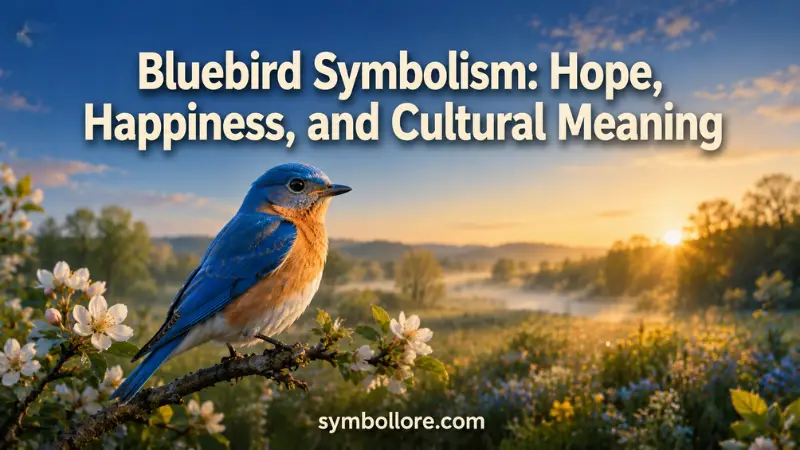
Bluebird symbolism most often expresses happiness, hope, renewal, and the promise of brighter days. The bird’s clear song, vivid color, and association with spring helped create these positive meanings across American folklore, art, and popular culture.
However, no single interpretation applies everywhere. A living bluebird, a mythic blue-colored bird, and a bluebird in a dream may carry different meanings. Cultural traditions also deserve individual treatment rather than being combined into one universal spiritual story.
Quick Answer
Bluebird symbolism primarily represents happiness, hope, peace, and renewal. Its bright plumage, gentle song, and seasonal presence encouraged its reputation as a welcome sign of better times. In specific cultural, literary, or personal settings, a bluebird may also suggest love, spiritual encouragement, freedom, remembrance, or the discovery that happiness already exists close to home.
Key Takeaways
- Bluebirds most commonly symbolize happiness, hope, peace, and fresh beginnings.
- Their song and spring activity helped shape these positive associations.
- Cultural meanings differ and should not be treated as universal.
- Scripture does not identify the bluebird as a unique biblical symbol.
- Sightings may inspire reflection but do not reliably predict future events.
- Modern conservation gives the bird a practical connection with recovery.
Bluebird Meanings at a Glance
| Context | Common Meaning | Important Distinction |
|---|---|---|
| Modern American culture | Happiness and optimism | The “bluebird of happiness” remains the dominant association. |
| Spring and nature | Renewal and fresh beginnings | Seasonal behavior helped create this meaning. |
| Spiritual reflection | Hope, guidance, or peace | This interpretation depends on personal belief. |
| Diné tradition | Dawn and rising to greet a new day | It belongs to a specific living cultural tradition. |
| Haudenosaunee stories | Spring’s return and winter’s defeat | Accounts and meanings vary among communities. |
| Chinese mythology | A divine messenger | The qingniao is not necessarily a North American bluebird. |
| Christianity | Providence, joy, or encouragement | These are later interpretations, not a named biblical doctrine. |
| Grief and memorials | Comfort, remembrance, continuing love | The meaning is emotional rather than proof of an afterlife message. |
| Tattoos and art | Hope, freedom, love, or resilience | Design details determine the intended meaning. |
What Does Bluebird Symbolism Mean?

The central meaning of the bluebird is hopeful happiness. Unlike excitement that disappears quickly, this happiness often suggests contentment, emotional lightness, and renewed trust after a difficult period. As a result, bluebird imagery can communicate the belief that joy may return even when circumstances have been hard.
The bird also represents peace, affection, and freedom. Its blue feathers encourage associations with the open sky, while its flight suggests release from emotional restriction. Still, these connections are symbolic interpretations rather than fixed laws. Context determines whether a bluebird stands for cheerful optimism, inner freedom, romantic love, or a quieter form of healing.
Why Bluebirds Represent Happiness and Renewal
Bluebirds gained positive meanings partly because of how people experience them in nature. Male Eastern Bluebirds have bright blue upperparts and warm reddish breasts. Their gentle calls and habit of perching in open, visible places also make encounters memorable.
The Cornell Lab of Ornithology’s Eastern Bluebird profile
describes their wavering calls, open-country behavior, and striking colors.
Seasonal activity strengthens the connection with renewal. In many northern areas, bluebirds become more noticeable as winter loosens its hold and breeding begins. Therefore, people naturally connect their color and song with longer days, new growth, and the return of life. The symbol grew from repeated observation, not color alone.
How the “Bluebird of Happiness” Became Famous
The “bluebird of happiness” is an old folk image, but literature helped establish it in modern English. Maurice Maeterlinck’s 1908 symbolist play The Blue Bird follows two children searching for a bird that represents happiness. After traveling through extraordinary realms, they return home and recognize that the happiness they sought was already near them.
The story gives the symbol an important layer: joy does not always wait in a distant or perfect future. It may become visible through gratitude, generosity, and a changed way of seeing ordinary life. Productions reached American audiences in the early twentieth century, and later songs, films, advertisements, and greeting cards strengthened the phrase. Consequently, Americans now understand a “bluebird of happiness” even without knowing the original play.
Bluebird Meaning in Indigenous Traditions
There is no single Native American bluebird meaning. Indigenous nations maintain distinct languages, histories, environments, and ceremonial practices, so their stories should not be merged into a general “tribal belief.”
In Diné tradition, the mountain bluebird appears in songs connected with dawn and the call to rise and greet the morning. The bird can therefore evoke awakening, discipline, hope, and the beginning of a new day.
Smithsonian Folkways’ collection of Navajo songs
helps preserve recordings within their proper musical context.
Other recorded traditions differ. In some Haudenosaunee accounts, bluebird song contributes to winter’s defeat and the arrival of spring. Cherokee traditions have associated the bird with wind or weather, while Pueblo stories may give it other roles. These examples show cultural variety, not a universal Indigenous definition.
Blue Birds in Chinese Mythology
In Chinese mythology, the qingniao is commonly understood as a blue, green, or azure bird associated with Xi Wangmu, the Queen Mother of the West. It may serve as her companion, food bearer, or messenger. Later poetry also connected the bird with communication, distant love, and news arriving from far away.
However, qing does not map perfectly onto the English color word “blue.” More importantly, the mythic qingniao should not automatically be identified as a North American member of the genus Sialia. The shared English phrase “blue bird” can hide major differences in species, language, and mythology. In this context, the messenger role is more historically relevant than the modern American idea of a cheerful backyard songbird.
Is Bluebird Symbolism Biblical?
The Bible does not name the Eastern, Western, or Mountain Bluebird as a special religious symbol. These species are native to the Americas and were not the birds known to biblical writers. Therefore, claims that Scripture specifically defines a bluebird as an angel, the Holy Spirit, or a divine message go beyond the text.
Christians may still use bluebird imagery as a personal symbol. Biblical passages describe birds as part of creation and sometimes use them to illustrate God’s care, refuge, or provision. A bluebird can consequently remind someone of joy, providence, or spiritual renewal. That is a modern devotional interpretation, though, not a formal biblical meaning or promise.
What Does Seeing a Bluebird Mean?
Seeing a bluebird usually means that a bluebird is feeding, resting, defending territory, or searching for a nesting site. The encounter may still feel meaningful, especially during a difficult decision or emotional transition. However, the bird’s appearance cannot objectively predict good news, romance, pregnancy, or a financial change.
A balanced interpretation uses three questions:
- What was happening naturally? Consider habitat, weather, food, and nesting season.
- What did you feel? Notice whether the encounter created calm, hope, grief, or courage.
- What meaning fits your values? Use the moment as reflection, not guaranteed prophecy.
This approach preserves the emotional power of the encounter without turning wildlife behavior into a fixed omen.
Bluebird Dream Meaning
A bluebird in a dream often represents hoped-for happiness, emotional freedom, or renewed confidence. Yet the dream’s mood and action matter more than a universal symbol list. A bird flying freely may reflect release, while a caged bird may suggest restricted joy or an unexpressed part of the self.
Personal associations matter as well. Someone who watched bluebirds with a grandparent may connect the dream with memory and family. Meanwhile, a person facing a new opportunity may experience it as encouragement. Instead of treating a dream as a prediction, consider what the bird was doing, how you felt, and which part of waking life shares that emotional pattern.
Bluebirds in Love, Grief, and Memorials
In relationships, two bluebirds may symbolize companionship, warmth, trust, or a shared home. Because bluebirds nest in cavities and cooperate in raising young, modern art sometimes uses a pair to represent partnership and family devotion. The symbolism remains human interpretation rather than a strict description of every bird’s behavior.
During grief, a bluebird can represent comfort, remembrance, or the possibility of feeling joy again without forgetting the person who died. Some mourners interpret an unexpected visit as a message from a loved one. That belief can offer real emotional comfort, but it cannot be verified as supernatural communication. A respectful reading allows the symbol to support memory without presenting private faith as universal fact.
Bluebird Tattoos, Art, and Modern Culture
A bluebird tattoo usually represents hope, happiness, freedom, resilience, or loyalty to a loved one. Its precise meaning depends on the surrounding design. Open wings emphasize liberation, spring flowers suggest renewal, and a paired design may represent love or friendship. A bluebird beside a name or date often serves as a memorial.
Artists also use the bird in less cheerful ways. A caged bluebird can represent hidden joy, emotional restraint, or innocence under pressure. In literature and music, a departing bird may express lost happiness, vulnerability, or the need to release someone. Therefore, posture, setting, and story can reverse or complicate the familiar positive meaning.
Conservation Added a Modern Meaning of Recovery
Bluebirds now carry a practical story of recovery as well as a symbolic one. During the twentieth century, habitat loss and competition for nesting cavities caused serious regional declines. Landowners, conservation groups, and bird enthusiasts responded by installing suitable nest boxes and maintaining bluebird trails.
The National Park Service’s Eastern Bluebird profile
identifies private nest-box programs as a major factor in the bird’s recovery across much of the eastern United States. That history gives renewal a concrete meaning. The return of bluebirds shows how ordinary people can help wildlife when they combine care with sound habitat management. Still, nest boxes require correct dimensions, safe placement, and regular monitoring.
FAQs
Many people treat a bluebird sighting as a positive sign because the bird traditionally represents happiness and hope. However, the encounter does not predict a specific event. It can instead serve as a personal reminder to notice progress, welcome change, or remain open to joy.
A bluebird near a window may see insects, a reflection, a perch, or a possible nesting area. Symbolically, some people connect the visit with hope or encouraging news. If the bird repeatedly strikes the glass, reduce reflections with effective exterior window markers to protect it.
A bluebird may represent an angel in personal art, memorial traditions, or modern spiritual belief. No scientific evidence proves that the bird carries supernatural messages, and the Bible does not assign it this role. Its comforting meaning depends on the observer’s faith and experience.
A pair commonly symbolizes love, partnership, loyalty, or the happiness of building a home together. This makes paired bluebirds popular in wedding art, anniversary gifts, and family tattoos. Flowers, nests, dates, and other details can make the intended message more specific.
Yes. True bluebirds belong to the thrush genus Sialia, while the Blue Jay belongs to the crow family. They differ in body shape, voice, behavior, and symbolic associations. A bluebird commonly represents gentle happiness, whereas a Blue Jay often suggests boldness, intelligence, protection, or assertive communication.
In art or dreams, a dead bluebird may symbolize lost innocence, disappointment, silenced happiness, or the end of an optimistic period. Finding one in real life is not a supernatural warning. Disease, predators, window collisions, vehicles, and harsh weather provide ordinary explanations.
Conclusion
Bluebird symbolism centers on happiness, hope, renewal, and the return of emotional light after hardship. Its meaning developed through the bird’s color, song, seasonal behavior, cultural stories, and the enduring “bluebird of happiness” tradition.
Still, every appearance is not a prediction, and every culture does not interpret the bird identically. The most grounded approach respects specific traditions, recognizes natural behavior, and treats personal meaning as personal. In that form, the bluebird remains a gentle but powerful reminder that joy can return—and may already be closer than it seems.