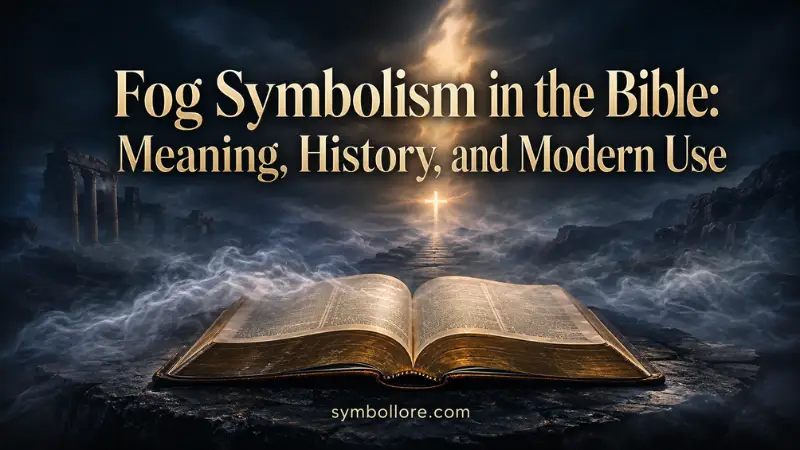
Fog symbolism in the Bible is not one fixed code. Depending on the passage and translation, fog-like language can point to human life’s brevity, limited sight, fading loyalty, judgment, or God’s hidden yet real presence. The key is to separate literal mist from metaphorical vapor and from the Bible’s richer cloud imagery.
That distinction matters because modern English versions do not always use the same weather word. Some say mist, vapor, cloud, or darkness where another says fog. Reading each verse in context produces a clearer meaning than treating every fog scene as a supernatural sign.
Quick Answer
Fog symbolism in the Bible mainly suggests the brevity and uncertainty of human life, especially in James 4:14. Related images can also express fading devotion, obscured sight, judgment, or divine presence, but those meanings come from separate passages. The Bible never gives fog one universal spiritual definition.
TL;DR
- James compares human life to mist that quickly disappears.
- Hosea uses morning moisture for love that does not last.
- Biblical clouds can reveal and conceal God’s presence.
- Fog wording varies across English Bible translations.
- No passage gives fog a fixed meaning in dreams.
Fog and Mist Meanings at a Glance
| Passage | Weather image | Meaning in context | Important limit |
|---|---|---|---|
| James 4:13–17 | Mist, vapor, or morning fog | Life is brief; plans remain subject to God | Not a ban on responsible planning |
| Hosea 6:4 | Morning cloud and early dew | Israel’s covenant love fades quickly | Describes unstable loyalty, not all fog |
| Genesis 2:6 | Mist, stream, or ground water | The earth receives water before the garden scene | Translation is debated; symbolism is not stated |
| Exodus 19 and 24 | Thick cloud and darkness | God is present, holy, and partly hidden | The text says cloud, not ordinary ground fog |
| Acts 13:11 | Mist and darkness | Elymas experiences temporary blindness as judgment | A narrative event, not a universal symbol |
| 2 Peter 2:17 | Mists driven by a storm | False teachers are empty and unstable | The image targets specific teachers |
| 1 Corinthians 13:12 | A dim mirror in most translations | Human knowledge is incomplete | “Fog” appears in a paraphrase, not the main image |
Does the Bible Actually Use the Word Fog?
The Bible can use the English word fog, but its appearance depends on the translation. The New Living Translation calls life “morning fog” in James 4:14. Other versions use mist, vapor, or smoke. Therefore, a word search in one translation cannot settle the whole question.
The modern weather term is also narrower than the biblical images.
The National Oceanic and Atmospheric Administration explains that fog is a cloud at ground level,
while clouds may form much higher. That physical link helps explain why readers connect the images. Still, fog symbolism in the Bible must come from a passage’s wording and purpose, not from weather science alone.
Fog, Mist, Vapor, and Cloud Are Not Identical
These four English words overlap, yet they do different work in Scripture. Mist in Scripture may describe suspended moisture, a brief life, obscured vision, or something unstable. Vapor stresses how quickly something appears and vanishes. By contrast, a cloud may carry rain, guide Israel, cover a holy place, or mark a divine appearance.
Translation adds another layer. Biblical Hebrew and Greek use several words that English versions render in different ways. As a result, readers should compare translations before building a symbolic meaning around one English term. A cloud at Mount Sinai and the vapor in James share a visual quality, but their contexts do not give them the same message.
James 4:14: Life Is Like Morning Fog
James 4:14 uses mist to expose human limits, not to make life sound worthless. In James 4:13–17, merchants speak as if they control where they will go, how long they will stay, and how much they will earn. James answers that confidence by comparing human life to moisture that appears briefly and then vanishes.
The image joins human mortality with uncertainty about tomorrow. Luther Seminary’s
Enter the Bible guide to James
notes that the passage challenges arrogant planning and redirects speech toward God’s will. Therefore, the lesson is not “never plan.” It is “plan humbly, act faithfully, and remember that time and outcomes are not fully yours to command.”
Hosea 6:4: Love That Fades Like Morning Mist
Hosea 6:4 uses a related image for unreliable devotion. God compares Ephraim’s and Judah’s covenant love to a morning cloud and early dew that quickly disappears. Here, the problem is not the shortness of life. It is the short life of their loyalty.
This passage adds an important distinction to biblical symbolism. The same vanishing quality can serve different points. In James, it describes human existence. In Hosea, it exposes devotion that appears but does not endure. Thus, morning moisture can call readers toward steady faithfulness, but that application should remain tied to Hosea’s message about Israel’s covenant relationship.
Cloud, Divine Presence, and Mount Sinai
Cloud imagery can express divine presence while also protecting divine mystery. In Exodus, the pillar of cloud guides Israel, and the cloud over Mount Sinai marks the place where God speaks. The image joins nearness and concealment: God is truly present, yet people do not control or fully see him.
The Yale Bible Study guide to Sinai
explains that Exodus 19:9 places God in a thick cloud so the people can hear the divine voice and trust Moses. That detail matters because revelation comes through hearing, not through a clear view of God. Calling this “fog” can help a modern reader picture obscured sight. However, the biblical text’s central image is cloud, so it should not be reduced to a general rule that fog always means God is nearby.
Obscurity and Judgment in Acts 13:11 and 2 Peter 2:17
Obscuring mist can carry a negative meaning when a passage clearly gives it one. In Acts 13:11, “mist and darkness” fall on Elymas after he opposes Paul’s message. He then searches for someone to lead him by the hand. The event works as temporary blindness and judgment within that narrative.
Meanwhile, 2 Peter 2:17 calls false teachers “mists driven by a storm” alongside waterless springs. The picture suggests emptiness, instability, and disappointed expectation. These texts support links between fog-like imagery, lost sight, and false guidance. Even so, they do not prove that every natural fog or unclear season signals punishment, deception, or spiritual attack.
Does 1 Corinthians 13:12 Really Mention Fog?
First Corinthians 13:12 supports the idea of limited knowledge, but fog is not its usual image. The Message paraphrase speaks of squinting through fog and mist.
However, the English Standard Version presents Paul’s image as seeing “in a mirror dimly”,
followed by the promise of seeing face to face.
This translation difference is easy to miss. Paul contrasts partial knowledge now with fuller knowledge later. Therefore, the verse can support a modern spiritual-fog metaphor about incomplete understanding. It should not be cited as proof that the original passage establishes literal fog as its symbol. The mirror remains the controlling picture in many close translations.
What Genesis 2:6 Says About Mist
Genesis 2:6 describes water rising from the earth before the garden is planted, but the exact physical picture is uncertain. English versions variously use mist, stream, springs, or water that “went up” from the land. The verse first explains how the ground received moisture; it does not provide a stated spiritual code.
Bible.org’s Genesis study note on the debated Hebrew wording
explains that the traditional “mist” translation may instead point to a flow or subterranean water source. Because Genesis 2:6 is a translation question, readers should not confidently turn it into proof of hidden revelation, the Holy Spirit, or personal guidance. Creation and provision may be reasonable themes, but the verse’s literal function comes first.
Does Fog in a Dream Have a Biblical Meaning?
The Bible gives no fixed rule for interpreting fog in a dream. Scripture contains important dreams, yet their meanings arise from each story and, at times, from an interpretation given within the text. It never supplies a dictionary in which fog always predicts confusion, danger, transition, or revelation.
A fog dream may still feel personally meaningful. For example, someone facing an uncertain choice might connect the dream with limited visibility. That is personal reflection, not biblical doctrine. A responsible approach avoids fear-based predictions, tests any spiritual claim against the wider teaching of Scripture, and seeks wise counsel before making a serious decision.
How to Apply Fog Symbolism Without Overreading It
The safest approach is to begin with the passage, then move toward personal application. This keeps biblical symbolism grounded while leaving room for reflection.
- Identify the actual word. Check whether the translation says fog, mist, vapor, cloud, or darkness.
- Read the surrounding passage. Note the speaker, audience, action, and stated result.
- Compare reliable translations. A paraphrase may sharpen an image without reproducing the source wording closely.
- Name the passage-specific meaning. Choose brevity, fading loyalty, hidden presence, judgment, or instability only when the context supports it.
- Apply the idea modestly. Use the image to encourage humility, patience, faithfulness, or discernment without claiming a private prophecy.
This method allows the biblical meaning of fog to remain useful without becoming superstition. It also respects the difference between interpretation and a present-day devotional analogy.
FAQs
No. Fog-like imagery can suggest limited sight, but context may point elsewhere. James 4:14 stresses life’s brevity, Hosea 6:4 exposes fading loyalty, and Exodus uses clouds around divine revelation. Confusion is one possible modern association, not a universal biblical meaning.
The Bible does not identify ordinary fog as a promised sign of the Holy Spirit. Certain cloud scenes mark God’s presence, guidance, or glory, but readers should not transfer that meaning automatically to local weather. A natural fog bank is not, by itself, a divine message.
Morning fog in James 4:14 represents the brief and uncertain span of human life. The surrounding verses correct boastful plans about future business. James calls people to make plans with humility and awareness of God’s will, not to abandon planning altogether.
Mist often appears as low moisture, vapor, or something that quickly vanishes. Biblical clouds have a wider role, including rain, guidance, concealment, and divine presence. English translations sometimes overlap, so the passage matters more than a rigid dictionary distinction.
“Walking through fog” is a modern metaphor for moving through uncertainty with limited knowledge. It can fit biblical themes of trust and humility, but it is not a fixed phrase or doctrine from Scripture. Use it as an illustration rather than a prediction about God’s plan.
Yes, in specific passages. Acts 13:11 links mist and darkness with Elymas’s temporary blindness, while 2 Peter 2:17 compares false teachers to storm-driven mists. Those contexts support judgment and instability, but they do not define every appearance of fog.
Conclusion
Fog symbolism in the Bible carries several context-based meanings rather than one secret definition. Mist and vapor most clearly show life’s brevity or loyalty that quickly fades. Meanwhile, clouds can mark God’s presence, guidance, and holy concealment, while other passages use obscured sight for judgment or unstable teaching.
The best next step is simple: identify the translation, read the surrounding verses, and let that passage control the meaning. This approach preserves the image’s spiritual depth without turning weather, dreams, or uncertainty into unsupported signs.