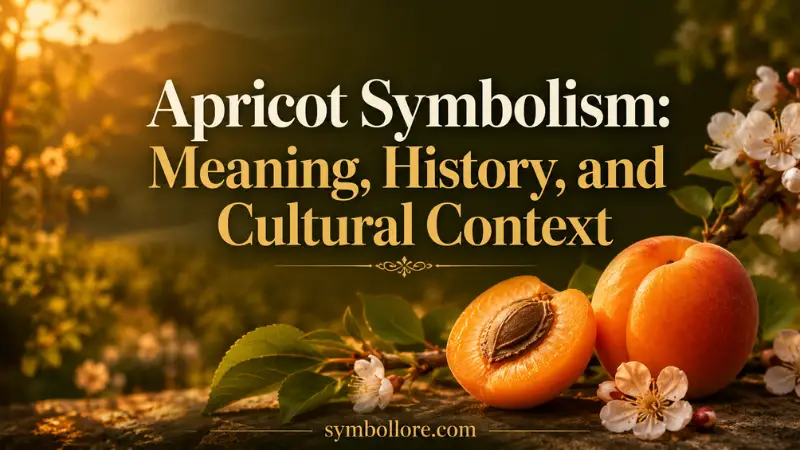
Apricot symbolism commonly represents abundance, timely growth, sweetness, fertility, renewal, learning, and the rewards of patient care. The edible apricot, or Prunus armeniaca, is a golden stone fruit whose early blossoms and brief ripening season naturally support these associations.
However, its meaning changes with the setting. A ripe fruit may suggest fulfillment, while a fragile blossom can represent hope or fleeting beauty. Cultural interpretation also requires care because Japanese “apricot” and Vietnam’s yellow “apricot blossom” often refer to different plants.
Quick Answer
Apricot symbolism centers on abundance, fertility, renewal, warmth, education, healing traditions, and opportunities that must be recognized at the right time. Ripe fruit represents fulfilled potential and life’s sweetness, while blossoms suggest spring and new beginnings. However, cultural meanings differ, and several plants called “apricot” in English are not the common edible apricot.
Key Takeaways
- Ripe apricots represent fulfillment, sweetness, and earned rewards.
- Blossoms suggest renewal, beauty, hope, and fragile beginnings.
- Early ripening connects apricots with timeliness and opportunity.
- Chinese traditions associate apricots with medicine and education.
- Armenia connects the fruit with heritage, music, and cultural identity.
- Plant names must be checked before assigning cultural meanings.
Apricot Meanings at a Glance
| Apricot Image or Context | Common Meaning | Why the Meaning Fits | Important Limitation |
| Ripe apricot | Abundance and fulfillment | The fruit has reached maturity and can be enjoyed | Not a universal promise of wealth |
| Apricot blossom | Renewal and hope | Blossoms appear before the fruit develops | Blossoms also suggest fragility |
| Apricot tree | Patience and long-term care | A harvest depends on seasons and cultivation | Meanings vary by region |
| Apricot pit | Hidden potential and protection | The hard stone encloses a seed | Raw kernels may be dangerous |
| Unripe apricot | Incomplete growth | The fruit has not reached readiness | May also represent impatience |
| Spoiled apricot | Missed timing or disappointment | A brief opportunity was not used | Context determines the message |
| Apricot gift | Warmth, affection, or good wishes | Sweet fruit is associated with hospitality | No universal gifting rule exists |
| Apricot color | Warmth and gentle optimism | Orange and pink tones feel soft and lively | Color reactions remain subjective |
What Apricot Symbolism Means
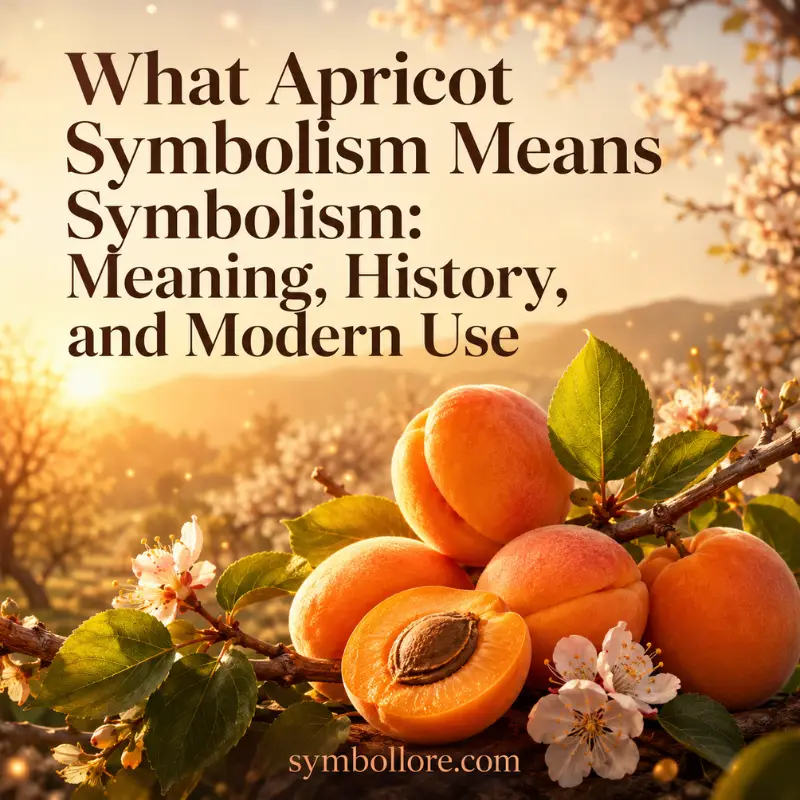
Apricot symbolism develops from the fruit’s growth cycle, appearance, flavor, and cultural uses. Its warm color suggests sunlight and vitality. Its sweetness supports associations with pleasure, affection, and reward. Meanwhile, the stone hidden inside the soft flesh creates a natural contrast between tenderness and protected potential.
The symbol is not fixed. A bowl filled with ripe apricots may represent plenty, while a single bruised fruit can suggest vulnerability or disappointment. Blossoming branches emphasize promise rather than completion. Therefore, the fruit’s condition, surrounding objects, cultural source, and emotional tone all affect the interpretation.
Botanically, the common edible apricot is Prunus armeniaca. Kew Science places its native range from Central Asia into northern and central China, although its long cultivation history has created strong associations far beyond that area.
Kew’s botanical profile of Prunus armeniaca
provides a useful factual starting point.
Why Apricots Symbolize Abundance, Fertility, and Timely Growth
Apricots symbolize abundance because a healthy tree can carry many bright fruits at once. In art or personal reflection, a fruit-laden branch naturally suggests plenty, nourishment, productive effort, and resources ready to be shared.
Fertility is a related but broader interpretation. Fruit develops after flowering and pollination, while the pit contains a seed capable of beginning another life cycle. As a result, the apricot can represent creativity, family continuity, productive relationships, or an idea finally becoming tangible. It should not be treated as a guaranteed fertility charm.
Timeliness is equally important. The English word ultimately traces to a Latin expression connected with early ripening, which also relates to the history of the word precocious. This linguistic background reinforces the apricot’s symbolic connection with something developing early or reaching readiness before expected.
A ripe apricot therefore carries two linked lessons: patient development matters, but the right moment should not be ignored.
Apricot Blossom Symbolism: Renewal, Fragility, and Spring
Apricot blossom symbolism centers on renewal because the flowers announce a new growing season. Their appearance signals that a dormant tree has resumed active growth, making them natural images of recovery, possibility, and hope after difficulty.
However, blossoms are not the same as fruit. A flower represents promise, not a completed result. Frost, poor pollination, wind, disease, or other conditions can interrupt the journey from blossom to harvest. For that reason, apricot flowers may also symbolize delicate plans, early love, uncertain opportunities, or beauty that requires protection.
Their short life adds another layer. The blossoms can represent impermanence and the need to appreciate a meaningful stage before it passes. In a wedding design, they may suggest new partnership and future growth. In memorial art, the same flowers can express the beauty and brevity of life.
The most accurate interpretation balances optimism with vulnerability.
Apricots in Chinese Culture: Medicine, Education, and Success
In Chinese culture, the apricot has established associations with medicine and education. Yale’s overview of the apricot tree notes that these meanings reach back to traditions connected with learning and medical service.
Yale Nature Walk’s apricot profile
also explains the fruit’s wider cultural importance.
The educational association is often connected with stories of Confucian teaching and the image of an apricot grove or platform as a place of learning. As a result, apricot imagery can represent scholarship, examination success, disciplined study, and the transmission of knowledge.
Medical symbolism developed through stories in which apricot trees became connected with physicians, healing service, and professional virtue. In this context, the apricot does not promise a cure. Instead, it represents the social ideal of a skilled and generous healer.
Later art and wordplay also linked apricots with prosperity, feminine beauty, marital hopes, and success. These meanings should be identified as specific Chinese traditions rather than universal rules for every apricot image.
Armenia and the Cultural Identity of the Apricot
The apricot holds a powerful place in Armenian cultural identity, even though its scientific name does not prove that the species originated only in Armenia. Its Latin name, Prunus armeniaca, reflects the fruit’s historical association with the region in European naming traditions. Modern botanical sources place the species’ native range farther east, while archaeological and agricultural history show deep, long-standing Armenian connections.
The fruit can therefore symbolize homeland, continuity, hospitality, survival, and attachment to landscape. Its significance also extends beyond food.
The Armenian duduk provides a strong material connection. UNESCO explains that the soft wood of the apricot tree is considered ideal for the body of this traditional double-reed instrument. Duduk music accompanies songs, dances, weddings, funerals, and other social occasions. UNESCO also notes that many Armenians regard its sound as an expression of warmth, joy, and history. UNESCO’s duduk cultural-heritage profile documents this relationship.
In Armenian contexts, apricot symbolism can therefore carry sound, memory, craftsmanship, and belonging.
Japanese Apricot and Vietnamese “Apricot Blossom” Are Different Plants
Many symbolism articles confuse three plants because their English common names overlap.
The true edible apricot is Prunus armeniaca. By contrast, the Japanese apricot, commonly called ume, is Prunus mume. Kew describes Prunus mume as a culturally important East Asian plant celebrated for early blossoms in art, poetry, bonsai, and traditional gardens. It is closely related to the common apricot but remains a separate species.
In Japan, ume blossoms have represented the arrival of spring, scholarship, nobility, loyalty, and prosperity. A 2026 Japanese government cultural feature explains that blossom patterns spread widely during the Edo period and developed associations with learning and good fortune.
Vietnam’s yellow hoa mai creates a larger botanical difference. It is frequently translated as “yellow apricot blossom,” especially in descriptions of Vietnamese Tết. However, the plant commonly meant is Ochna integerrima, which belongs to another botanical family. It symbolizes spring, resilience, prosperity, and renewed life in southern Vietnamese tradition.
These meanings remain culturally valid, but they should not automatically be assigned to Prunus armeniaca.
Apricot Spiritual Meaning in Modern Practice
Apricot spiritual meaning today usually emphasizes abundance, emotional warmth, ripening potential, gratitude, creativity, and enjoyment of life’s temporary pleasures. These are modern interpretive themes rather than doctrines shared by every religion or culture.
The fruit can serve as a personal reminder to nurture something until it becomes ready. A ripe apricot may represent receiving the results of sustained work. Sharing the fruit can suggest generosity, hospitality, or allowing others to benefit from personal success.
Its softness may symbolize openness and tenderness. In contrast, the hard inner stone can represent emotional boundaries or a protected inner purpose. Together, these qualities create an image of gentle strength: something can remain warm and receptive without becoming unprotected.
The apricot can also warn against waiting too long. Because ripe fruit has a limited period of freshness, it may represent a relationship, opportunity, or creative idea that requires timely action.
Such meanings work best as tools for reflection, not predictions of future events.
Apricot Dream Meaning: How to Read the Context
Apricot dream meaning depends more on the dream’s events and emotions than on a fixed symbolic dictionary. A dream cannot reliably predict prosperity, pregnancy, romance, or spiritual favor. However, it may reflect memories, concerns, expectations, or personal associations.
Consider the fruit’s condition:
- Ripe apricots may reflect satisfaction, readiness, pleasure, or a reward.
- Unripe fruit can suggest impatience or a plan that needs more time.
- Rotten apricots may represent regret, disappointment, or a neglected opportunity.
- A flowering tree can point toward hope, preparation, or an early stage.
- Sharing apricots may relate to affection, hospitality, or mutual support.
- Being unable to reach the fruit may express frustration or delayed fulfillment.
Next, examine the emotion. Joy supports a positive reading, while anxiety may indicate pressure, uncertainty, or fear of missing the right moment. The dreamer’s real experiences with apricots remain more useful than a universal supernatural explanation.
Apricot Color Meaning in Design and Emotion
Apricot color meaning combines the energy of orange with the softness of pink or cream. The exact shade varies, but apricot generally appears as a warm, pale orange-pink inspired by the fruit.
In modern U.S. design, apricot can suggest warmth, optimism, friendliness, comfort, and gentle confidence. It feels less intense than bright orange and less traditionally romantic than strong pink. Therefore, designers often use it to create an inviting atmosphere without making the space feel overly bold.
In clothing, apricot may communicate softness, freshness, and approachability. In branding, it can suit wellness, beauty, food, hospitality, lifestyle, and family-oriented products. Paired with cream or beige, it appears calm and natural. Combined with dark green or navy, it gains contrast and sophistication.
These associations are not universal psychological facts. Personal taste, lighting, neighboring colors, cultural background, and context all affect how people respond to the shade.
The Apricot Pit: Hidden Potential and a Real Safety Warning
The apricot pit represents hidden potential because a hard, rough stone protects the seed within it. Symbolically, it can suggest an undeveloped idea, guarded emotion, inner resilience, or the essential part of a person that remains unseen beneath a softer exterior.
It may also represent difficulty before growth. The nourishing fruit is easy to enjoy, but reaching the seed requires breaking through a hard barrier. In personal art or tattoos, this contrast can express protection, endurance, or the belief that valuable potential may remain concealed.
However, symbolic use should not become unsafe consumption. Apricot kernels contain amygdalin, which the body can convert into cyanide. In 2024, the U.S. Food and Drug Administration warned consumers about specific apricot-seed products containing dangerous amygdalin levels.
The FDA apricot-seed safety warning
describes possible severe and fatal toxicity.
The flesh of an ordinary apricot is not the same hazard. The warning concerns kernels found inside the hard stone.
FAQs
An apricot can symbolize warmth, tenderness, sensual enjoyment, affection, and a relationship gradually reaching maturity. Blossoms may represent new love or hopeful beginnings, while ripe fruit suggests deeper fulfillment. These meanings are poetic associations rather than universal romantic traditions.
The apricot can represent good fortune in certain Chinese and decorative traditions, especially where linguistic associations connect it with prosperity or success. However, it is not a universal luck symbol. Its meaning depends on the region, artwork, ceremony, and plant species involved.
An apricot tree commonly symbolizes patience, cultivation, continuity, generosity, and the long process behind visible results. Blossoms represent potential, fruit represents achievement, and roots suggest stability. In Armenian settings, the tree may also carry meanings of heritage, music, craftsmanship, and homeland.
A ripe apricot represents readiness, fulfilled potential, pleasure, reward, and the results of proper timing. Because ripeness is temporary, it can also advise a person to recognize an opportunity before it passes. The meaning may become negative when the fruit appears bruised or spoiled.
The Bible does not clearly establish apricots as a distinct, recurring symbol with one official meaning. General biblical fruit imagery may inspire modern associations with blessings, harvest, character, or spiritual results, but those broader themes should not be presented as a specific scriptural doctrine about apricots.
No. Apricot and peach blossoms come from related but different trees, and their cultural associations can overlap without being identical. Confusion also arises because Prunus mume may be called Japanese apricot or plum, while Vietnamese hoa mai is often translated as yellow apricot blossom despite being Ochna integerrima.
Conclusion
Apricot symbolism draws meaning from the fruit’s warm color, early blossoms, protected seed, brief ripening period, and long cultural history. It can represent abundance, renewal, education, tenderness, cultural identity, timely action, and the fulfillment of carefully nurtured potential.
Still, no interpretation applies everywhere. Chinese scholarship, Armenian heritage, Japanese ume, Vietnamese hoa mai, modern dreams, and personal artwork each require their own context. The strongest reading identifies the actual plant, observes its condition, and separates documented tradition from flexible personal symbolism.