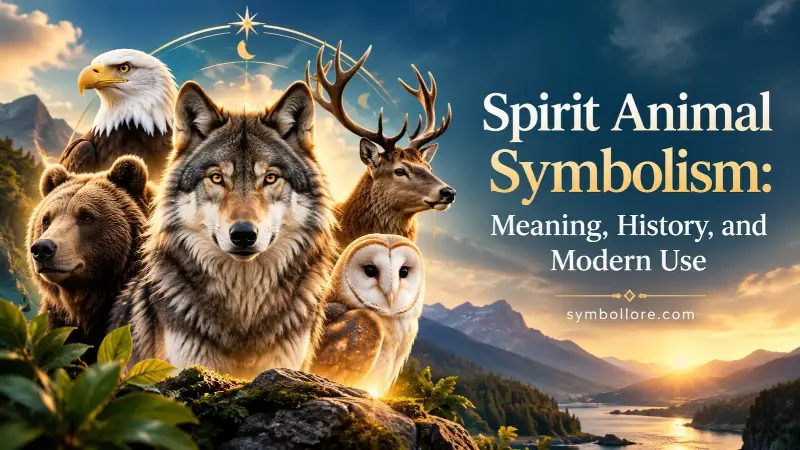
Spirit animal symbolism explores how animals can represent human qualities, emotions, and life experiences. A wolf may remind someone of loyalty, while a butterfly may symbolize personal growth. These connections can help people understand their strengths, challenges, and changing priorities.
However, animal symbolism is not the same across every culture. Some traditions give animals specific spiritual or ceremonial roles. Others use them as symbols in stories, art, and personal reflection.
This guide explains common spirit animal meanings, their cultural background, and how to interpret animal symbols thoughtfully.
Quick Answer: What Does Spirit Animal Symbolism Mean?
Spirit animal symbolism refers to the symbolic qualities people associate with animals, such as courage, wisdom, freedom, and transformation. Some spiritual beliefs describe animals as guides or protectors. In modern personal reflection, an animal may represent someone’s character, goals, or experiences. These interpretations are not universal, and their cultural meanings can differ.
Key Takeaways
- Animals can symbolize personality traits, emotions, challenges, and personal growth.
- A wolf often represents loyalty, while an owl commonly suggests wisdom or awareness.
- Animal meanings change across cultures, stories, and individual experiences.
- Dreams or repeated animal sightings do not prove that an animal is delivering a spiritual message.
- Understanding cultural traditions helps people explore animal symbolism respectfully.
What Is Spirit Animal Symbolism?
Spirit animal symbolism is the practice of finding meaning in the qualities, actions, or cultural associations of animals.
People often connect animals with ideas they recognize in themselves. For example, someone who values patience might feel drawn to a turtle. Another person may admire an eagle because it represents freedom and a wider perspective.
There are two important ways to understand these connections.
Spiritual interpretation: Some people believe animals can act as guides, protectors, or meaningful presences in their spiritual lives.
Personal interpretation: Others view animals as metaphors for personality, feelings, or experiences without believing in supernatural guidance.
Both approaches may give someone a sense of meaning. However, personal symbolism should not be confused with the teachings of a particular religious or cultural community.
The Meaning and Importance of Spirit Animals
The central idea behind spirit animal symbolism is connection.
People have long used animals in stories, art, and religious traditions to express human experiences. Animals offer familiar ways to describe ideas that can otherwise feel abstract.
For example, strength can be represented by a bear. Change can be illustrated through a butterfly’s transformation. A bird in flight may suggest independence or freedom.
Personal Strength and Identity
An animal symbol may reflect qualities someone already has or wants to develop.
A person who values independence might identify with a fox. Someone who prioritizes teamwork may prefer the symbolism of a wolf.
These associations are personal choices rather than scientific personality classifications.
Change and Personal Growth
Animals also provide powerful images of change.
Butterflies undergo metamorphosis, and snakes shed their outer skin. These natural processes help explain why people connect them with renewal and fresh beginnings.
Such symbolism can be especially meaningful during major life changes.
Awareness and Intuition
Some animals inspire reflection because of their senses and behavior.
Owls can hunt effectively in low light. Eagles have sharp vision. People sometimes use these abilities as metaphors for observation, awareness, and perspective.
These meanings are symbolic comparisons, not proof that animals communicate supernatural messages.
15 Common Spirit Animals and Their Symbolic Meanings
The following table summarizes common modern animal associations. Interpretations vary by culture, personal beliefs, and context.
| Animal | Common symbolic meaning | Personal reflection |
|---|---|---|
| Wolf | Loyalty, cooperation, instinct | How do I support others? |
| Owl | Wisdom, awareness, mystery | What am I overlooking? |
| Bear | Strength, protection, rest | Where do I need boundaries? |
| Eagle | Freedom, perspective, vision | What is the bigger picture? |
| Fox | Adaptability, cleverness | Could I try another approach? |
| Butterfly | Transformation, renewal | How am I changing? |
| Lion | Courage, confidence, leadership | When should I speak up? |
| Deer | Gentleness, sensitivity, grace | Can I respond more calmly? |
| Turtle | Patience, protection, endurance | Am I allowing enough time? |
| Snake | Renewal, change, complexity | What habits should I release? |
| Raven | Intelligence, mystery, change | What assumptions should I question? |
| Dolphin | Playfulness, connection, communication | How can I strengthen relationships? |
| Horse | Freedom, movement, determination | What motivates me? |
| Dragonfly | Adaptability, transformation | How can I embrace change? |
| Elephant | Memory, family, strength | Which relationships matter most? |
These examples offer starting points for reflection. They are not fixed spiritual rules.
Spirit Animal Symbolism Examples and Their Meanings
1. Wolf Spirit Animal Symbolism
Loyalty • Cooperation • Instinct
Wolves often symbolize loyalty, family connections, and teamwork. Their social relationships make them a familiar symbol of cooperation.
A person drawn to wolf symbolism might value strong friendships or shared responsibility.
However, wolves also live complex social lives. Their behavior cannot be reduced to human ideas about loyalty or leadership.
2. Owl Spirit Animal Symbolism
Wisdom • Awareness • Mystery
Owls commonly represent wisdom and careful observation in modern Western symbolism.
Their ability to move and hunt in darkness also makes them symbols of mystery.
Yet owl symbolism differs across cultures. Some traditions connect particular owls with warnings, death, or other spiritual beliefs rather than wisdom.
3. Bear Spirit Animal Symbolism
Strength • Protection • Rest
Bears often represent strength, courage, and protection.
Their seasonal patterns of activity and rest also inspire modern associations with recovery and reflection.
Someone who connects with bear symbolism may use it as a reminder to protect personal boundaries while making time for rest.
4. Eagle Spirit Animal Symbolism
Freedom • Vision • Perspective
Eagles are often associated with freedom, keen observation, and a broad perspective.
Their soaring flight makes them memorable symbols of independence.
In the United States, the bald eagle also represents national identity. Certain Native nations have additional sacred relationships with eagles and eagle feathers. Those meanings should not be treated as interchangeable with general American symbolism.
5. Fox Spirit Animal Symbolism
Adaptability • Cleverness • Resourcefulness
Fox symbolism commonly emphasizes intelligence and flexibility.
Foxes appear as clever characters in many folktales. Some stories celebrate their resourcefulness, while others portray them as tricksters.
For personal reflection, a fox might represent the ability to solve problems creatively.
6. Butterfly Spirit Animal Symbolism
Transformation • Growth • Renewal
The butterfly is one of the clearest natural symbols of change.
Its development from caterpillar to adult butterfly inspires associations with transformation and new beginnings.
Someone experiencing a major life transition may find butterfly symbolism encouraging.
However, seeing a butterfly does not establish that a particular change is destined to happen.
7. Lion Spirit Animal Symbolism
Courage • Authority • Confidence
Lions often symbolize courage, leadership, and power.
Kings, rulers, and institutions have used lion imagery to communicate authority for centuries.
In personal symbolism, the lion can serve as a reminder to act confidently while respecting others.
8. Deer Spirit Animal Symbolism
Gentleness • Sensitivity • Awareness
Deer frequently represent grace, gentleness, and sensitivity.
Their alert behavior can inspire ideas about careful attention and emotional awareness.
A deer symbol may encourage someone to respond thoughtfully instead of reacting too quickly.
9. Turtle Spirit Animal Symbolism
Patience • Endurance • Protection
Turtles are familiar symbols of patience and steady progress.
Their protective shells also inspire associations with safety and boundaries.
Turtles hold distinct cultural meanings in many communities, including important roles in certain Indigenous creation traditions. These specific meanings go beyond the general idea of patience.
10. Snake Spirit Animal Symbolism
Renewal • Transformation • Complexity
Snakes often represent change because they shed their skin.
They can also symbolize healing, danger, fertility, or deception, depending on the tradition.
This makes snake symbolism especially dependent on context.
A snake in a personal journal might represent renewal, while the same animal in a religious story could carry a very different meaning.
How to Interpret Your Personal Animal Symbolism
You do not need to claim a traditional spiritual identity to appreciate the symbolic qualities of animals.
A simple reflection process can help you explore these meanings.
Step 1: Choose an animal that interests you.
Think about an animal you admire, remember, or feel personally connected to. Your choice does not need to come from a dream or unusual encounter.
Step 2: Learn about its actual behavior.
Explore how the animal lives, interacts, protects itself, and adapts. Separate biological facts from stories and symbolic interpretations.
Step 3: Identify meaningful qualities.
Write down what the animal represents to you. For example, a turtle might remind you to slow down during stressful periods.
Step 4: Consider the cultural context.
Learn whether a meaning comes from a specific tradition or a modern interpretation. Avoid claiming traditional cultural symbols or identities that do not belong to you.
Step 5: Apply the lesson thoughtfully.
Use the symbol as a reminder rather than a prediction. Meaningful reflection should support your judgment, not replace it.
Spirit Animal Symbolism in Dreams and Daily Life
Animals sometimes become meaningful through dreams, memories, or personal experiences.
For example, someone might dream about a horse while thinking about independence. The person may interpret the horse as a symbol of freedom because that idea matters in their life.
However, dreams do not have one proven symbolic meaning.
A dream about an owl could reflect something the dreamer recently saw, an emotional experience, or a personal association.
Likewise, noticing the same animal repeatedly does not prove it is a spiritual guide.
The most useful questions are often simple: What does this animal mean to me? Why am I paying attention to it now? Does its symbolism help me understand anything about my life?
Spirit Animal vs. Totem Animal vs. Power Animal
These terms sometimes appear together, but they do not always mean the same thing.
| Term | General meaning | Important distinction |
|---|---|---|
| Spirit animal | An animal understood as a spiritual guide or personal symbol | Modern popular use differs from specific cultural beliefs |
| Totem animal | An animal connected to a particular social, clan, or cultural tradition | Traditional meanings cannot be reduced to personality types |
| Power animal | An animal guide in some contemporary spiritual practices | Practices and definitions vary among spiritual communities |
| Animal symbolism | The use of animals to represent ideas or qualities | Does not require supernatural beliefs |
For readers interested mainly in personality or self-reflection, animal symbolism or a favorite animal symbol often communicates the intended meaning more clearly.
Spirit Animal Symbolism Across Cultures
Animal symbolism appears in many parts of the world. However, shared interest in animals does not mean every culture follows the same spiritual system.
Native American Traditions
Many Native American nations have important relationships with animals through stories, teachings, ceremonies, and clan systems.
These relationships are diverse. They cannot be described accurately as one universal Native American belief about spirit animals.
For example, animal-connected clan identities may carry responsibilities and histories that are very different from choosing an animal based on personality.
Respectful interpretation starts by recognizing that these traditions belong to living communities.
Ancient Egyptian Symbolism
Animals held significant roles in ancient Egyptian religion and art.
The falcon was associated with Horus, while the jackal was associated with Anubis.
These relationships reflected specific religious beliefs. They were not simply personality descriptions comparable to modern online spirit animal lists.
Chinese Cultural Symbolism
Chinese traditions include rich animal symbolism.
The dragon often represents power and auspicious qualities, while the tiger can suggest strength and protection.
The Chinese zodiac also connects twelve animals with a repeating calendar cycle.
These symbolic systems have their own histories and should not be presented as identical to modern spirit animal practices.
Common Mistakes About Spirit Animal Symbolism
Believing Every Animal Has One Universal Meaning
An owl does not symbolize wisdom in every tradition.
Meanings depend on culture, historical context, and individual experience.
Assuming Repeated Sightings Prove Spiritual Guidance
A repeated sighting may feel important. However, it does not demonstrate that an animal is sending a message.
People naturally notice patterns, especially when something already holds their attention.
Treating Online Quizzes as Cultural Authorities
A personality quiz may be entertaining, but it cannot establish someone’s traditional spiritual identity.
Many quizzes use modern interpretations rather than teachings from a specific cultural community.
Confusing Animal Symbolism With Animal Behavior
A lion’s symbolic courage is a human interpretation, not a scientific personality label.
Animal behavior can inspire metaphors, but animals should also be understood on their own terms.
Ignoring Cultural Differences
Calling every animal-connected tradition a form of spirit animal belief can erase important distinctions.
Learning the source of a symbol helps prevent misleading explanations.
Expert Context: Why Cultural Accuracy Matters
One of the most important points about spirit animal symbolism is the distinction between personal meaning and cultural identity.
The Smithsonian National Museum of the American Indian has explained that classroom activities involving generic “spirit animals” can trivialize Native peoples’ relationships with the animal world.
Its educational guidance emphasizes the cultural importance of animal-related stories, values, and kinship systems.
This matters because a meaningful animal symbol is not necessarily the same as an inherited clan relationship or a ceremonial tradition.
Readers can appreciate animals and learn from their behavior without presenting personal interpretations as authentic teachings from a community.
People Also Ask About Spirit Animal Symbolism
What does it mean when an animal keeps appearing in your life?
Repeated encounters may become personally meaningful, especially if you already associate the animal with a particular idea. However, repetition alone does not prove spiritual communication. Consider ordinary explanations as well as your own emotional response.
Can a person connect with more than one animal symbol?
Yes. Personal animal symbolism does not require a single permanent choice. Someone might associate a butterfly with personal change and a wolf with family loyalty. These meanings can coexist without forming a traditional spiritual system.
What animal symbolizes strength and protection?
Bears and lions commonly represent strength in modern symbolism. Bears may suggest protection and boundaries, while lions often represent courage and authority. These meanings are not universal across cultures.
Is spirit animal symbolism connected to religion?
Sometimes. Certain religious and spiritual traditions assign animals particular roles. Modern personal animal symbolism, however, can also be secular. It may simply involve using an animal as a metaphor for human qualities.
Frequently Asked Questions
In some spiritual beliefs, a spirit animal represents guidance, protection, or qualities that help a person understand their life. In modern personal symbolism, the term often refers to an animal that reflects someone’s personality or aspirations. The meaning depends on the person’s beliefs and cultural context.
For personal reflection, begin with an animal that interests you. Learn about its behavior and explore what qualities it represents in different contexts. Think about why those qualities matter to you. This process can help you choose a meaningful animal symbol, but it does not establish a traditional spiritual identity.
Wolf symbolism commonly includes loyalty, cooperation, instinct, and social connection. People may use the wolf as a reminder to maintain strong relationships while respecting their independence. Specific traditional interpretations can differ from these modern associations.
Doves and swans often symbolize love, affection, or devotion in certain Western traditions. Wolves may suggest family bonds and cooperation. No single animal universally represents love, so the meaning depends on the story, culture, or personal interpretation.
Snakes are associated with healing in some historical and medical symbolism. Butterflies may represent emotional renewal, while bears sometimes symbolize recovery in modern interpretations. These connections are symbolic and should not be mistaken for medical advice or promises of healing.
Personal animal symbols can change as your interests, experiences, and priorities develop. For example, someone may connect with butterfly symbolism during a major transition and later prefer turtle symbolism while focusing on patience. This does not mean that traditional cultural identities change in the same way.
It can be, particularly when used casually or when it treats Indigenous spiritual and cultural traditions as entertainment. Some people prefer saying “an animal I relate to” or “my favorite animal symbol.” These alternatives express a personal connection without claiming a cultural practice.
Animal symbolism involves interpreting animals as representations of ideas, emotions, or qualities. Spiritual guidance involves the belief that an animal or spiritual presence offers direction or protection. Animal symbolism can be explored without believing in supernatural communication.
Conclusion
Spirit animal symbolism offers a way to explore qualities such as strength, loyalty, wisdom, freedom, and transformation.
Animals can inspire personal reflection through their behavior, cultural associations, and roles in storytelling. However, their meanings are not universal, and spiritual beliefs should be distinguished from personal interpretations.
The most meaningful approach combines curiosity with cultural respect. Rather than searching for one fixed answer, consider what an animal represents, where that meaning comes from, and how it relates to your experience.