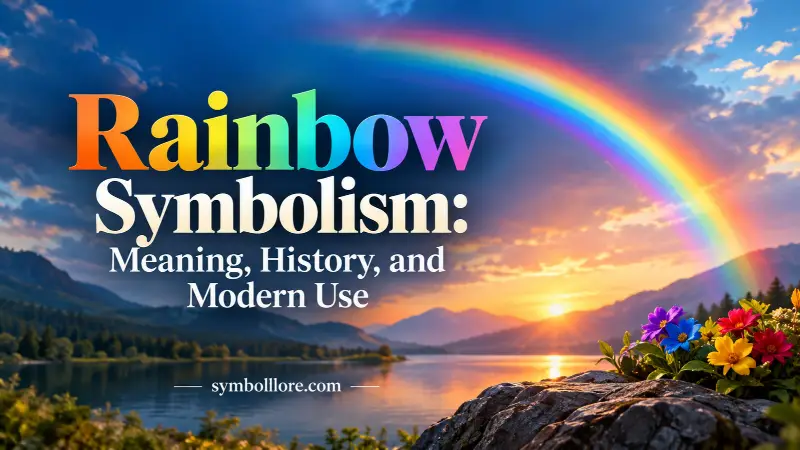
A rainbow has long captured human attention because it appears suddenly, connects earth and sky, and transforms ordinary weather into a memorable scene. Rainbow symbolism often represents hope, renewal, promise, and connection, but its meaning changes depending on the culture, religion, historical period, or modern setting where it appears.
The rainbow became meaningful because of its unusual natural qualities. It arrives after rain, displays many colors together, and seems to form a bridge across the sky. Different communities built their own interpretations around these features, from biblical covenant traditions to mythological stories and modern symbols of diversity.
Quick Answer
Rainbow symbolism commonly represents hope, renewal, promise, and connection because rainbows appear when sunlight meets water after rainfall. In biblical tradition, the rainbow represents a covenant with God, while Greek mythology connects it with Iris, a divine messenger. Modern uses may also represent diversity and inclusion, but meanings depend on context.
TL;DR
- Rainbows often symbolize hope because they appear after storms.
- Biblical tradition connects the rainbow with God’s covenant after the flood.
- Greek mythology links the rainbow with Iris, a messenger between gods and humans.
- Norse mythology describes Bifröst as a rainbow bridge connecting worlds.
- Modern American culture uses rainbow imagery for diversity, pride, and artistic expression.
- A rainbow does not have one fixed meaning across every culture.
Rainbow Meanings at a Glance
| Context | Possible Meaning | Why the Association Exists | Important Limit |
|---|---|---|---|
| Nature | Hope and renewal | Rainbows often appear after storms when sunlight returns | The meaning comes from human interpretation, not the weather event itself |
| Biblical tradition | Promise and covenant | Genesis describes the rainbow as a sign of God’s covenant after the flood | This meaning belongs specifically to biblical tradition |
| Greek mythology | Divine communication | Iris was associated with the rainbow and served as a messenger of the gods | Ancient texts do not create a modern fixed rainbow color system |
| Norse mythology | Connection between worlds | Bifröst was described as a bridge between gods and humans | Norse descriptions differ from modern rainbow ideas |
| Modern culture | Diversity and inclusion | Multiple colors together can represent many identities or communities | Meanings depend on the group and setting |
Why Rainbows Became Symbols of Hope
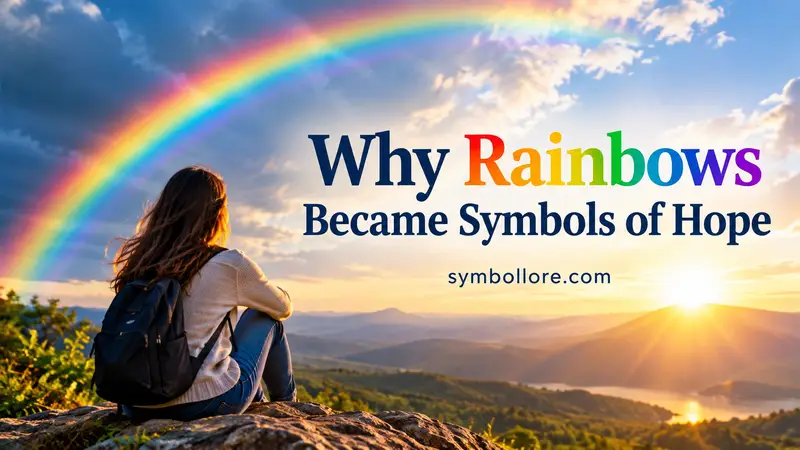
The most common meaning connected with a rainbow comes from its appearance after rainfall. A storm often creates darkness, uncertainty, and disruption. When sunlight returns and a rainbow appears, people naturally connect the image with relief and improvement.
This association appears in many forms of storytelling. Writers and artists often use rainbows to show emotional change, such as moving from hardship toward peace or from confusion toward clarity.
However, the rainbow itself does not guarantee a positive outcome. The meaning comes from human interpretation of a powerful visual experience.
Biblical Rainbow Symbolism and the Covenant Tradition
One of the most recognized historical meanings of the rainbow comes from the Book of Genesis. After the flood story of Noah, the rainbow appears as a sign of God’s covenant with Noah and all living creatures. The biblical passage presents the rainbow as a reminder of this promise.
Within Jewish and Christian traditions, this interpretation connects the rainbow with:
- divine promise;
- protection;
- remembrance;
- a relationship between God and humanity.
This meaning should be understood within its religious context. Other cultures developed different explanations for the rainbow, so the biblical interpretation is one important tradition rather than a universal definition.
Rainbow Symbolism in Greek Mythology
Ancient Greek mythology connects the rainbow with Iris, a goddess who served as a messenger between the gods and humans. Her movement between heaven and earth helped create associations with communication, transition, and connection.
The rainbow’s position between sky and ground made it a fitting image for a figure who carried messages across different realms.
Although modern artwork often assigns symbolic meanings to individual rainbow colors, ancient Greek sources do not provide a simple seven-color meaning chart. Interpretations of rainbow colors today are often modern artistic systems rather than direct ancient rules.
The Rainbow Bridge in Norse Tradition
In Norse mythology, Bifröst is described as a bridge connecting the world of humans with the realm of the gods. Modern readers often associate it with rainbow imagery because it is commonly translated as a rainbow bridge.
This interpretation highlights themes of:
- connection between worlds;
- movement between different realms;
- separation and access.
Like other mythological symbols, Bifröst belongs to a specific cultural tradition. It should not be combined with every other rainbow belief as though all traditions shared one meaning.
Rainbow Symbolism in Modern American Culture
In modern American life, rainbow imagery appears in many settings, including art, education, celebrations, design, and social movements.
The rainbow flag became a major symbol associated with LGBTQ+ pride and community identity. The original flag was created in 1978 through the work of artists and activists involved in San Francisco’s pride movement.
Today, rainbow imagery may communicate:
- diversity;
- acceptance;
- community;
- visibility;
- celebration.
The meaning depends on who uses the symbol and why. A rainbow in a painting, a religious setting, and a social movement may communicate different ideas.
Why Rainbow Colors Influence Symbolic Meaning
A rainbow contains many colors appearing together, which can encourage ideas of harmony and variety. Because no single color dominates the image, people often interpret the rainbow as representing unity among differences.
However, individual color meanings vary across cultures. A color that suggests celebration in one setting may represent something different elsewhere.
The rainbow’s symbolic power often comes less from each separate color and more from the combination of many colors forming one image.
Rainbow Symbolism in Art and Literature
Artists and writers frequently use rainbows to represent transformation, emotional change, and possibility.
A rainbow may appear after a difficult moment in a story to suggest:
- recovery after loss;
- movement into a new stage of life;
- unexpected beauty;
- reconciliation.
Because rainbows are temporary, they can also represent brief moments of wonder or experiences that cannot be permanently held.
Common Misconceptions About Rainbow Meanings
Does every culture see the rainbow as a symbol of hope?
No. Many cultures have created meaningful rainbow traditions, but the exact interpretation depends on the community and historical setting.
Does every rainbow color have a fixed symbolic meaning?
No. While people often create color symbolism systems, these meanings change across cultures, periods, and personal interpretations.
Are rainbow meanings spiritual facts?
Rainbow meanings are usually symbolic interpretations connected with culture, religion, art, or personal belief. They are not scientifically proven messages or predictions.
FAQs
Rainbow symbolism most commonly represents hope, promise, connection, and renewal. These meanings developed because rainbows appear after storms and create a striking link between earth and sky.
In Christianity, the rainbow is commonly understood as a sign of God’s covenant after the flood described in Genesis. This interpretation comes from biblical tradition rather than from all cultures worldwide.
Today, rainbow imagery may represent many things, including diversity, inclusion, artistic creativity, and personal meaning. The interpretation depends on the community and context where it appears.
Rainbows appear as an arc across the sky, which has encouraged many cultures to view them as connections between different places or worlds. Greek and Norse traditions both developed related ideas of connection between realms.
No. Dream interpretations vary widely among cultures and individuals. A rainbow in a dream may represent hope or change for some people, but there is no universal scientific meaning.
Sources and Further Reading
- Smithsonian National Museum of American History research on the rainbow flag’s history.
- Biblical rainbow covenant tradition.
- SymbolLore research approach to cultural symbolism and interpretation.
Conclusion
Rainbow symbolism reflects the human tendency to find meaning in powerful natural experiences. Across history, rainbows have represented hope, promise, communication, connection, and diversity in different traditions. A rainbow’s meaning depends on the culture, story, religion, or setting where it appears. Rather than having one universal definition, the rainbow remains meaningful because people continue to interpret its colors, shape, and appearance in ways connected to their own histories and experiences.