
Brown bear symbolism commonly centers on strength, protection, grounded courage, and the ability to withdraw before returning renewed. These meanings reflect the animal’s size, protective behavior, seasonal denning, and close association with forests and mountains.
However, no single interpretation belongs to every society. Indigenous nations, European traditions, modern spiritual communities, and individual artists understand the bear through different histories. Therefore, responsible interpretation requires attention to culture, setting, behavior, and purpose rather than treating one symbolic definition as universal.
Quick Answer
Brown bear symbolism primarily represents strength, protection, resilience, and grounded personal power. Seasonal denning also connects the animal with rest, introspection, and renewal, while a mother defending her cubs supports its association with fierce care. Meanings vary by culture, so these ideas should not replace specific traditional interpretations.
Key Takeaways
- Brown bears commonly represent strength tempered by patience and restraint.
- Protective motherhood gives the symbol a nurturing yet formidable quality.
- Seasonal denning inspires modern associations with retreat and renewal.
- Cultural meanings vary among nations, regions, and historical traditions.
- Dreams require personal context rather than fixed supernatural definitions.
- Tattoos may express courage, family loyalty, wilderness, or independence.
Brown Bear Meanings at a Glance
| Symbolic Theme | Behavioral or Cultural Connection | Important Distinction |
|---|---|---|
| Strength | Large body, muscular build, and commanding presence | Strength may include restraint, not only force |
| Protection | Mothers vigorously guard and teach their cubs | Protection can become overcontrol when taken too far |
| Resilience | Bears survive seasonal scarcity and difficult habitats | Resilience does not mean ignoring the need for rest |
| Introspection | Winter denning resembles withdrawal from outward activity | The symbolic reading is human interpretation |
| Renewal | Bears emerge as food and activity return in spring | Not every population follows the same winter pattern |
| Grounding | Brown coloring and land-based movement suggest earthiness | This is especially common in modern spirituality |
| Independence | Adults generally spend much of their time alone | Solitude differs from harmful social isolation |
| Danger | Size, defensive power, and unpredictability inspire caution | Brown bears usually do not symbolize evil by default |
What Does Brown Bear Symbolism Mean?
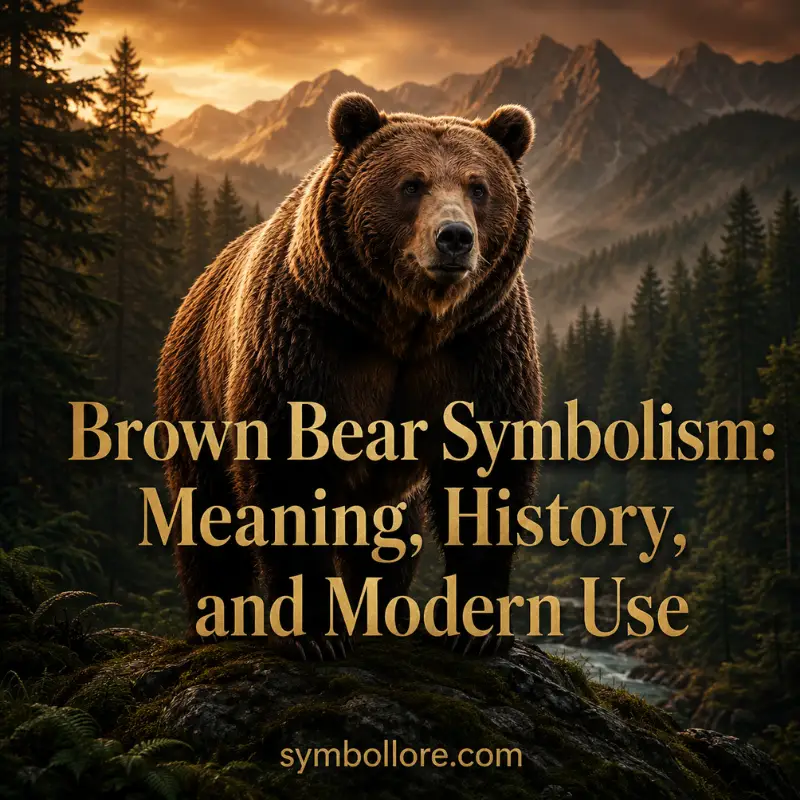
Brown bear symbolism expresses power that is grounded, watchful, and capable of restraint. Unlike a symbol of reckless aggression, the brown bear often represents knowing when to act, when to protect, and when to conserve energy. That combination makes it an appealing emblem of mature strength.
The animal can also signify self-reliance and firm personal boundaries. Brown bears usually travel and forage without permanent social groups, although mothers remain with their cubs for extended periods. As a result, the symbol can unite two qualities that appear opposite: independence and deep family devotion.
These meanings are interpretations, not scientific properties of the animal. Human observers select noticeable behaviors and turn them into metaphors for personal or social values.
Why the Brown Bear Represents Strength and Resilience
The association with strength begins with the animal’s unmistakable physical presence. Brown bears have powerful limbs, large claws, and a shoulder hump formed by muscles used for digging. They inhabit varied environments across North America and Eurasia, reinforcing their image as adaptable survivors.
Yet their symbolic power does not come from constant confrontation. Bears often avoid unnecessary conflict and spend much of their lives searching for seasonally available food. Consequently, the animal can represent strategic energy: using strength when necessary while refusing to waste it.
This combination supports a practical modern message. Courage does not always require charging forward. Sometimes it means holding one’s position, preparing carefully, or waiting until action will have the greatest effect.
Protection, Motherhood, and Family Loyalty
A mother brown bear is one of the clearest natural foundations for protective bear imagery. Cubs depend on her for food knowledge, security, denning skills, and survival lessons. The National Park Service notes that cubs may remain with their mother for two or three years while learning these essential behaviors through experience
(West Cook Inlet bear ecology).
Therefore, mother-bear symbolism often communicates fierce love, family loyalty, and readiness to defend vulnerable people. Americans commonly use “mama bear” for a parent or caregiver who responds firmly when a child faces danger.
Still, the symbol carries a useful warning. Healthy protection creates safety and prepares others for independence. In contrast, fear-driven protection may become possessive or controlling.
Hibernation, Renewal, and Introspection
Seasonal denning explains why brown bears symbolize withdrawal, reflection, and renewal. In colder parts of Alaska, denning may last five to eight months, although bears in warmer areas can remain active during winter
(National Park Service brown-bear overview).
Their behavior is therefore more varied than the simple idea that every bear sleeps through winter.
Symbolically, entering a den resembles turning inward during a demanding period. Emerging later suggests restored energy, a new phase, or readiness to reengage with life. For this reason, people may choose the brown bear during recovery, grief, creative rest, or a major transition.
However, the lesson is not that retreat automatically solves every problem. Its more grounded meaning is that purposeful rest can support future action.
Brown Bears in Indigenous Traditions
There is no single “Native American bear meaning.” Hundreds of distinct nations maintain their own languages, stories, ceremonies, and relationships with local animals. Any interpretation should therefore name the specific community whenever reliable information permits.
In Lakota tradition, mató is connected with courage, healing knowledge, responsibility, and awareness. An educational account from the Akta Lakota Museum describes the bear as balancing purposeful action with calm reflection. Meanwhile, the University of New Mexico’s Tony Hillerman Portal explains that bears in Navajo contexts can represent healing power, self-knowledge, deliberate action, and guardianship of the West
These examples share certain themes, but they are not interchangeable. Sacred teachings also should not be reduced to a generic “spirit animal” label or copied solely as decorative imagery.
European Mythology and Bear Folklore
Across Europe, bears have represented warfare, wilderness, ancestry, sovereignty, and the mysterious border between human and animal life. Their ability to stand upright likely encouraged comparisons with human form, while their physical strength made them natural symbols of fighters and rulers.
Greek star mythology preserves a famous transformation involving Callisto. One version connects her transformation into a bear with Ursa Major, the “Great Bear” constellation. The Smithsonian’s Chandra astronomy resource summarizes how Callisto and her son became the two bears placed in the
sky (Ursa Major myth).
Northern European traditions developed other meanings. Sámi bear rituals, for example, belonged to specific religious relationships involving respect, hunting, and the supernatural. Such traditions deserve historical context rather than being blended into a universal bear myth.
Brown Bear Spiritual Meaning Today
In contemporary spiritual writing, the brown bear often means grounding, inner strength, healing, and reconnection with instinct. Its earthy coat and land-based life support the grounding association, while denning encourages ideas about solitude and inward reflection.
Someone drawn to the animal may use it as a reminder to set boundaries, protect personal energy, or face a challenge without losing emotional control. Others see it as a prompt to balance work with restorative rest.
These interpretations can offer useful personal metaphors, but they are not measurable predictions or universal religious truths. A brown bear does not carry one guaranteed message. Its significance depends on the observer’s beliefs, circumstances, and relationship with the image.
What Does a Brown Bear Mean in a Dream?
A brown bear in a dream may represent power, fear, protection, anger, independence, or a need for rest. The most useful interpretation comes from examining the bear’s behavior and the dreamer’s emotions, not from assigning an automatic prediction.
A calm bear may reflect stable confidence or comfort with solitude. A pursuing bear could represent a threat, responsibility, or emotion the dreamer has avoided. Meanwhile, a mother with cubs may point toward caregiving, boundaries, or concern for someone vulnerable.
Consider four details:
- Behavior: Was the bear resting, watching, attacking, or walking away?
- Emotion: Did you feel safe, frightened, respectful, or curious?
- Setting: Did the forest, den, home, or road feel significant?
- Life context: What current situation involves strength, protection, or withdrawal?
Dream symbolism is reflective rather than diagnostic or prophetic.
Brown Bear Tattoos, Art, and Popular Culture
A brown bear tattoo often represents courage, endurance, family protection, wilderness, or an independent personality. A standing bear can emphasize readiness and authority, while a walking bear may suggest steady progress. A mother and cub commonly communicate parental devotion.
Design details change the message. Mountains and pine trees reinforce freedom and wild landscapes. Claw marks add conflict or survival, whereas flowers can soften the design and highlight nurturing strength. Geometric styling may present the bear as controlled power rather than raw aggression.
In American popular culture, bears also appear as mascots, state emblems, children’s characters, and conservation icons. These uses range from athletic toughness to warmth and familiarity. Therefore, the surrounding visual language matters as much as the animal itself.
Shadow Meanings: Rage, Dominance, and Isolation
Brown bear symbolism also has a darker side. Its immense strength can signify intimidation, uncontrolled anger, territorial behavior, or a person whose presence overwhelms others. In a story, an aggressive bear may embody danger that cannot be ignored.
Solitude can carry two interpretations as well. Chosen privacy may support reflection and independence. Prolonged isolation, however, may represent distrust, emotional withdrawal, or refusal to seek needed support.
These cautionary meanings do not make the bear inherently negative. Instead, they reveal the symbol’s central tension: power can defend or dominate, and boundaries can protect or imprison. Context shows which meaning fits.
How to Interpret a Brown Bear Encounter or Image
Begin with context rather than searching for a fixed supernatural message. An actual sighting may simply reflect the animal’s habitat, movement, or search for food. Wildlife safety should always take priority over symbolism.
For a dream, tattoo, artwork, or repeated personal image, use this framework:
- Identify what the bear is doing.
- Record your immediate emotional response.
- Consider whether strength, rest, family, or boundaries matter in your life.
- Check whether the image belongs to a specific cultural tradition.
- Choose the interpretation that fits the evidence without treating it as prophecy.
This method preserves the symbol’s emotional value while avoiding exaggerated certainty or cultural appropriation.
FAQs
A brown bear can represent good fortune when it appears as a sign of protection, resilience, or successful renewal. However, good-luck meanings are not universal. The surrounding culture, the bear’s behavior, and the person’s emotional response determine whether the image feels encouraging or cautionary.
A grizzly bear is a North American form of the brown-bear species, Ursus arctos. Their symbolism therefore overlaps strongly, especially around strength, wilderness, and protection. “Grizzly” often emphasizes ferocity and the American West, while “brown bear” can support broader Eurasian and North American interpretations.
Yes, healing is an important meaning in some specific cultural and modern spiritual contexts. Seasonal rest and later emergence also support a modern metaphor of recovery. Still, readers should not attribute one healing doctrine to every Indigenous nation or treat symbolic healing as medical care.
A calm brown bear often represents controlled power, confidence, patience, and firm boundaries. Because the animal possesses strength without displaying it constantly, the image can suggest security that does not require aggression or public approval.
An attacking bear may represent danger, defensive anger, overwhelming pressure, or a conflict that demands attention. In dreams and fiction, it may also reflect fear of authority or one’s own suppressed emotions. The interpretation depends on what provoked the attack and how the person responded.
It can be appropriate when the design reflects personal values such as courage, protection, or endurance. However, avoid copying sacred or nation-specific Indigenous designs without understanding their origin and permission requirements. An original naturalistic or contemporary design reduces that risk.
Some people interpret an encounter as a reminder of strength, boundaries, or respect for nature. Still, no objective rule proves that a bear sighting contains a personal message. Maintain distance, follow local wildlife guidance, and consider symbolism only after addressing safety.
Conclusion
Brown bear symbolism combines formidable strength with protection, patience, independence, and restorative retreat. Its meaning grows from observable behavior as well as distinct stories developed across North America, Europe, and Asia.
The symbol is most useful when interpreted with context and cultural care. It can encourage grounded courage, loyal caregiving, or necessary rest, but it may also warn against rage and isolation. Ultimately, the brown bear represents power at its best when strength remains balanced by awareness and restraint.