A vase may look like a simple decorative object, but it can carry a surprising amount of meaning. Across different cultures, people have used vases to hold flowers, preserve valuable materials, honor loved ones, and decorate important spaces.
Vase symbolism often connects with peace, beauty, protection, emotional openness, and remembrance. However, its meaning can change depending on the vase’s design, contents, condition, and cultural background.
An empty vase may suggest possibility, while a broken one might represent loss or change. This guide explores these meanings, their historical roots, and how people interpret vases today.
Quick Answer: What Does a Vase Symbolize?
A vase commonly symbolizes beauty, peace, preservation, love, and the ability to hold something valuable. In Chinese art, vases can represent peace, while certain ancient Greek vessels were connected to burial and remembrance. In modern personal symbolism, an empty vase may suggest potential, and a broken vase may represent change or emotional loss.
Key Takeaways
- Peace and harmony: Chinese artistic traditions connect vases with wishes for safety and peaceful living.
- Beauty and appreciation: A vase filled with flowers can represent affection, gratitude, and the beauty of everyday life.
- Memory and remembrance: Historical funerary vessels show how containers can carry meaning beyond their practical purpose.
- Emotional openness: An empty vase can serve as a modern metaphor for possibility, waiting, or personal growth.
- Fragility and change: A cracked or broken vase may symbolize vulnerability, endings, or transformation.
What Is Vase Symbolism?
Vase symbolism refers to the meanings people assign to vases in art, traditions, stories, and everyday life.
A vase is a container, usually made from materials such as ceramic, glass, porcelain, metal, or stone. People commonly use it to display flowers or decorate a room.
However, its shape and purpose create several symbolic possibilities.
Because a vase holds and protects its contents, it may represent care, preservation, or emotional support. Its decorative beauty can suggest elegance, creativity, and appreciation.
In some traditions, vases also have established cultural meanings.
For example, Chinese art uses vases as symbols of peace. Meanwhile, particular vessels in ancient Greece served ceremonial and funerary purposes.
These historical associations differ from personal interpretations. There is no single meaning shared by every culture or every vase.
Vase Symbolism and Its Deeper Meaning
The meaning of a vase often comes from its ability to contain, protect, and display something important.
1. Peace and Harmony
Peace is one of the best-documented cultural meanings associated with vases.
In Chinese art, the word for vase, ping, sounds like the first part of ping’an, meaning peace or safety.
Artists have used this connection to express wishes for peaceful living.
A decorated vase may therefore communicate harmony, security, and goodwill, especially when combined with other traditional symbols.
2. Beauty and Appreciation
Vases often highlight natural beauty through flowers and artistic design.
A carefully arranged bouquet can turn an ordinary room into a welcoming space. For this reason, a flower-filled vase may suggest appreciation, affection, and attention to life’s small pleasures.
The symbolism becomes stronger when someone gives the arrangement as a thoughtful gift.
3. Protection and Preservation
A vase holds objects within a defined space.
This basic function creates a useful metaphor for keeping something safe.
In literature or personal reflection, a vase might represent the protection of memories, feelings, or valued relationships.
This interpretation is symbolic rather than a universal cultural rule.
4. Love and Relationships
A vase containing flowers can express love or emotional connection.
For example, someone may place roses in a vase to celebrate an anniversary. Another person might display flowers received from a close friend.
In both situations, the arrangement becomes a reminder of affection and shared experiences.
The vase itself supports this meaning by holding the flowers and keeping them on display.
5. Emotional Openness
An empty vase has room for something new.
As a metaphor, this open space can represent readiness for experiences, relationships, or personal growth.
However, emptiness can also suggest loneliness or waiting.
The surrounding details determine which interpretation makes more sense.
6. Memory and Remembrance
Some historical vessels played important roles in funeral customs.
In ancient Greece, certain vases served as grave markers or held offerings associated with the deceased.
Their use connected them with grief, family memory, and respect for the dead.
Today, someone might experience a similar emotional connection through a vase inherited from a parent or grandparent.
7. Fragility and Vulnerability
Many decorative vases break easily.
Their delicate materials can make them symbols of fragile relationships, uncertain situations, or emotional vulnerability.
A cracked vase may suggest that something valuable has experienced damage.
Still, an object with visible repairs may also communicate resilience and the value of preservation.
8. Abundance and Prosperity
A large vase overflowing with flowers can suggest abundance.
In some Chinese decorative traditions, flowers and other images work together to express wishes for prosperity and good fortune.
In modern artwork, a full arrangement may also represent a generous life, creative energy, or emotional richness.
These meanings depend on the specific flowers, design, and cultural setting.
9. Change and Renewal
A vase can hold different arrangements throughout the year.
Fresh spring flowers may replace dried winter branches. Bright colors can give way to softer tones.
Because its contents change, the vase can serve as a metaphor for renewal.
It may remind viewers that life changes while some forms of care and support remain.
Types of Vases and Their Symbolic Meanings
Different vase materials and designs can influence interpretation.
Ceramic Vase Symbolism
Ceramic vases often suggest craftsmanship, tradition, and stability.
Clay begins as a natural material and changes through shaping and firing. This process can make pottery a useful metaphor for patience, growth, and transformation.
A handmade ceramic vase may also represent individuality because its details reflect the maker’s work.
Glass Vase Symbolism
Glass vases allow viewers to see their contents.
This transparency can suggest honesty, clarity, or emotional openness in modern artistic interpretations.
Their fragile structure may also represent vulnerability.
A clear glass vase filled with fresh flowers can create a strong visual contrast between delicate beauty and temporary life.
Porcelain Vase Symbolism
Porcelain vases often communicate refinement, skilled craftsmanship, and artistic tradition.
Many historical Chinese porcelain vessels also feature decorative images with specific cultural meanings.
Their symbolism depends on more than the material. Flowers, birds, colors, inscriptions, and other designs can contribute to the message.
Antique Vase Symbolism
An antique vase may represent heritage, memory, or a connection with earlier generations.
Its age can suggest continuity between the past and present.
For someone who inherited a family vase, its personal history may matter more than its market value or decorative style.
Modern Decorative Vase Symbolism
Modern vases frequently emphasize shape, color, and artistic expression.
A simple design might suggest calm and balance. An unusual sculptural form may communicate originality or creative freedom.
These are possible design interpretations, not fixed meanings for every modern vase.
Spiritual Meaning of a Vase
In spiritual reflection, a vase may symbolize the capacity to receive, protect, or nurture something valuable.
Its open top and enclosed interior provide a visual metaphor for receptivity.
Some people interpret a vase as representing the inner self. Under this reading, its contents stand for emotions, beliefs, relationships, or experiences.
An empty vase could suggest a desire for growth. A full vase might represent gratitude or emotional satisfaction.
However, these are contemporary symbolic readings. They should not be treated as established teachings shared by all religions.
Vase as a Symbol of Inner Growth
A vase starts as an empty container, yet people can fill it with something meaningful.
Similarly, personal development involves learning, changing, and making room for new experiences.
In reflective writing, a vase may represent this ongoing process.
Vase as a Symbol of Balance
A vase must stand securely to support its contents.
This practical detail makes it a useful symbol of balance and stability.
For instance, an artist might paint a tall vase standing firmly among scattered objects to suggest calm during confusion.
The meaning comes from the visual scene rather than any supernatural property of the object.
Vase Symbolism in Different Cultures
Cultural background plays an important role in understanding vase symbolism.
Chinese Vase Symbolism: Peace and Good Fortune
In Chinese art, vases have a particularly clear connection with peace.
The pronunciation of the Chinese word for vase creates an association with ping’an, a term connected with peace and safety.
Artists also combine vases with flowers and decorative patterns to create messages of good fortune.
For example, a vase with flowers from different seasons can communicate a wish for peace throughout the year.
Certain floral combinations express wealth, honor, or prosperity.
These meanings come from identifiable artistic conventions rather than general assumptions about what every vase represents.
Ancient Greek Vase Symbolism: Memory and Ceremony
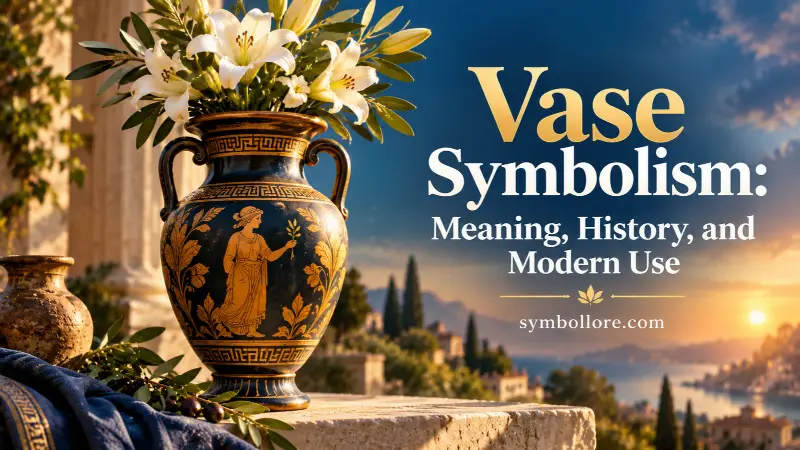
Ancient Greek pottery had many practical purposes, including storing liquids, carrying water, and serving food or drinks.
Some vessels also appeared in religious and funerary settings.
Large ceramic vessels sometimes marked graves, while smaller containers held oils used in funeral rituals.
A type called the lekythos was especially associated with oil and funerary offerings.
Another vessel, the loutrophoros, could be used in ceremonies connected with marriage or death.
These examples show that historical meaning often depended on a vessel’s actual function.
Vase Symbolism in Modern American Culture
In the United States, vases commonly appear in homes, weddings, memorials, restaurants, and public spaces.
A wedding centerpiece may communicate beauty and celebration. Flowers displayed at a memorial service often express sympathy and remembrance.
An inherited vase may represent family history.
Unlike established Chinese artistic symbols, many modern American interpretations depend on personal relationships and the occasion.
Empty Vase Symbolism
An empty vase can suggest possibility, loneliness, waiting, or emotional space.
Its meaning depends on context.
Emptiness and Loneliness
An empty vase in a quiet room may create a feeling of absence.
For example, a writer might describe a vase that once held anniversary flowers but now stands empty.
The object becomes a reminder of a relationship or moment that has passed.
Potential and New Beginnings
An empty vase also offers room for something new.
Someone preparing a home for spring might place a clean vase on a table before buying fresh flowers.
In this setting, emptiness represents anticipation rather than loss.
Simplicity and Peace
A plain vase can also function as a complete decorative object without flowers.
In minimalist design, its shape, texture, and empty space may encourage a feeling of calm.
Therefore, an empty vase does not always communicate sadness.
Broken Vase Symbolism
A broken vase often represents loss, fragility, change, or the end of something meaningful.
However, interpretations vary.
Loss and Emotional Pain
A shattered vase can represent a sudden emotional break.
In fiction, a character might accidentally break a treasured family vase during an argument.
The damage may reflect tension, regret, or fear of losing an important relationship.
Change and Transformation
A broken object changes form permanently.
As a metaphor, this can represent a turning point or the realization that life cannot return to its previous state.
However, the change is not automatically negative.
An artist could transform fragments into a new sculpture, turning destruction into a symbol of creativity.
Healing and Resilience
A repaired vase can symbolize recovery.
Visible cracks may remind someone that an object still has value despite damage.
This interpretation often appears in modern discussions about healing and personal growth.
A broken vase is not reliable evidence that bad luck or a future disaster will occur.
Flower Vase Symbolism and Its Meaning
A vase filled with flowers combines the symbolism of the container with the meanings of the plants.
The vase may suggest care or preservation, while the flowers communicate additional emotions.
| Flower Arrangement | Possible Symbolic Meaning |
|---|---|
| Red roses in a vase | Romantic love and affection |
| White lilies in a vase | Remembrance, sympathy, or purity, depending on context |
| Sunflowers in a vase | Warmth, optimism, and appreciation |
| Pink flowers in a vase | Tenderness, affection, and gratitude |
| Dried flowers in a vase | Memory, endurance, or the passage of time |
| Mixed seasonal flowers | Celebration, variety, and changing seasons |
| Fresh green branches | Renewal, simplicity, and natural growth |
These are common associations, not universal meanings. Personal experiences and cultural traditions can change how someone understands a flower arrangement.
How to Interpret Vase Symbolism
The best way to interpret a vase is to examine its context rather than assign it one fixed meaning.
Start with these questions.
- What is inside the vase? Fresh flowers, dried plants, water, or emptiness may suggest different ideas.
- What condition is it in? A polished vase creates a different impression from a cracked or shattered one.
- Where does it appear? A wedding, memorial, painting, or dream changes the possible meaning.
- Does the design have a cultural background? Certain images or patterns may have documented symbolic meanings.
- What emotions does it create? A cherished family vase may communicate comfort to one person and sadness to another.
For example, a blue ceramic vase in a sunny kitchen may suggest peace and domestic comfort.
The same vase, broken beside an abandoned table, could create a feeling of loss.
Context makes the difference.
Examples of Vase Symbolism in Art and Everyday Life
A Vase in a Still-Life Painting
Imagine a painting showing a glass vase filled with flowers. Several petals have fallen onto the table.
The arrangement may suggest both beauty and the passage of time.
Fresh blossoms show life and vitality, while fallen petals remind viewers that living things change.
Without knowing the artist’s intent, this remains a possible interpretation rather than a confirmed message.
A Vase Given as a Wedding Gift
A decorative vase presented to newlyweds can represent care, celebration, and wishes for a welcoming home.
The symbolism may come from the occasion, the giver’s intentions, or the vase’s traditional design.
A Family Vase Passed Down Through Generations
A vase inherited from a grandparent often carries memories of family gatherings and earlier homes.
Its emotional value may become more important than its material worth.
In this example, the vase represents continuity and remembrance.
A Broken Vase in a Story
A character breaks a vase during a moment of anger.
Later, the character carefully gathers the pieces.
This scene might symbolize regret, responsibility, or the desire to repair a damaged relationship.
The meaning develops through the character’s actions.
Vase Symbolism vs. Other Container Symbols
Vases share some characteristics with other containers, but their usual functions create different associations.
| Object | Common Symbolic Associations | Main Distinction |
|---|---|---|
| Vase | Beauty, preservation, peace, remembrance | Often displays flowers or decorative arrangements |
| Bowl | Nourishment, sharing, hospitality | Commonly associated with serving or holding food |
| Jar | Storage, protection, preservation | Usually emphasizes keeping contents safe |
| Cup | Hospitality, refreshment, shared experience | Often used for drinking or offering a beverage |
| Urn | Memory, mourning, respect | May have a specific funerary purpose |
These distinctions are helpful, but they are not absolute. A vessel’s historical function and cultural setting matter more than its modern English label.
Common Misconceptions About Vase Symbolism
Every Vase Represents Good Luck
Not every vase has a traditional connection with luck.
Some Chinese designs express good wishes, but this does not mean every vase in every culture carries the same message.
A Broken Vase Always Means Something Bad
A broken vase can represent emotional pain in a story, but it can also suggest transformation or repair.
Accidentally breaking a vase does not predict future events.
An Empty Vase Always Represents Loneliness
An empty vase may suggest absence, but it can also represent simplicity, freedom, or anticipation.
The setting and personal associations shape the interpretation.
All Ancient Vases Were Ceremonial
Many ancient vessels served ordinary household purposes.
Their use as storage containers, water carriers, drinking vessels, or decorative objects was often practical.
Certain forms had ceremonial roles, but it would be inaccurate to assign a sacred meaning to every ancient vase.
Important Historical Facts About Vase Symbolism
Historical evidence helps separate established cultural meanings from modern interpretations.
In ancient Greece, ceramic forms could have specific ceremonial functions. Archaeological examples show that some vessels served as grave markers or held oils associated with burial customs.
Chinese decorative art provides another clear example. Through language-based symbolism, artists used the image of a vase to communicate wishes for peace.
Meanwhile, a modern painting of an empty vase has no automatic, fixed interpretation. Its meaning depends on the artist’s choices and the viewer’s understanding.
The strongest interpretations consider the object’s origin, period, decoration, and use.
This approach prevents personal symbolism from being mistaken for historical fact.
People Also Ask About Vase Symbolism
What does a vase represent spiritually?
A vase may spiritually represent openness, care, inner growth, or the ability to receive something meaningful. These are possible personal interpretations rather than universal religious teachings. Cultural background and the vase’s contents can change its meaning.
Is a vase a symbol of peace?
Yes, a vase is an established symbol of peace in certain Chinese artistic traditions. The connection comes from the similar pronunciation of words associated with vases and peace. Elsewhere, a vase may express calm through its design or setting without having the same traditional meaning.
What does an empty vase mean?
An empty vase can represent possibility, waiting, simplicity, or absence. In a hopeful scene, it may suggest readiness for new experiences. In a sad scene, the same object might express loneliness or loss.
What does a vase symbolize in art?
In art, a vase can represent beauty, domestic life, memory, fragility, or the passage of time. Its meaning depends on the work. Flowers, lighting, nearby objects, and the artist’s cultural background help determine the interpretation.
Frequently Asked Questions About Vase Symbolism
1. What does a white vase symbolize?
A white vase may suggest simplicity, calm, cleanliness, or elegance. In a modern interior, its neutral color can create a peaceful atmosphere. However, color meanings vary across cultures. The vase’s design, contents, and occasion provide more reliable clues than color alone.
2. What is the meaning of a blue vase?
A blue vase may represent calm, thoughtfulness, or emotional balance in personal interpretation. Blue often creates a peaceful visual effect in interior design. In historical ceramics, however, blue decoration may have artistic or technical significance rather than one universal spiritual meaning.
3. What does a vase mean in a dream?
A vase in a dream may reflect personal memories, relationships, or feelings about something valuable. A full vase might remind someone of care or abundance, while a broken vase could connect with recent worries. Dream research does not establish one universal meaning for vase dreams, so personal context matters most.
4. What does receiving a vase as a gift symbolize?
Receiving a vase may express appreciation, friendship, hospitality, or good wishes. In some Chinese cultural contexts, a vase can communicate a wish for peace. In other situations, the meaning comes mainly from the giver’s intentions and the relationship between the people involved.
5. What does a cracked vase symbolize?
A cracked vase may represent vulnerability, emotional strain, or something that needs attention. If the vase remains useful despite its damage, it may also suggest resilience. This metaphor works well in stories and personal reflection, but a crack has no fixed supernatural meaning.
6. What does a vase with water symbolize?
A vase containing water may suggest care, nourishment, or the conditions needed for growth. Water supports fresh flowers, so it can serve as a metaphor for emotional support. Its specific meaning depends on whether the vase appears in art, a personal ritual, or an ordinary household setting.
7. What does an old vase symbolize?
An old vase may symbolize heritage, memory, tradition, or respect for craftsmanship. If it belonged to a loved one, it can carry strong personal meaning. Historical vases may also reveal information about the society that made them, including artistic methods and ceremonial practices.
Conclusion: What Does a Vase Truly Symbolize?
Vase symbolism connects everyday beauty with deeper ideas about peace, care, memory, and change.
In Chinese art, vases have a documented connection with peace. Certain ancient Greek vessels also played meaningful roles in funerary customs.
Modern interpretations are more personal. An empty vase may suggest possibility, while a broken one can represent fragility or transformation.
Ultimately, a vase’s meaning comes from its cultural history, appearance, purpose, and the emotions people associate with it.