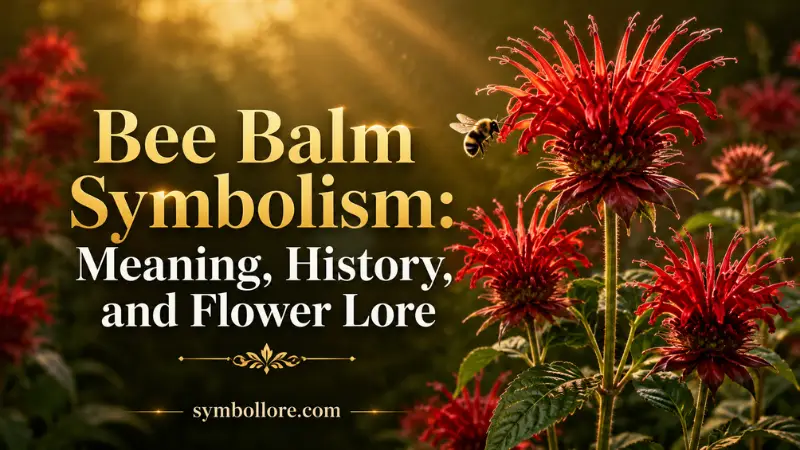
Bee balm symbolism most often centers on compassion, healing, sympathy, vitality, and connection. These ideas make sense for a North American native plant long valued in gardens and associated with traditional practical uses. Its nectar-rich flowers also support many pollinators.
However, bee balm does not have one universal meaning handed down unchanged through history. Modern flower guides, historical plant use, floriography, and contemporary spiritual interpretation sometimes tell different stories. Understanding those layers reveals a much richer symbol than a simple list of meanings.
Quick Answer
Bee balm symbolism commonly represents compassion, healing, sympathy, vitality, and connection with others. Healing associations reflect the plant’s long history of practical use, while its pollinator-rich flowers support modern ideas of community and reciprocity. However, meanings such as prosperity, protection, and specific color symbolism are better understood as later or modern interpretations rather than universal historical definitions.
Key Takeaways
- Compassion and healing are bee balm’s most widespread modern associations.
- Its practical history helps explain its connection with care and comfort.
- Bee balm belongs to the North American genus Monarda.
- Historical flower dictionaries do not give bee balm one consistent meaning.
- Color interpretations are useful but are not fixed historical rules.
- Pollinator activity supports modern themes of connection and community.
Bee Balm Meanings at a Glance
| Meaning | Why It Is Associated With Bee Balm | Best Interpretation |
|---|---|---|
| Compassion | Long association with soothing and care | Common modern meaning |
| Healing | Traditional practical uses of Monarda | Historically grounded association |
| Sympathy | Repeated in modern flower-language sources | Established modern flower lore |
| Vitality | Bright blooms and vigorous summer growth | Modern interpretation |
| Connection | Flowers attract diverse pollinators | Ecological interpretation |
| Protection | Linked in some flower guides with health | Folkloric or modern association |
| Prosperity | Appears in several contemporary guides | Modern symbolic interpretation |
What Does Bee Balm Symbolism Mean?
At its core, bee balm represents care that is active rather than passive. Compassion, sympathy, and healing fit a plant whose cultural reputation developed partly around practical usefulness. Its vivid flowers add a second layer: vitality, confidence, and energetic life.
Connection is an especially useful modern interpretation. Bee balm doesn’t bloom in isolation from its ecosystem. Its tubular flowers provide resources for bees, butterflies, hummingbirds, and other visitors. That makes the plant an appealing symbol for relationships in which giving and receiving support one another.
Protection and prosperity also appear in modern flower guides. However, they should not be treated as universally documented historical meanings. Flower symbolism changes between books, cultures, periods, and individual interpreters.
That distinction makes bee balm symbolism more credible, not less meaningful.
Why Healing, Compassion, and Sympathy Became Central
Healing is one of the easiest symbolic associations to understand because Monarda has a documented history of practical plant use. The USDA notes that beebalms were culturally significant to several Native American groups and had medicinal applications.
Over time, a useful plant associated with comfort can naturally acquire emotional meanings such as care, consolation, and compassion. Modern flower-language sources commonly extend that idea to sympathy.
Still, symbolism should not be confused with medical evidence. A historical record that people used a plant medicinally does not prove that every traditional preparation is safe or effective by modern clinical standards.
For symbolic purposes, the more important point is cultural memory: bee balm became associated with helping, soothing, and sustaining people. That provides a logical foundation for its modern healing symbolism without turning folklore into a health claim.
Monarda didyma, Monarda fistulosa, and the Plant Behind the Symbol
Bee balm is not simply one flower. The name commonly refers to members of the genus Monarda in the mint family, Lamiaceae.
Two particularly important species are Monarda didyma, commonly called scarlet beebalm or Oswego tea, and Monarda fistulosa, widely known as wild bergamot. The
describes Monarda as aromatic members of the mint family that support many kinds of pollinators.
This botanical distinction prevents two common mistakes.
First, wild bergamot is not the bergamot orange, Citrus bergamia, whose oil flavors Earl Grey tea. Second, bee balm is not lemon balm, Melissa officinalis. Although both belong to the mint family, they belong to different genera.
Therefore, symbolic claims about “balm” or “bergamot” should always be checked against the actual plant being discussed.
Bee Balm in Native American Plant History
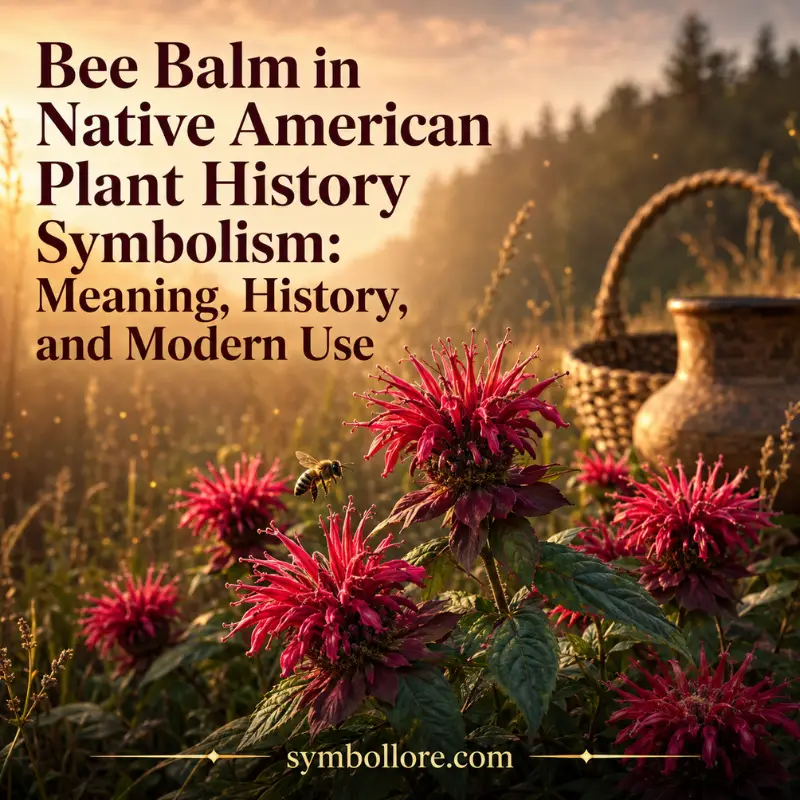
Native American plant use gives bee balm part of its historical depth, but it should not be reduced to a single “Native American meaning.” Indigenous peoples are distinct nations with distinct languages, knowledge systems, and traditions.
Historical ethnobotanical records provide more specific evidence. An early Bureau of Ethnology account records Ojibwe use of Monarda fistulosa root preparations for stomach and intestinal pain. The USDA likewise notes cultural importance and various traditional applications among Native communities.
Those records help explain why contemporary readers associate bee balm with care, resilience, and healing. However, they do not establish that every Native nation regarded the flower as a formal symbol for those concepts.
That difference matters. Native American plant use is documented cultural history; assigning a single spiritual definition to all Indigenous peoples would go beyond the evidence.
Oswego Tea and Early American History
The name Oswego tea links Monarda with an important part of its North American cultural history. Monarda didyma was used for tea by Indigenous people and later by colonists.
identifies M. didyma as bee balm, Oswego tea, and bergamot. It notes that Native Americans and colonists used the native plant for tea. Its spicy, minty, citrus-like fragrance also explains the comparison with true bergamot.
Bee balm’s place in early American gardens is likewise well established.
Monticello reports that M. didyma was valued as an ornamental and kitchen plant by the early eighteenth century. John Bartram sent seed to England in 1744.
This history adds themes of usefulness, exchange, adaptation, and cultural continuity to the flower.
Bee Balm Symbolism in Floriography
Claims about Victorian bee balm meanings require particular care. Modern websites frequently connect Monarda with compassion and sympathy and sometimes describe those meanings as Victorian floriography.
Historical flower dictionaries show why such claims should not be treated as a single settled code. In the digitized historical volume
The Language and Poetry of Flowers
an entry for Monarda amplexicaulis assigns the flower a meaning about unbearable whims—not compassion or healing.
That does not mean modern compassion symbolism is “wrong.” The historical entry concerns a named Monarda taxon and represents one flower dictionary, while floral codes varied between publications.
Instead, it demonstrates an important rule: there was no perfectly standardized Victorian flower dictionary. Therefore, compassion and sympathy are safest described as widespread modern flower-language associations unless a particular historical source is identified.
Bee Balm Color Meanings
Bee balm color meanings work best as modern interpretations based on broader Western color associations. They should not be presented as a universal historical code.
Red bee balm naturally suggests vitality, passion, courage, and strong affection. Scarlet Monarda didyma has such intense color that energy is an especially intuitive interpretation.
Pink bee balm can represent affection, gentleness, gratitude, and warm friendship. For that reason, it works well in a caring or appreciative gift.
Purple or lavender bee balm, particularly wild bergamot, can suggest creativity, individuality, reflection, and dignity.
White bee balm commonly fits themes of peace, sincerity, remembrance, and new beginnings.
These meanings become strongest when the sender explains the intention. A red plant given to someone recovering from a difficult period, for example, can represent renewed strength regardless of what a flower dictionary says.
Pollinators and the Modern Meaning of Bee Balm
Pollinators give bee balm an unusually visible ecological identity. USDA materials describe beebalms as valuable to butterflies, bees, flies, and wasps, while other botanical resources also record hummingbird visitation.
That ecological relationship supports contemporary symbolic meanings of community, reciprocity, generosity, and interdependence. These are interpretations based on the plant’s real ecological role rather than claims about ancient symbolism.
The distinction is useful.
A gardener might plant bee balm as a personal reminder that supporting a community often produces benefits beyond oneself. Someone else may see its busy summer flowers as a symbol of social energy and shared purpose.
In environmentally focused gardens, bee balm can also represent a deliberate relationship with native biodiversity. Here the symbolism comes from what the living plant actually does.
Spiritual Meaning, Tattoos, and Gifts
In contemporary spiritual interpretation, bee balm can represent emotional healing, renewed energy, compassionate relationships, and reconnecting with one’s community. Some modern traditions also associate it with cleansing or protection. These meanings are personal or folkloric, not universal religious teachings.
A bee balm tattoo can therefore work well for someone who wants to represent recovery, compassion, resilience, or mutual support. Adding a bee or hummingbird can emphasize connection and reciprocity, while a red bloom can stress strength and vitality.
As a gift, the living plant often makes more sense than a strict “coded” bouquet. It can communicate support to someone going through change, gratitude toward a caring friend, or encouragement after hardship.
The best meaning is specific: accompany the flower with a short explanation such as, “For strength, healing, and all the care you give others.” That creates a clear personal symbol without pretending that flower meanings have only one definition.
FAQs
Bee balm commonly symbolizes compassion, sympathy, healing, vitality, and connection. Some modern flower guides also associate it with prosperity and protection. These meanings are not all equally historical, so it is better to view them as overlapping traditions and modern interpretations.
The modern spiritual meaning of bee balm often centers on healing, emotional renewal, supportive relationships, and protection. Contemporary herbal or spiritual practices may give it additional meanings. However, those beliefs should not be described as universal or scientifically established properties.
Historical evidence is inconsistent. Modern sources often connect Monarda with compassion and sympathy, but at least one historical flower-language dictionary assigns Monarda amplexicaulis a very different meaning. Therefore, there was no single, universal Victorian bee balm definition.
Red bee balm commonly represents passion, vitality, courage, energy, and strong affection in modern interpretation. These meanings draw largely from broader red-flower symbolism and the dramatic appearance of scarlet Monarda rather than from a universally documented historical code.
Purple or lavender bee balm can symbolize creativity, individuality, dignity, and reflection. Wild bergamot, Monarda fistulosa, commonly produces lavender-colored flowers. These color associations are best treated as contemporary symbolic interpretations rather than fixed traditional definitions.
Bee balm is sometimes called wild bergamot, but it is not the bergamot orange. Bee balm belongs to the genus Monarda, while the citrus fruit associated with bergamot oil is Citrus bergamia. Similarity in fragrance helped produce the shared common name.
Yes. A living bee balm plant can make a thoughtful gift for someone associated with compassion, recovery, resilience, friendship, or gardening. Because floral meanings vary, a personal note explaining why you chose the plant makes the symbolism clearer.
Conclusion
Bee balm symbolism is best understood as a blend of documented plant history and evolving interpretation. Compassion, healing, sympathy, vitality, and connection are its strongest modern themes, supported in part by Monarda’s cultural uses and its lively relationship with pollinators.
However, no single flower dictionary controls its meaning. Historical floriography, Native plant history, modern spirituality, and color symbolism should remain distinct. With that context, bee balm becomes a particularly grounded symbol of care, resilience, community, and life shared with others.


