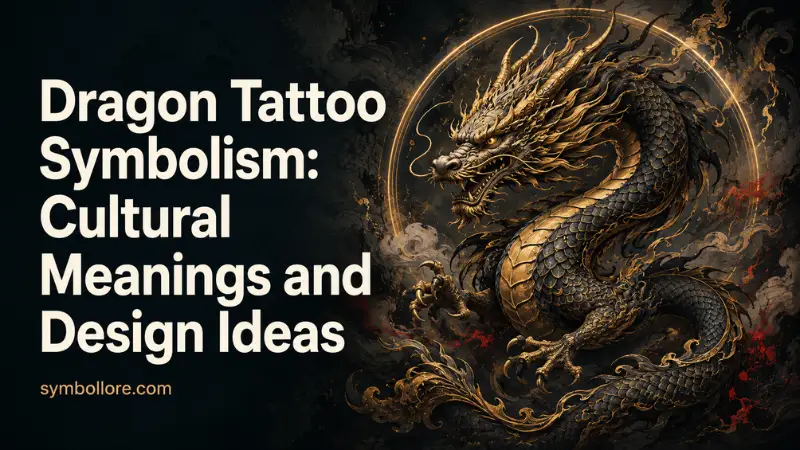
Dragon tattoo symbolism commonly expresses power, wisdom, protection, courage, or personal transformation. However, a dragon does not carry one universal message. Its cultural tradition, posture, color, surrounding elements, and the wearer’s intention all shape its meaning.
A long, wingless dragon moving through clouds may suggest East Asian water and celestial imagery. In contrast, a winged, fire-breathing creature often draws on European stories about danger, treasure, and heroic struggle. Understanding that difference helps you choose a design with purpose instead of relying on a generic symbol chart.
Quick Answer
Dragon tattoo symbolism usually represents strength, wisdom, protection, ambition, or transformation. Chinese and Japanese designs often connect dragons with water, weather, authority, and beneficial power. European-style dragons may represent danger, independence, conquest, or controlled aggression. The final meaning depends on the tradition, design details, and personal story behind the tattoo.
Key Takeaways
- Dragons can represent power, protection, wisdom, courage, or change.
- Cultural tradition changes the meaning more than color alone.
- Eastern dragons often connect with water, clouds, and beneficial forces.
- Winged Western dragons often suggest fire, danger, or conquest.
- Added symbols can support, balance, or transform the central message.
- Personal meaning should complement, not erase, cultural context.
Dragon Tattoo Meanings at a Glance
| Design Feature | Common Association | Important Distinction |
|---|---|---|
| Chinese-style dragon | Authority, good fortune, rain, vitality | Historically connected with water and imperial imagery |
| Japanese-style dragon | Wisdom, guardianship, balance, natural force | Meaning depends on story, composition, and tattoo tradition |
| European-style dragon | Danger, independence, treasure, conquest | It may represent the threat or the power to defeat it |
| Dragon with water or clouds | Adaptability, life, change, natural energy | Especially relevant to many East Asian designs |
| Dragon with fire | Passion, destruction, purification, fierce will | More common in modern fantasy and European imagery |
| Rising dragon | Ambition, progress, awakening | Direction is suggestive, not a universal rule |
| Coiled dragon | Controlled strength, readiness, protection | Pose and facial expression can change the tone |
| Dragon with a pearl | Wisdom, value, enlightenment, spiritual pursuit | Interpret within the design’s cultural source |
What Dragon Tattoo Symbolism Usually Represents
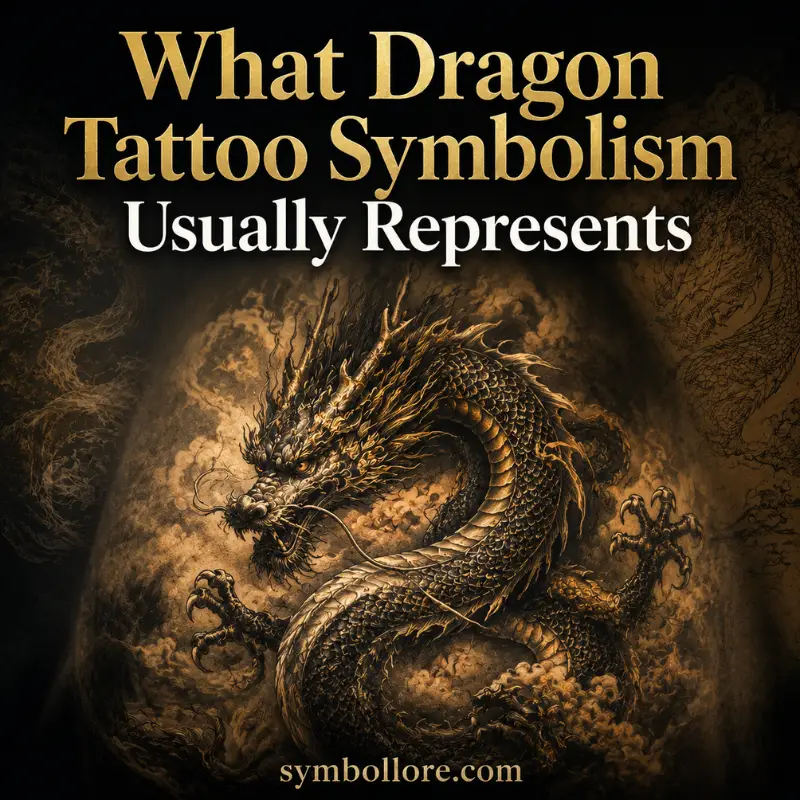
A dragon tattoo most often communicates exceptional power. Unlike an ordinary strong animal, a dragon combines features from several creatures and rules spaces humans cannot easily control. It may fly, command storms, breathe fire, live beneath water, or guard a sacred place. That supernatural scale makes it suitable for ideas such as authority, resilience, and self-mastery.
Protection is another common meaning. A wearer may see the dragon as a guardian of family, personal boundaries, or hard-won peace. In other cases, the creature represents wisdom because it is ancient, watchful, and difficult to defeat.
Transformation is largely a modern personal reading, although it can connect with older legends. Someone may choose the design after surviving illness, ending a destructive pattern, or entering a new stage of life. These personal associations are valid, but they should not automatically be described as traditional meanings.
Chinese Dragon Symbolism: Rain, Fortune, and Authority
Chinese dragon imagery traditionally connects with water, rainfall, natural forces, dignity, and imperial authority. These dragons are usually long and serpentine rather than winged. They commonly move among waves or clouds, which visually reinforces their command of weather and water.
The Smithsonian’s National Museum of Asian Art explains that, by the Han dynasty, dragons were understood as water creatures that could enter clouds and bring life-giving rain. Its discussion of
also connects them with masculine power and imperial majesty. This evidence explains why a Chinese dragon tattoo can suggest authority, prosperity, vitality, or beneficial control rather than simple aggression.
A flaming pearl sometimes appears near the creature. Museum interpretations associate this pearl with wisdom or enlightenment. Therefore, a dragon pursuing it may convey aspiration, knowledge, or the search for something of lasting value.
Japanese Dragon Symbolism: Wisdom and Natural Power
A Japanese dragon, called ryū or tatsu, often represents formidable power directed toward protection or balance. Like its Chinese counterpart, it commonly has a long body and strong links with water, clouds, rainfall, and the sea. Japanese stories and artworks also contain dangerous dragons, so “always benevolent” is too broad a rule.
In Japanese tattooing, known as irezumi, the full composition matters. Waves, wind bars, clouds, blossoms, and the dragon’s movement work together across the body. A dragon surrounded by turbulent water might represent control during hardship. The same creature among softer clouds and flowers may feel more protective or contemplative.
Japanese artists have interpreted dragon imagery in many ways across time. The Smithsonian’s National Museum of Asian Art presents
a pair of dragon paintings associated with Tawaraya Sōtatsu’s expressive style. Such artworks show why tattoo designs should be understood as compositions, not merely as collections of coded details.
European Dragon Symbolism: Fire, Danger, and Conquest
A European dragon tattoo often has wings, a heavy body, horns, and a connection with fire or guarded treasure. In many medieval legends, the creature threatens a community or blocks access to something valuable. A hero must confront it, making the dragon a symbol of danger, chaos, greed, or a supreme test.
However, the wearer does not have to identify with the monster’s negative role. The tattoo may reclaim the dragon’s independence and untamed strength. It can symbolize refusing control, protecting personal territory, or embracing qualities that others find intimidating.
Modern fantasy has widened these interpretations further. Dragons may be loyal companions, intelligent rulers, endangered beings, or morally complex forces. Therefore, a Western design can represent controlled aggression, survival, freedom, or fascination with fantasy without carrying a religious meaning.
Colors, Pose, Direction, and Design Details
Color can support a dragon’s message, but it does not function as a universal dictionary. Red may suggest passion, danger, celebration, or vitality. Black can feel severe, protective, mysterious, or restrained. Gold frequently implies prestige, achievement, or wealth, while blue may strengthen an association with water and calm authority.
The National Museum of Asian Art notes that blue has a lasting symbolic relationship with water, life, fertility, and rebirth in many artistic contexts. Its explanation of
shows why a blue water dragon may evoke renewal. Still, the complete design determines the message.
Pose also changes the emotional tone. An open mouth and extended claws create confrontation, while a curved, watchful posture may suggest guardianship. Upward movement can communicate ambition. Downward movement could indicate descent, intervention, pursuit, or simply the best anatomical flow. No single direction automatically brings bad luck.
Dragon With Koi, Phoenix, Tiger, or Flowers
A dragon paired with another symbol creates a relationship rather than two separate meanings. The viewer should consider whether the figures cooperate, oppose each other, or show different stages of one story.
A koi and dragon can refer to the East Asian legend of a carp overcoming difficult waters and becoming a dragon. The British Museum notes that the ascending carp became associated with courage in Japan.
can therefore express perseverance rewarded by transformation.
A phoenix may balance enduring strength with renewal. A tiger can create tension between grounded physical force and celestial or fluid power. Lotus flowers may add purity or growth, while peonies can suggest beauty, status, or abundance. Cherry blossoms can introduce impermanence because their brief flowering season often evokes life’s passing nature.
These combinations are not equations. Their meaning depends on movement, cultural source, artistic style, and the wearer’s purpose.
Placement and Size Affect the Design’s Message
Placement does not impose a fixed symbolic meaning, but it changes how the dragon communicates. A back piece offers room for a complete scene with clouds, waves, claws, and supporting figures. It can feel monumental or protective because the creature occupies a broad field.
Sleeves and leg pieces suit a long dragon because its body can follow the limb’s natural movement. The shoulder, elbow, hip, and knee can become turning points in the composition. Meanwhile, the chest may give a guardian design a more personal or intimate emphasis.
Small tattoos require simplification. Too many scales, whiskers, flames, and flowers can merge as lines soften over time. A compact dragon may work better as a clear silhouette, head, or single continuous form. Ask the artist which details will remain readable at the intended size.
Cultural Respect and Appropriation
People outside an East Asian culture can generally approach dragon imagery respectfully, but appreciation requires more than choosing an attractive picture. Start by identifying whether the reference is Chinese, Japanese, Korean, Vietnamese, or a modern mixture. These traditions influence one another, yet they are not interchangeable.
Next, learn what the surrounding symbols mean in their original context. Avoid adding religious writing, imperial emblems, or characters that neither you nor your artist understands. Do not claim heritage, status, or spiritual authority you do not possess.
A skilled artist should be able to explain the design tradition and distinguish historical practice from modern invention. Ask where the references came from, why specific elements appear together, and whether the composition follows a recognized style. Respectful research does not eliminate every disagreement, but it prevents careless or misleading use.
Planning a Safe, Meaningful Dragon Tattoo
Begin with the message, not a random reference image. Write one sentence describing what the dragon should express. For example, “I want a calm guardian that represents strength gained through experience” gives an artist clearer direction than “I want a powerful dragon.”
Then use this planning sequence:
- Choose the cultural or fantasy tradition.
- Select one central meaning.
- Pick visual features that reinforce that meaning.
- Decide whether added symbols create harmony or conflict.
- Match the composition to the body area.
- Ask the artist how the lines and contrast will age.
- Review cultural references before approving the final sketch.
Safety matters as much as symbolism. The U.S. Food and Drug Administration warns that tattoos can cause infections, allergic reactions, scarring, granulomas, and other adverse effects. Its current
recommends contacting a health professional if an infection or reaction develops. Choose a reputable studio that follows applicable state and local sanitation requirements.
Common Myths and Misunderstandings
Dragon tattoos are not inherently masculine or feminine. Style, scale, line weight, color, and composition can make the same creature feel fierce, elegant, restrained, playful, or ceremonial. The wearer’s gender does not determine its meaning.
A dragon facing downward is not automatically unlucky. Although individual artists or traditions may prefer ascending movement, internet claims often turn design customs into universal supernatural rules. Ask for the source before accepting such a statement.
Claw count can provide cultural or historical clues, but it does not offer a flawless method for identifying every dragon. Artistic conventions changed across regions, eras, media, and social settings. Modern tattoo artists also adapt older designs.
Finally, no color guarantees luck, wealth, protection, or danger. Symbolism develops through the full image and the wearer’s relationship with it.
FAQs
Spiritually, a dragon tattoo may represent protection, vital energy, wisdom, transformation, or mastery over destructive impulses. However, there is no single spiritual definition shared by every religion or culture. The specific tradition and surrounding symbols must support any spiritual interpretation.
A Chinese dragon tattoo commonly represents beneficial power, dignity, good fortune, rain, and command over natural forces. It can also suggest imperial authority or the pursuit of wisdom. Clouds, water, posture, and a flaming pearl can further shape the message.
A Japanese dragon tattoo often represents wisdom, strength, guardianship, and natural power connected with water or weather. Yet Japanese legends include both helpful and threatening dragons. The entire design, including waves, clouds, flowers, and movement, determines its particular tone.
Yes, many wearers use a dragon as a protective emblem. The creature may guard a person, family, value, memory, or boundary. Still, protection is only one possible meaning; some designs emphasize ambition, danger, authority, independence, or transformation instead.
No. Colors have associations, but they do not form a universal tattoo code. Red might communicate vitality or danger, while blue may suggest water or calm. Cultural tradition, pose, surrounding imagery, and the artist’s visual choices matter more than color by itself.
It is not automatically disrespectful, but careless use can be. Research the specific culture, avoid misunderstood sacred or imperial imagery, and work with an artist who knows the tradition. Appreciation becomes more credible when the design accurately acknowledges its sources.
Conclusion
Dragon tattoo symbolism can express power, wisdom, protection, ambition, danger, or personal change. Its clearest meaning comes from the relationship between cultural tradition and visual design, not from one color or isolated detail.
Before choosing permanent artwork, identify the kind of dragon, the central idea, and the elements that support it. Then discuss cultural references, placement, long-term readability, and safety with a qualified tattoo artist. A carefully researched design can remain visually powerful while carrying a meaning you understand and can explain.