

Campanula symbolism centers mainly on gratitude, humility, loyal affection, and enduring love. Commonly called bellflowers, these delicate blooms have also represented constancy, acknowledgment, friendship, and remembrance. However, no single interpretation applies to every species, color, culture, or historical period.
Their nodding, bell-shaped flowers encourage associations with modesty and thankfulness. Meanwhile, their abundant blooms and recurring growth support ideas of dependable affection. Understanding these distinctions helps you choose a Campanula whose color and setting communicate the right message.
Quick Answer
Campanula symbolism most often represents gratitude, humility, loyalty, and everlasting love. Purple and blue flowers commonly suggest devotion or constancy, while white blooms suit sincerity and remembrance. These meanings come partly from historical flower language and partly from modern interpretations, so the recipient, occasion, species, and culture still shape the message.
Key Takeaways
- Campanula most commonly expresses gratitude, humility, and dependable affection.
- Its bell shape supports associations with modesty and spiritual reflection.
- Historical flower books assigned different meanings to different bellflowers.
- Color meanings are useful conventions, not universal rules.
- Campanula can suit romance, friendship, weddings, sympathy, and remembrance.
- Species names matter because “bellflower” describes many distinct plants.
Campanula Meanings at a Glance
| Flower or Color | Common Symbolic Meaning | Suitable Occasion | Important Note |
|---|---|---|---|
| Purple Campanula | Admiration, dignity, lasting affection | Anniversary or congratulations | Often carries the genus’s familiar romantic meaning |
| Blue Campanula | Loyalty, constancy, calm devotion | Friendship or committed relationships | Blue meanings also depend on local tradition |
| White Campanula | Sincerity, humility, peace | Sympathy, remembrance, or thanks | Appropriate when a quiet message is preferred |
| Pink Campanula | Gentle affection, appreciation, tenderness | Birthdays or friendly gifts | Usually reads as warmer and less formal |
| Canterbury bells | Gratitude, acknowledgment, enduring love | Weddings and thank-you bouquets | A specific species, Campanula medium |
| Harebell | Humility, delicacy, constancy | Nature-inspired gifts or memorials | Common names vary considerably by region |
What Does Campanula Symbolize?
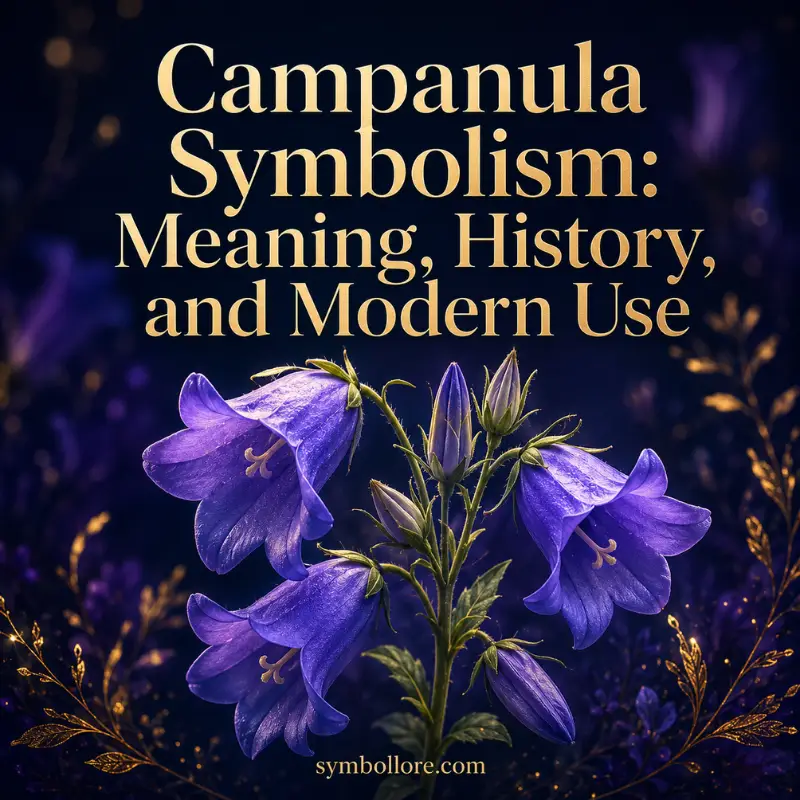
Campanula symbolizes a quiet but lasting form of affection. Gratitude and humility are its most widely repeated meanings, followed by loyalty, constancy, friendship, and enduring love. Rather than suggesting dramatic passion, the bellflower usually communicates steady care, appreciation, or emotional sincerity.
This interpretation fits the plant’s appearance. Many varieties carry small, nodding blossoms instead of large, upright flowers. Their restrained form can suggest modesty, while their generous clusters evoke companionship and connection. Because many campanulas return each year, perennial varieties also lend themselves to messages about lasting bonds and dependable support.
Still, flower meanings are cultural conventions. A Campanula does not have one scientifically determined definition. Its message emerges from historical flower books, folklore, visual qualities, and the occasion in which someone gives or displays it.
Why Campanula Represents Gratitude and Humility
The flower’s downward-facing or gently nodding form helps explain its connection with humility. A bloom that appears to bow can resemble a respectful gesture. Its relatively delicate size also gives it a modest character, especially beside bold flowers such as peonies, lilies, or sunflowers.
Gratitude follows naturally from that visual reading. A bellflower bouquet can feel like a quiet acknowledgment rather than an extravagant declaration. Some modern interpretations also connect its abundant flowering with generosity: the plant produces many blooms while maintaining a soft, unassuming appearance.
These explanations should be understood as symbolic readings, not proven origins. Nevertheless, they clarify why florists and gardeners continue to use Campanula for thank-you gifts. It communicates appreciation without making the occasion feel overly formal or romantic.
Everlasting Love, Loyalty, and Constancy
Campanula can represent everlasting love, but its romantic message is usually gentle and faithful rather than passionate. The association works especially well for established relationships, anniversaries, and partnerships built on trust. Blue or purple blooms can reinforce this sense of steady devotion.
Constancy also has historical support. Nineteenth-century flower-language books did not always agree, yet several associated particular bellflowers with constancy or a constant heart. One period handbook listed the pyramidal bellflower under constancy and the small white bellflower under gratitude. Another assigned a “constant heart” to bellflower more generally. These records show both continuity and variation in Victorian floriography.
Therefore, Campanula is a thoughtful romantic flower when the intended message is “my affection remains.” However, pairing it with a note prevents a loving gift from being mistaken for friendship or simple appreciation.
Campanula Symbolism by Color
Color changes the emotional tone of Campanula, although these meanings are modern conventions rather than strict historical rules.
- Purple Campanula suggests admiration, dignity, achievement, and deep affection. It works well for milestones and romantic arrangements.
- Blue Campanula conveys loyalty, trust, calmness, and constancy. It can honor a dependable friend or long-term partner.
- White Campanula commonly represents sincerity, humility, innocence, peace, or remembrance. Its quiet appearance suits memorial flowers.
- Pink Campanula expresses tenderness, appreciation, happiness, and gentle love. It is suitable for birthdays, family gifts, or early romance.
The arrangement can change the meaning further. White bellflowers beside rosemary may emphasize remembrance, while pink Campanula mixed with cheerful seasonal flowers feels more celebratory. Consequently, color should guide interpretation, not control it.
History and Victorian Flower Language
Campanula’s scientific name comes from the Latin campana, meaning bell, with campanula conveying the idea of a little bell. The name refers to the corolla found on many species. North Carolina State University’s plant profiles confirm this origin for both clustered bellflower and Canterbury bells.
The genus has a long botanical history. Carl Linnaeus formally published Campanula in 1753, and
Kew Science recognizes it as an accepted genus
distributed widely across temperate and subtropical parts of the Northern Hemisphere.
During the nineteenth century, Western flower-language books turned plants into coded emotional messages. Yet their definitions differed. Surviving works associate bellflowers with gratitude, constancy, acknowledgment, or an enduring heart. Therefore, “Victorian meaning” should not be treated as a single official dictionary. The tradition was popular, varied, and shaped by individual publishers.
Campanula in Myth, Folklore, and Religion
Bellflowers often acquire spiritual meaning because their blossoms resemble bells. In Christian-influenced interpretation, that shape may recall church bells, prayer, attention, or a call toward spiritual awareness. Blue flowers have also received Marian associations in European folk naming, although those connections apply more strongly to particular local species and traditions than to the entire genus.
Scottish and northern European folklore gives harebells a more mysterious character. Folk names link them with fairies, witches, or enchanted landscapes. Such stories can make the flower signify wonder, sensitivity, and the boundary between ordinary and magical spaces.
Online accounts also repeat a story connecting Campanula with Venus and a mirror. However, this tale is difficult to verify in surviving classical sources and may confuse true Campanula with Venus’ looking-glass, now generally placed in the genus Triodanis. It is safer to describe the story as later floral folklore rather than established Greek mythology.
Meanings of Different Campanula Species
Campanula is a genus, not one flower. Its members vary in shape, origin, growth habit, and traditional associations.
Kew Science records the genus across a broad Northern Hemisphere range,
so local names can easily cause confusion.
Canterbury bells (Campanula medium) have large, showy flowers and commonly represent acknowledgment, gratitude, or enduring affection.
NC State identifies the species
as a biennial native to parts of southern Europe.
Harebell (Campanula rotundifolia) has slender stems and delicate nodding flowers. It often suggests humility, delicacy, and constancy.
Clustered bellflower (Campanula glomerata) produces dense flower heads. Its grouped form can support modern ideas of community and friendship.
Creeping bellflower (Campanula rapunculoides) may symbolize persistence, but U.S. gardeners should be careful.
The University of Minnesota Extension
describes it as an aggressive weed that spreads through seeds, roots, and rhizomes.
Campanula in Grief and Remembrance
White or pale blue Campanula can express sympathy, peaceful remembrance, and continuing emotional connection. Its restrained appearance is suitable for a message that should feel compassionate without becoming visually overwhelming. The idea of constancy may also represent love that continues after loss.
However, Campanula is not universally known as a funeral flower. In many settings, it appears primarily as a garden ornamental or cheerful seasonal bloom. Therefore, the surrounding flowers and written message should make a memorial intention clear.
For example, white bellflowers combined with greenery create a quiet sympathy arrangement. Purple blooms may feel more personal when they reflect the deceased person’s favorite color. A short note about gratitude or lasting memory gives the flowers a precise and considerate meaning.
When to Give Campanula Flowers
Give Campanula when you want to communicate appreciation, steady affection, or gentle encouragement. Its message is warm but not usually overpowering, which makes it useful across romantic and nonromantic relationships.
Suitable occasions include:
- Thank-you gifts: Choose blue, white, or mixed bellflowers to express sincere gratitude.
- Anniversaries: Purple Campanula can represent loyal and enduring love.
- Weddings: Canterbury bells complement themes of acknowledgment, commitment, and happiness.
- Friendship gifts: Pink or blue varieties communicate appreciation and dependable support.
- Memorials: White flowers offer a quiet expression of peace and remembrance.
- New beginnings: A potted perennial can symbolize a relationship or hope that continues to grow.
Because its meanings overlap, include a personal card. A few direct words will communicate more reliably than color symbolism alone.
Campanula Symbolism in Modern Life
Today, people use Campanula symbolism in flower arrangements, gardens, wedding décor, botanical artwork, and tattoos. In a garden, recurring perennial blooms can represent continuity and resilience. Clusters of bellflowers may also suggest friendship, family unity, or the strength of a supportive community.
In wedding arrangements, Campanula adds an informal, romantic quality. Purple and blue varieties suit themes of loyalty, while white flowers support a quieter message of sincerity. Potted bellflowers can also serve as living favors that continue beyond the event.
A Campanula tattoo often carries a more personal meaning. It may honor a loyal relationship, express gratitude after hardship, or remember someone important. Since bellflower species differ, an accurate botanical design can add specificity. A harebell may emphasize delicacy, while Canterbury bells create a fuller and more celebratory image.
Common Misconceptions About Campanula Symbolism
The most common misconception is that Campanula has one fixed meaning everywhere. Flower symbolism changes across books, periods, communities, and personal experiences. Gratitude and humility are strong modern associations, but they are not scientific properties or universal cultural rules.
Another mistake is treating every blue bell-shaped flower as Campanula. Bluebells from the genera Hyacinthoides and Mertensia, balloon flowers from Platycodon, and Venus’ looking-glass from Triodanis are distinct plants. Their common names sometimes overlap, which encourages inaccurate stories and symbolism.
Finally, color charts should not be read as rigid codes. Purple does not automatically mean romance, and white does not always indicate mourning. The recipient’s preferences, cultural background, arrangement, and written message matter more than any online definition.
FAQs
Campanula is commonly called bellflower because many species have bell-shaped blossoms. However, “bellflower” can also appear in the common names of plants outside the genus. Using the scientific name helps identify the exact plant and prevents confusion about its history or symbolism.
Campanula can symbolize everlasting love, especially in modern floral gifting and romantic arrangements. Its stronger historical associations include constancy, gratitude, and a faithful heart. Because these ideas overlap, the flower suits relationships based on lasting commitment rather than short-lived passion.
Purple Campanula commonly represents admiration, dignity, ambition, and lasting affection. It can be given for an anniversary, graduation, promotion, or personal achievement. Still, purple color symbolism varies, so a written message should explain the intended sentiment.
Campanula can appear in graveside plantings and sympathy arrangements, particularly in white, blue, or purple. In that setting, it may represent remembrance, peace, and enduring emotional connection. However, it is not exclusively a death symbol and often carries cheerful meanings in gardens and weddings.
White Campanula generally symbolizes sincerity, humility, peace, innocence, or remembrance. It works well in thank-you bouquets, understated wedding arrangements, and sympathy flowers. Its meaning depends heavily on the occasion and the other plants surrounding it.
Campanula flowers are suitable for weddings because they can communicate gratitude, loyal love, happiness, and commitment. Canterbury bells create a particularly romantic cottage-garden appearance. Couples should first confirm seasonal availability and select colors that complement the ceremony’s wider floral theme.
A Campanula tattoo may represent gratitude, humility, loyalty, resilience, or love that endures. The chosen species and color can make the design more personal. Many people also use its bell shape to suggest remembrance, spiritual attention, or an important emotional message.
Conclusion
Campanula symbolism most often communicates gratitude, humility, constancy, and lasting affection. Its nodding bell shape supports its modest character, while perennial growth and abundant flowers encourage ideas of loyalty and connection. Yet its meaning is never completely fixed.
Color, species, culture, and occasion all influence how the flower is understood. Whether used in a thank-you bouquet, wedding, memorial, garden, or tattoo, Campanula works best as a symbol of sincere feelings expressed with gentleness rather than display.


