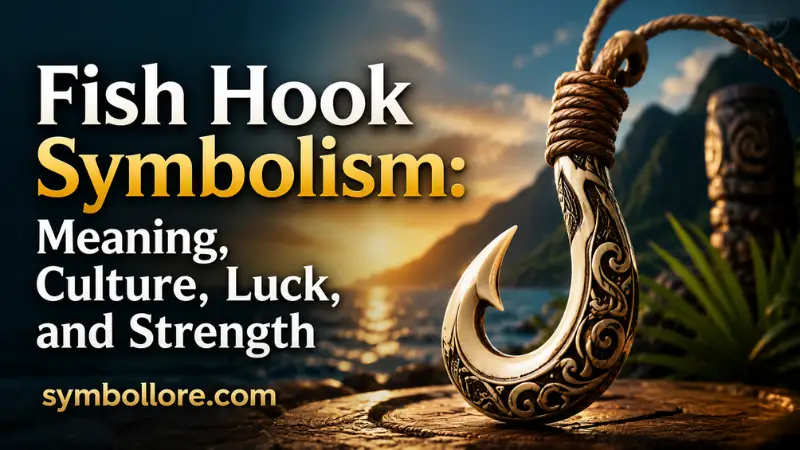
Fish hook symbolism is closely connected with abundance, strength, survival, prosperity, and safe passage, especially in Pacific cultures. The hook began as a practical tool for obtaining food, yet its importance grew into something much larger. It became connected with the sea, navigation, provision, ancestry, and stories of powerful cultural heroes.
The exact meaning depends on the tradition. A Māori hei matau is not simply a generic lucky charm, and a Hawaiian makau should not automatically be treated as identical to it. Both reflect deep relationships with the ocean, but their cultural histories and forms deserve to be understood on their own terms.
Quick Answer
Fish hook symbolism commonly represents abundance, prosperity, strength, determination, protection, and safe travel, particularly across Māori and Hawaiian traditions. These meanings grew from the hook’s practical importance as a source of food and connection to the sea. Specific designs, such as the Māori hei matau and Hawaiian makau, carry additional cultural and mythological meanings.
Key Takeaways
- Fish hooks symbolize abundance because they provided food and supported survival.
- Māori hei matau represent strength, determination, abundance, and safe water journeys.
- Hawaiian makau connect people with the ocean, prosperity, strength, and safe passage.
- Māui’s legendary hooks are important in several Pacific cultural traditions.
- Fish-hook tattoos often express resilience, travel, heritage, or ocean connection.
- A symbolic hook represents cultural meaning, not guaranteed supernatural protection.
Fish Hook Symbolism at a Glance
| Context | Common Meaning | Cultural Note |
| General fish hook | Provision, survival, abundance | Comes from its practical role |
| Māori hei matau | Abundance, strength, determination, safe water travel | A specific Māori cultural symbol |
| Hawaiian makau | Strength, good fortune, safe passage, ocean connection | A distinct Hawaiian tradition |
| Māui’s hook | Creation, ingenuity, power, transformation | Connected to Pacific mythology |
| Jewelry | Protection, prosperity, travel, personal identity | Meaning depends on design and tradition |
| Tattoo | Strength, heritage, perseverance, ocean connection | Cultural context matters |
| Maritime imagery | Fishing, livelihood, endurance | Can be separate from Polynesian symbolism |
| Gift | Safe journey, success, abundance | Especially meaningful for travelers |
What Does a Fish Hook Symbolize?
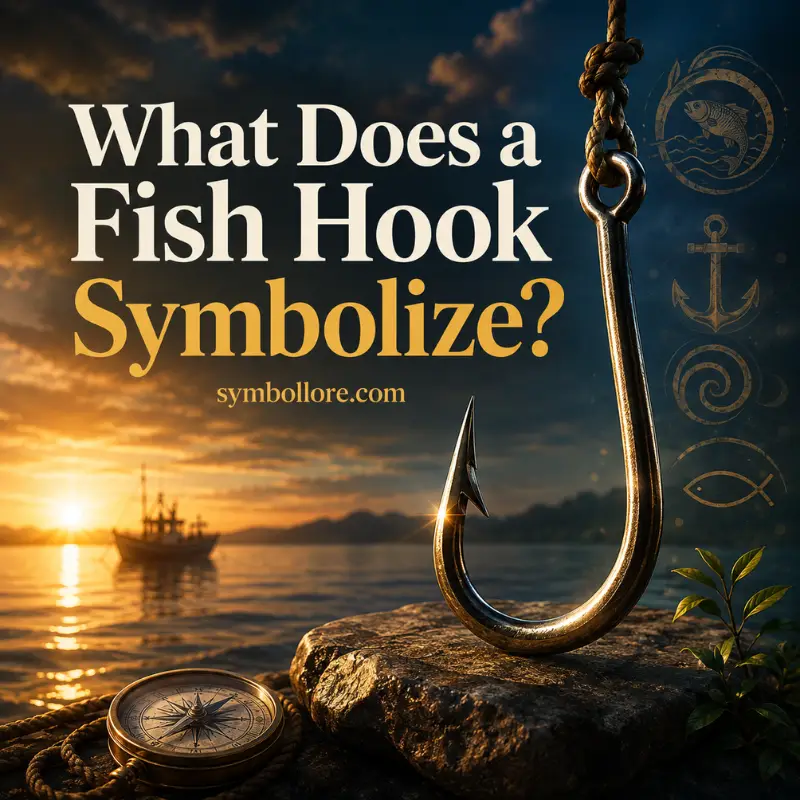
A fish hook most broadly symbolizes the ability to provide, survive, and draw sustenance from the natural world. Before it became jewelry or body art, it was a functional object. A successful hook could mean food for an individual, family, or community.
That practical relationship helps explain why abundance became such a strong symbolic theme. The hook did not merely represent wealth in an abstract sense. It represented a means of obtaining something necessary for life.
The same idea can extend into modern symbolism. Someone may choose a fish hook pendant to represent determination, self-reliance, success, or the ability to overcome challenges. These modern interpretations build on the older relationship between the hook, effort, and provision.
For Māori communities, the hook also has a specific cultural meaning. New Zealand’s Intellectual Property Office identifies the hei matau as a traditional Māori icon representing abundance, strength, determination, and good luck for those traveling over water.
Why Do Fish Hooks Represent Abundance and Prosperity?
Fish hooks became symbols of abundance because fishing was directly connected to food and community survival. A hook was not decorative in its original setting. It was a carefully made tool that helped people obtain an important source of nourishment.
The Australian Museum explains that fishing holds profound significance in Te Ao Māori, or the Māori world, and describes traditional Māori fishing methods and hooks as part of a long cultural history.
This creates a useful symbolic chain:
Hook → fish → food → provision → abundance → prosperity
The meaning can therefore be broader than financial wealth. Abundance may refer to food, family well-being, successful journeys, productive work, or having enough resources to thrive.
That distinction makes fish-hook symbolism different from a simple “money symbol.” Its deeper theme is often the ability to obtain and provide what is needed.
Māori Hei Matau Meaning
The Māori hei matau is one of the most important fish-hook symbols associated with Aotearoa New Zealand. It is a stylized hook pendant commonly made from pounamu, or New Zealand greenstone, although historical examples were made from other materials as well.
Museum of New Zealand Te Papa Tongarewa describes hei matau as symbolic representations of the fish hook associated with Māui. The museum also connects the design with the importance of fishing and the Māori relationship with Tangaroa, the guardian of the sea and its environs.
The New Zealand Intellectual Property Office gives a concise official summary: the hei matau represents abundance, strength, determination, and is also said to bring good luck to people journeying over water.
The symbol therefore carries several related ideas:
- Strength to face difficulty
- Determination to reach a goal
- Abundance and provision
- Connection with the sea
- Safe travel over water
- Māori cultural identity
- Connection to ancestral stories
The design should not be reduced to a generic “lucky fish hook.” It is a taonga, or culturally significant treasure, with a specific Māori history.
Hawaiian Makau Meaning
The Hawaiian makau is another important Pacific fish-hook tradition. The word refers to a fish hook, and historical Hawaiian examples demonstrate how sophisticated these tools could be.
The British Museum holds a Hawaiian makau made from wood, human bone, and vegetable fiber. Its curator’s notes explain that the bone point was associated with mana, or spiritual power, and that shark fishing with hooks was an elite activity associated with chiefs.
Modern explanations commonly associate the makau with strength, good fortune, safe passage, and connection to the ocean. OluKai, for example, describes the makau as a symbol of safe passage over water, good fortune, strength, and human connection with the sea.
However, Hawaiian makau should not simply be labeled “the Hawaiian version of the Māori hei matau.” The two share a wider Pacific relationship with fishing and the ocean, but each belongs to its own cultural setting.
The historical objects also show that a fish hook could carry social meaning beyond ordinary fishing. The British Museum’s example demonstrates connections among fishing, chiefs, power, craftsmanship, and Hawaiian religious concepts.
Māui and the Fish Hook
Māui is a major figure in Pacific mythology, and stories about his magical fish hook help explain why the hook has such powerful cultural associations.
In Māori tradition, Māui and his brothers are said to have fished up the North Island of New Zealand. Te Papa identifies the hei matau as a symbolic representation of the hook associated with this story and connects the North Island with Te Ika-a-Māui, or “the fish of Māui.”
Te Papa also notes the association between the hook, fishing, the sea, and Tangaroa.
Hawaiian traditions likewise preserve stories involving Māui and a powerful fish hook. Modern Hawaiian sources describe the legendary hook Mānaiakalani in stories about Māui and the Hawaiian Islands.
These stories help explain a recurring Pacific theme: the hook can represent more than catching fish. It can symbolize ingenuity, courage, creation, transformation, and the ability to accomplish something extraordinary.
Fish Hook Tattoos and Jewelry
Fish-hook tattoos and pendants often carry personal meanings that build on older cultural symbolism. A wearer might choose the design to represent strength, prosperity, safe travel, perseverance, or a connection to the ocean.
The meaning becomes more specific when the design is clearly based on a hei matau or makau. In those cases, the cultural source matters. A Māori-inspired design can carry associations with Māori history and tradition, while a Hawaiian makau can evoke Hawaiian relationships with the ocean and fishing.
A fish hook used simply as a maritime symbol may have a broader meaning. It can represent:
- A love of fishing
- Life near the sea
- A career or hobby connected with water
- Perseverance
- Providing for family
- Travel
- Returning home safely
- Personal resilience
The Environmental Literacy Council similarly identifies prosperity, abundance, strength, good luck, connection to the ocean, and safe travel among modern fish-hook tattoo interpretations.
The important point is that personal symbolism and cultural symbolism are not always the same thing.
Good Luck, Protection, and Safe Travel
Good luck is one of the most common modern meanings attached to Pacific fish-hook symbols. The idea makes practical sense within maritime cultures because successful fishing and safe travel were closely tied to survival.
The official New Zealand Intellectual Property Office says the hei matau is “said to be” a good-luck charm for people journeying over water. This wording is useful because it identifies the belief without presenting supernatural protection as a proven physical effect.
Safe travel is particularly appropriate as a symbolic meaning because the ocean can be unpredictable. A hook worn by a traveler can therefore express the hope of reaching a destination safely and returning home.
In modern life, that idea can extend beyond literal sea travel. A fish-hook pendant may symbolize a safe passage through a new stage of life, such as moving away, starting a career, beginning an education, or facing a major personal challenge.
How to Use the Symbol Respectfully
Fish-hook imagery can be meaningful, but cultural specificity matters. Not every curved hook is a Māori hei matau, and not every Pacific fish-hook design should be described as interchangeable.
The New Zealand Intellectual Property Office specifically recommends working with artists or designers familiar with traditional Māori culture and tikanga when using or commissioning Māori artwork or designs.
A respectful approach includes:
- Identify the source tradition.
Determine whether the design is Māori, Hawaiian, another Pacific form, or simply maritime-inspired. - Use the correct name.
If it is a hei matau, do not casually rename it as a generic “Polynesian hook.” - Learn the basic meaning.
Understand the cultural associations before using the design as a tattoo or commercial motif. - Consider the maker.
When authenticity matters, look for artists with genuine knowledge of the relevant tradition. - Avoid invented spiritual claims.
A symbol can represent protection or safe travel without literally guaranteeing either.
This approach respects the difference between appreciating a symbol and stripping it from its cultural setting.
FAQs
The main meaning is often provision and abundance because the hook traditionally helped people obtain food. In Māori and Hawaiian contexts, additional meanings include strength, safe travel, prosperity, ocean connection, and cultural identity.
The Māori hei matau symbolizes abundance, strength, and determination, and it is also associated with good luck during journeys over water. It connects with fishing, the sea, Māui, and Tangaroa.
The Hawaiian makau is associated with the ocean, fishing, strength, good fortune, and safe passage. Historical examples also demonstrate its connection with craftsmanship, status, and Hawaiian concepts of mana.
A fish-hook tattoo can symbolize strength, prosperity, perseverance, ocean connection, safe travel, or cultural heritage. Its exact meaning depends on the design and the tradition that inspired it.
Yes, good luck is a common symbolic interpretation, especially in modern explanations of Māori hei matau and Hawaiian makau. However, good luck is a cultural or personal belief, not a scientifically demonstrated effect.
A hei matau is a specific Māori fish-hook pendant associated with Māori cultural traditions in Aotearoa New Zealand. Makau is the Hawaiian term for a fish hook and refers to a distinct Hawaiian tradition. Both connect strongly with fishing and the ocean, but they should not be treated as identical symbols.
It can be, but context matters. A generic maritime hook is different from a culturally specific Māori or Hawaiian design. When using a traditional design, learning its origin and choosing culturally informed artists or makers is a more respectful approach.
Conclusion
Fish hook symbolism begins with a simple idea: a hook helps provide food and connects people with the sea. From that practical foundation grew meanings of abundance, prosperity, strength, determination, safe travel, and good fortune. Māori hei matau and Hawaiian makau add important cultural and mythological layers, including connections to Māui, the ocean, ancestry, and traditional life.
The strongest interpretation is therefore contextual. A fish hook can be a personal symbol of resilience or travel, but culturally specific designs deserve to be understood on their own terms rather than reduced to a generic lucky charm.